
Temples in Tamil Nadu
13 Temples*
A hand-researched beginning, not a full count — more great temples of this state are added as our research completes.
Tamil Nadu is where the deepest layers of temple worship in Bharat are still in daily use, and the Tamil temples listed here gather into a few great streams. All six Arupadai Veedu abodes of Murugan stand here — Thiruparankundram and Pazhamudircholai on either side of Madurai, Tiruchendur on the Bay of Bengal, Palani on its hill in Dindigul district, Swamimalai in the Kaveri delta and Thiruthani north of Chennai — the circuit fixed for all time by Nakkirar's Sangam-era Tirumurugatruppadai. On its island in the Kaveri stands Srirangam's Ranganathaswamy temple, foremost of the 108 Divya Desams and known as Bhooloka Vaikuntam, 'Vaikuntha on earth'. And at Rameswaram, where the Ramayana places Rama's worship of Shiva before the crossing to Lanka, the Ramanathaswamy temple is at once a Jyotirlinga and one of the four Char Dham.
The Devi holds two of her most celebrated southern seats in the same state: Meenakshi Amman at Madurai, whose Thirukalyanam — the marriage of Meenakshi to Sundareswarar — is the climax of the city's Chithirai festival, and Kamakshi Amman at Kanchipuram, one of the Sapta Puri and the principal Shakti shrine of the Kanchi tradition. The geography sorts itself into three bases. Madurai covers Thiruparankundram, Pazhamudircholai and Meenakshi, with Rameswaram about 173 kilometres east on NH87 — roughly three hours — and Tiruchendur further down the coast. Tiruchirappalli anchors Srirangam and the delta run to Swamimalai near Kumbakonam. Chennai now holds temples of its own — Kapaleeshwarar at Mylapore and Parthasarathy at Triplicane, both inside the city — and reaches Thiruthani at about 87 kilometres and Kanchipuram, where Varadaraja Perumal stands in the same town as Kamakshi Amman, at about 74, both easy day trips.
Jyotirlinga
New to this tradition? Read the overview →
Shakti Peethas
New to this tradition? Read the overview →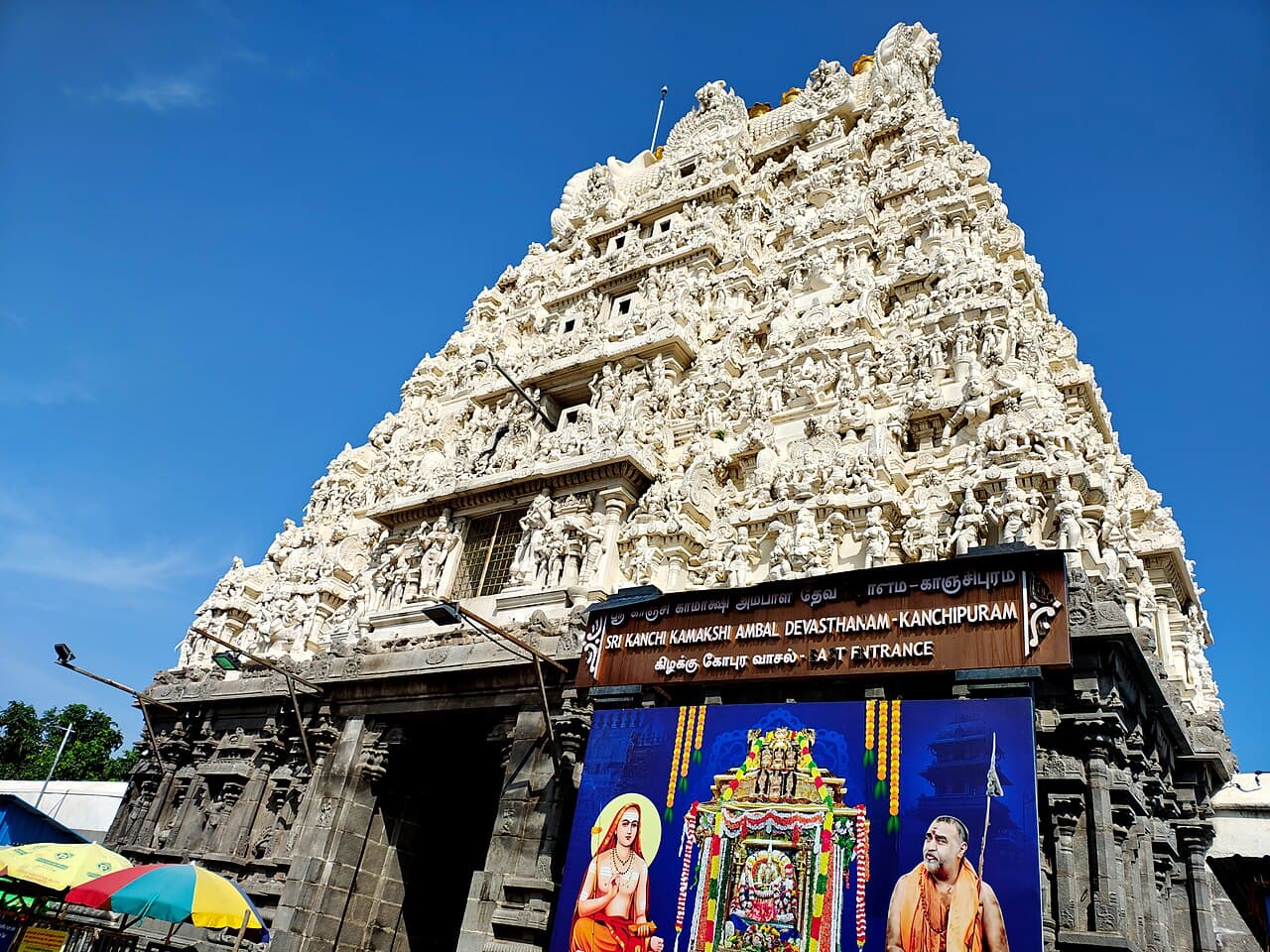
Vishnu Desam
New to this tradition? Read the overview →
Ranganathaswamy, Srirangam
Srirangam, Tiruchirappalli, Tamil Nadu
The foremost of the 108 Divya Desams — Ranganatha asleep upon his serpent inside seven walled enclosures, the largest functioning Hindu temple complex on earth.

Varadaraja Perumal, Kanchipuram
Kanchipuram, Tamil Nadu
Vishnu as Varadaraja on the elephant-hill of Hastagiri — the shrine Sri Vaishnavas call simply Perumal Koil, whose fig-wood deity rises from its tank once in forty years.

Parthasarathy, Triplicane
Triplicane (Thiruvallikeni), Chennai, Tamil Nadu
A Divya Desam in the heart of old Madras — Krishna as Arjuna's charioteer, moustached and weaponless, his face still marked by the arrows he took for the friend he drove.

Thiruparankundram Murugan
Thiruparankundram, Madurai, Tamil Nadu
First of the six abodes of Murugan — a sanctum quarried out of the living rock of Skandamalai, where the god wed Deivanai after the Surasamharam.

Subramaniya Swamy, Tiruchendur
Tiruchendur, Thoothukudi, Tamil Nadu
The only one of Murugan's six abodes that stands on the sea — where the vel felled Surapadman, and the Surasamharam is fought again on the shore each Skanda Shashti.

Dhandayuthapani, Palani
Palani, Dindigul district, Tamil Nadu
Murugan as Dhandayuthapani — the boy-god turned renunciate, shorn of ornament and holding only a staff — on Sivagiri hill, third of the six Arupadai Veedu and for many devotees the foremost.

Swaminatha Swamy, Swamimalai
Swamimalai, Kumbakonam, Tamil Nadu
The fourth of Murugan's six abodes — the hill where the child-god expounded the meaning of Om to his own father, and so became guru to the Lord himself.

Thiruttani Murugan
Thiruttani, Tamil Nadu
The fifth of the six Arupadai Veedu — the hill where Murugan's anger cooled after the war, reached by 365 steps, one for each day of the year.
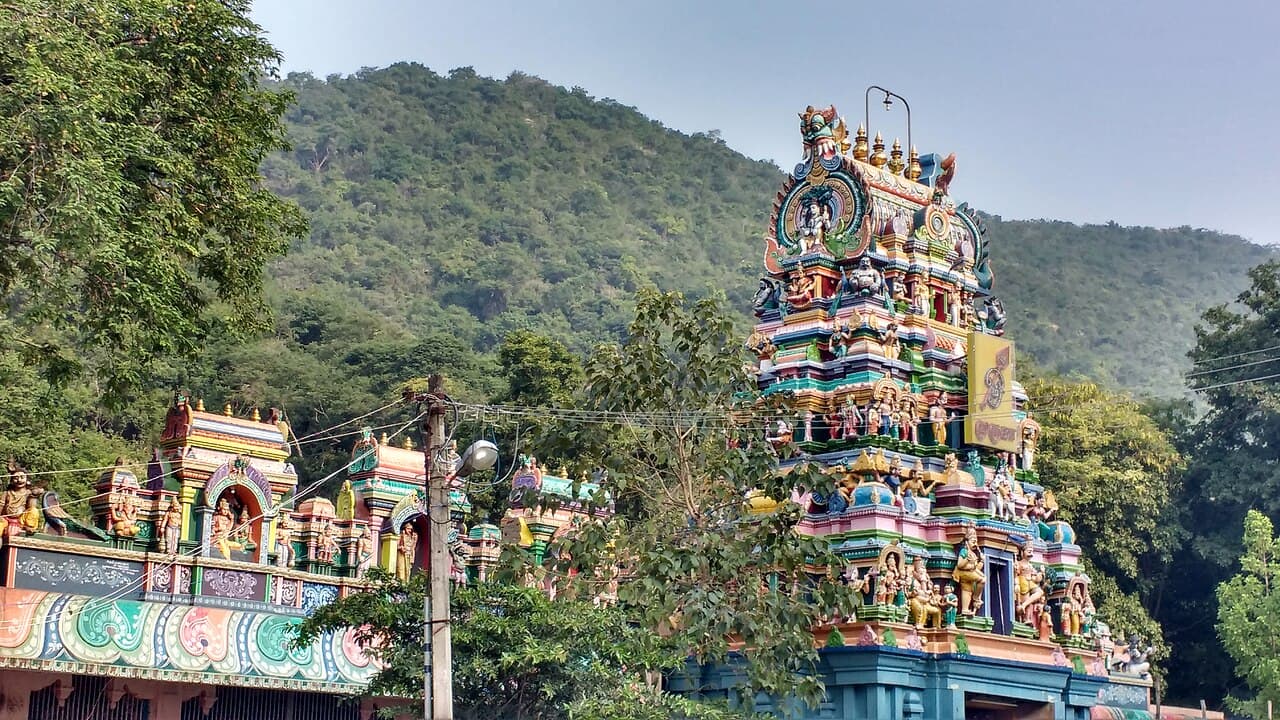
Pazhamudircholai Murugan
Alagar Koil, Madurai, Tamil Nadu
The sixth and last of Murugan's six abodes — a fruit-ripe grove high in the Alagar hills above Madurai, where the god tested the poet Avvaiyar with a riddle about a roasted fruit.
Shiva Mahadev
New to this tradition? Read the overview →

Frequently Asked Questions
How many major temples are listed in Tamil Nadu on MereMandir?+
Thirteen — all six Arupadai Veedu abodes of Murugan (Thiruparankundram, Tiruchendur, Palani, Swamimalai, Thiruthani and Pazhamudircholai), the Ranganathaswamy temple at Srirangam, the Meenakshi Amman temple at Madurai, the Kamakshi Amman and Varadaraja Perumal temples at Kanchipuram, the Ramanathaswamy temple at Rameswaram, and the Chennai pair — Kapaleeshwarar at Mylapore and Parthasarathy at Triplicane. Murugan, Vishnu, Devi and Shiva are all represented in a single state.
Are all six abodes of Murugan in Tamil Nadu?+
Yes. The Arupadai Veedu — the six 'battle camps' named in Nakkirar's Tirumurugatruppadai — lie entirely within Tamil Nadu: Thiruparankundram and Pazhamudircholai at Madurai, Tiruchendur on the coast in Thoothukudi district, Palani in Dindigul district, Swamimalai near Kumbakonam and Thiruthani in Thiruvallur district.
Which Jyotirlinga is in Tamil Nadu?+
One — Ramanathaswamy at Rameswaram, the southernmost of the twelve Jyotirlingas and also one of the four Char Dham established by Adi Shankaracharya, which makes it the point where the two greatest all-India circuits meet. It sits on Pamban island, reached from the mainland at Mandapam.
What is the best season to visit temples in Tamil Nadu?+
January to March is the most comfortable window — the northeast monsoon has passed and the summer heat has not yet built. The festive peaks are spread through the year: Vaikunta Ekadasi at Srirangam (December–January), Thaipusam at Palani (January–February), Chithirai and the Meenakshi Thirukalyanam at Madurai (April–May) and Skanda Sashti at Tiruchendur (October–November).