
Dussehra is the tenth day, and the tenth day is a victory. It closes the nine nights of Sharad Navaratri on the Dashami of Ashwin's bright fortnight — Tuesday, 20 October in 2026 — and it carries two rememberings at once. After nine nights of battle, Goddess Durga struck down Mahishasura, the shape-shifting asura whom no man or deva could kill, and the Mother who ended him has been Mahishasuramardini ever since. On that same tenth, in the other telling, Shri Ram brought the war in Lanka to its close and Ravana fell. The name itself holds it — Dussehra from dasha-hara, the taking away of the ten, the ten heads of the demon king; and Vijayadashami, simply, the tenth of victory. What the day says is one sentence, and every region of Bharat says it in its own tongue: adharma may hold the field for a while, but not to the tenth day.
The panchang gives the day its own hours. Puja is done in the Aparahna kaal — 1:14 PM to 3:30 PM at New Delhi in 2026 — and within it falls the Vijaya Muhurat, 1:59 PM to 2:45 PM, a span of forty-five minutes held to be proof against failure. Vijayadashami is counted among the sade-teen muhurat, the three and a half spans of the year that need no further reckoning: whatever is begun then is begun well. So the day fills with beginnings. Shops open, ledgers are consecrated, vehicles and tools come home, and in the south the Ayudha Puja lays down every implement of a family's livelihood — lathe and loom, plough and pen, laptop and lorry — before the Devi for a day's rest and worship. Children are seated for Vidyarambham and given their first letters. In the north the Shami tree is honoured, its leaves exchanged as gold in memory of the Pandavas, who hid their weapons in a Shami through the last year of exile and took them down again on this day; Aparajita, the Devi who is never defeated, is invoked by the same rite.
Then the celebration divides, gloriously. Across the Gangetic plain the nine nights have been given to Ramlila, the community staging of the Ramayana that UNESCO inscribed in 2008 on its Representative List of the Intangible Cultural Heritage of Humanity; on Dussehra evening the last scene is played out of doors, the arrow is loosed, and the tall effigies of Ravana, Kumbhakarna and Meghnad burn against the dark while the ground shakes with “Jai Shri Ram”. Varanasi's month-long Ramnagar Ramlila and Delhi's great maidans are the best known of hundreds. In Karnataka the day is Chamundeshwari's: Mysuru Dasara, the state's Nada Habba, opens with puja on Chamundi Hill and closes with the Jamboo Savari, the Devi carried in a golden howdah on a caparisoned elephant to Bannimantap, with the palace lit below. Bengal keeps its own clock — its Vijaya Dashami falls on Wednesday, 21 October 2026, when married women play sindoor khela at the Devi's feet and the pratimas are taken to the river. And in Himachal's Kullu valley the festival is only beginning: the international Kullu Dussehra starts on Vijayadashami and runs a week at the Dhalpur maidan, Raghunath ji drawn on his rath while hundreds of village devtas arrive on palanquins to attend him.
For darshan, the tenth day belongs to two families of shrines. Chamundeshwari on her hill above Mysuru is the Devi of the day itself, and the Shakti seats — Kalighat in Kolkata, Vaishno Devi in the Trikuta hills, Mahalakshmi at Kolhapur — carry the last and largest crowds of the Navaratri tide. Alongside them stand the seats of Shri Ram: the Ram Janmabhoomi temple and Hanuman Garhi at Ayodhya; Kalaram at Panchavati in Nashik, the forest where the Lord passed his exile and from where Mata Sita was taken; Bhadrachalam on the Godavari in Telangana; and Rameswaram, where tradition holds that Shri Ram worshipped Shiva on the shore of the sea he was about to bridge. Expect the year's densest queues, aim for darshan well before the Aparahna puja, and confirm each temple's Vijayadashami arrangements before you set out.
Dussehra across Bharat — four tenth days, one victory
No other festival is kept in so many different ways on the same afternoon. In the Gangetic north the tenth day belongs to Shri Ram: nine nights of Ramlila reach the war in Lanka, and at sunset the effigies of Ravana, Kumbhakarna and Meghnad go up in flame before whole townships standing in the open. In Karnataka the day belongs to the Devi, and Mysuru gives her a procession that the state keeps as its Nada Habba. In Bengal she is a daughter going home, and the parting is a day later than everyone else's. In the Kullu valley the festival has not even begun yet — there, Dussehra starts on the day it ends elsewhere.
The difference is not confusion; it is the same victory remembered from four directions. Durga's slaying of Mahishasura and Shri Ram's of Ravana are both told of the tenth of Ashwin's bright fortnight, and the panchang gives the day two windows of its own — the Aparahna kaal in which the puja is done, and inside it the short Vijaya Muhurat, which in 2026 runs from 1:59 PM to 2:45 PM at New Delhi. Vijayadashami is counted among the sade-teen muhurat, the three and a half unfailingly auspicious spans of the year, which is why a shop is opened, a vehicle brought home, a child's first letters written and a new ledger begun on this day and no other.
Mysuru Dasara — the Jamboo Savari
Karnataka keeps Dasara as its Nada Habba, the festival of the land. It opens with puja at Chamundeshwari's door on Chamundi Hill and closes on Vijayadashami with the Jamboo Savari — the Devi borne in a golden howdah on a caparisoned elephant at the head of the procession to Bannimantap, the palace below lit end to end.
Kullu Dussehra — the one that begins here
In Himachal's Kullu valley the international Dussehra begins on Vijayadashami and runs a week. Raghunath ji is brought from Sultanpur to the Dhalpur maidan and drawn on his rath, and hundreds of village devtas arrive on palanquins to attend him — the assembly, not the effigy, is the festival there.
Bengal's Vijaya Dashami — 21 October 2026
Bengal keeps its Vijaya Dashami a day after the rest of Bharat — Wednesday, 21 October 2026 by Drik Panchang's Kolkata reckoning. Married women offer sweets and sindoor at the Devi's feet in the sindoor khela, take the blessing of the departing Mother, and the pratimas go to the river at dusk.
Ramlila & Ravan Dahan — the northern tenth day
Ramlila — the staging of the Ramayana across the nine nights — is inscribed on UNESCO's Representative List of the Intangible Cultural Heritage of Humanity (2008). On Dussehra evening its last scene is played in the open, and the effigies of Ravana, Kumbhakarna and Meghnad are set alight. Varanasi's Ramnagar Ramlila and Delhi's grounds draw the largest gatherings.
Where to take darshan
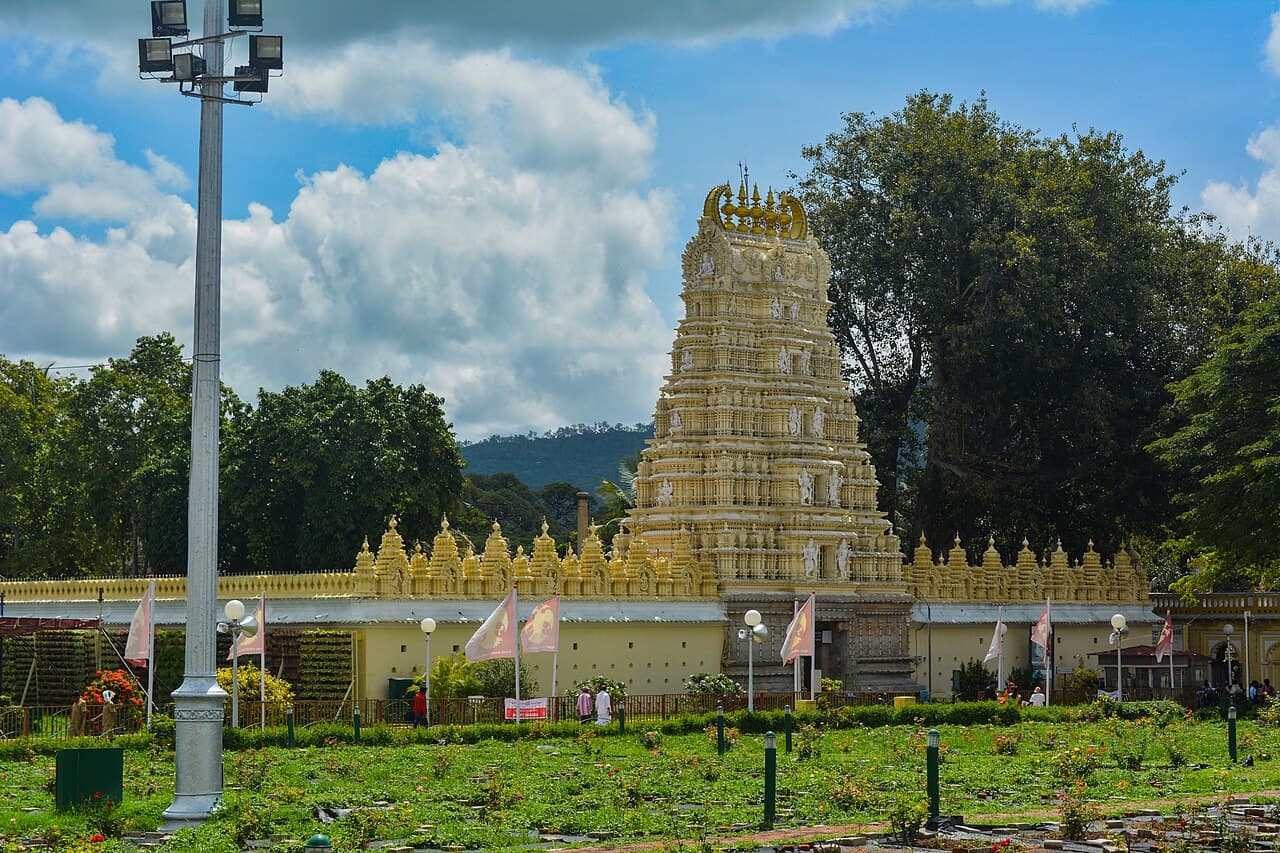
Sri Chamundeshwari, Mysuru
Chamundi Hill, Mysuru, Karnataka
Mahishasuramardini on the hill that gave Mysuru its name — kuladevi of the Wodeyars, presiding Mother of the city below, and the Devi whose Dasara Karnataka keeps as its Nada Habba.

Shri Ram Janmabhoomi (Ram Lalla)
Ayodhya, Uttar Pradesh
The grand new temple over Rama's birthplace on the Sarayu — consecrated in January 2024, where the Lord is worshipped as the child Ram Lalla.

Hanuman Garhi, Ayodhya
Ayodhya, Uttar Pradesh
The fort-temple on its mound in the heart of Ayodhya, where Pavanputra Hanuman keeps watch over Ramkot — seventy-six steps up, and by long custom the first darshan of the city, taken before Ram Lalla's.

Shri Kalaram Mandir, Panchavati
Panchavati, Nashik, Maharashtra
The black Rama of Panchavati — Rama, Sita and Lakshmana in dark stone on the Godavari at Nashik, on ground the Ramayana remembers as the forest of the exile years.

Sita Ramachandraswamy, Bhadrachalam
Bhadrachalam, Bhadradri Kothagudem, Telangana
Rama enthroned as Vaikuntha Rama — four-armed, conch and discus in his upper hands — with Sita upon his knee and Lakshmana at his side, on the Godavari hill that is the devotee Bhadra himself.

Ramanathaswamy (Rameshwaram)
Rameswaram, Tamil Nadu
Where Rama worshipped Shiva before crossing to Lanka — a Jyotirlinga and Char Dham with India's longest temple corridor.
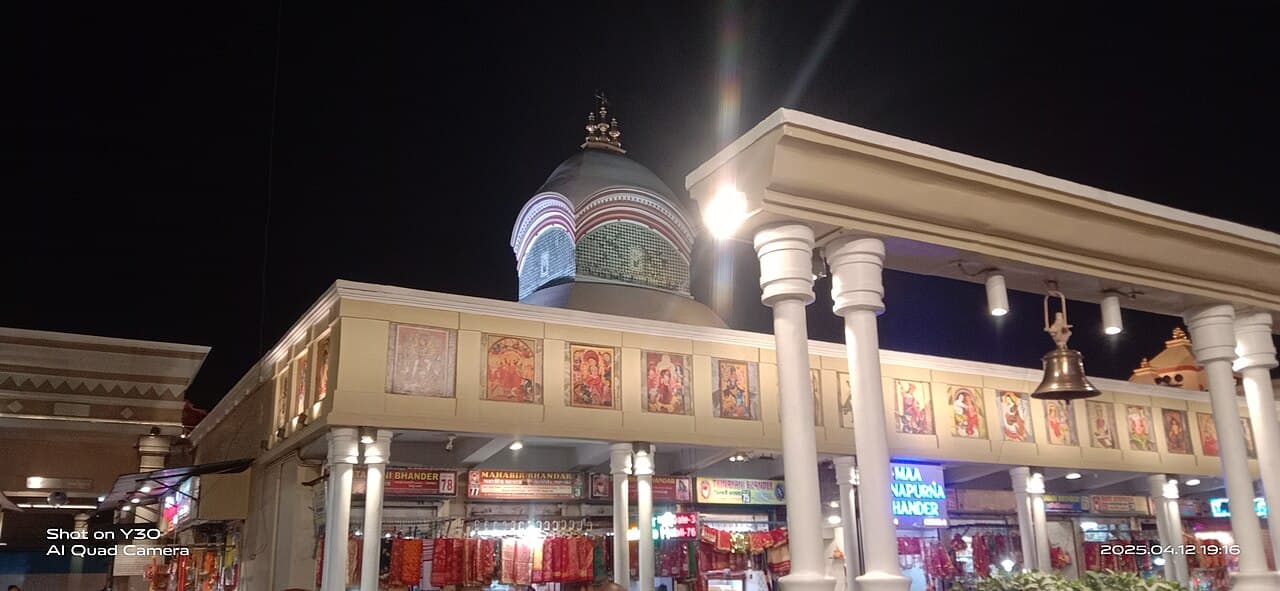
Kalighat
Kolkata, West Bengal
Kali's toe-fall on the Adi Ganga that gave Kolkata its name — the city's most revered Shakti Peetha, worshipped as Dakshina Kali.

Shri Mata Vaishno Devi
Trikuta hills, Katra (Reasi), Jammu & Kashmir
The Mother of the Trikuta hills — three self-manifest pindis in a cave above Katra, reached by a thirteen-kilometre climb that millions make each year at her call.
Frequently Asked Questions
When is Dussehra in 2026?+
Dussehra (Vijayadashami) falls on Tuesday, 20 October 2026, the Dashami of Ashwin's bright fortnight. For New Delhi, Drik Panchang gives the Vijaya Muhurat as 1:59 PM to 2:45 PM and the Aparahna puja window as 1:14 PM to 3:30 PM; Panchang AstroSage gives the same day and the same Vijaya window. Bengal keeps its Vijaya Dashami a day later, on Wednesday, 21 October 2026. Muhurat timings shift with the city, so check a panchang for your own location.
Why is Dussehra celebrated?+
For two victories remembered on the same tithi. Goddess Durga fought Mahishasura through the nine nights of Navaratri and struck him down on the tenth, which is why she is Mahishasuramardini. On that same tenth, Shri Ram ended the war in Lanka and Ravana fell — the name Dussehra comes from dasha-hara, the taking away of the demon king's ten heads. Both tellings say the same thing: adharma may hold the field for a while, but not to the tenth day.
What is the Vijaya Muhurat and why does it matter?+
The Vijaya Muhurat is a short span inside the day's Aparahna kaal — in 2026 it runs 1:59 PM to 2:45 PM at New Delhi — held to be proof against failure, and Vijayadashami itself is counted among the sade-teen muhurat, the three and a half unfailingly auspicious spans of the year. That is why shops are opened, ledgers consecrated, vehicles and tools brought home, Ayudha Puja performed on every implement of a livelihood, and children seated for Vidyarambham on this day and no other.
How is Dussehra different from Navaratri?+
Navaratri is the nine nights; Dussehra is the tenth day that crowns them. Sharad Navaratri 2026 runs from Ghatasthapana on 11 October to Maha Navami on 19 October, each night given to one of the Navadurga; Vijayadashami follows on 20 October as the day of victory. In Bengal the same nine nights are kept as Durga Puja, and there the tenth day — the visarjan — falls on 21 October 2026.
Where is Dussehra celebrated most grandly?+
Mysuru keeps Dasara as Karnataka's Nada Habba, closing with the Jamboo Savari, in which Chamundeshwari rides a caparisoned elephant in a golden howdah to Bannimantap. Kullu in Himachal Pradesh begins its week-long international Dussehra on Vijayadashami, with Raghunath ji's rath at the Dhalpur maidan and hundreds of village devtas in attendance. Bengal's Vijaya Dashami brings sindoor khela and the visarjan, and across the north Ramlila ends in the burning of Ravana's effigy — most famously at Varanasi's Ramnagar Ramlila and on Delhi's maidans.
Which temples are best for Vijayadashami darshan?+
Chamundeshwari on Chamundi Hill above Mysuru is the Devi of the day itself. The Shakti seats take the Navaratri tide's last and largest crowds — Kalighat in Kolkata, Vaishno Devi in the Trikuta hills, Mahalakshmi at Kolhapur. For Shri Ram's victory, the seats are the Ram Janmabhoomi temple and Hanuman Garhi at Ayodhya, Kalaram at Panchavati in Nashik, Bhadrachalam on the Godavari, and Rameswaram, where tradition holds the Lord worshipped Shiva before bridging the sea. Plan for very long queues and confirm each temple's arrangements first.