
The Char Dham — literally the “four abodes” — are four great temple sites placed at the four cardinal corners of India: Badrinath in the Himalayan north (Uttarakhand), Jagannath Puri on the eastern coast (Odisha), Rameshwaram at the southern tip (Tamil Nadu), and Dwarka on the western shore (Gujarat). Tradition holds that Adi Shankaracharya, the eighth-century saint-philosopher, established this all-India pilgrimage to bind the subcontinent into a single sacred geography, so that a pilgrim who completes the circuit has, in effect, circled the whole of Bharat. This is distinct from the Uttarakhand “Chota Char Dham” — Yamunotri, Gangotri, Kedarnath and Badrinath — a separate Himalayan circuit that shares only Badrinath with the all-India yatra. Together the four dhams span both Vaishnava and Shaiva devotion: Badrinarayan at Badrinath, Lord Jagannath at Puri, Dwarkadhish Krishna at Dwarka, and Lord Shiva as the Ramanathaswamy jyotirlinga, consecrated in Rama's story, at Rameshwaram.
The traditional way to make the yatra is clockwise, like a great parikrama of Bharat itself: begin at Badrinath in the north, travel east to Puri, south to Rameshwaram, and complete the circle west at Dwarka. Plan with realistic expectations, because the four dhams sit at the far corners of the country and connecting them all involves roughly 6,000 kilometres or more of travel. For this reason most pilgrims do not attempt everything at once: the common pattern is one dham per trip, completed over several years as time, health and savings permit. Pilgrims who do undertake the full circuit in a single journey by road and rail should budget two to three weeks, allowing for long train legs, road transfers and rest days. Badrinath sets the calendar for the whole plan — the shrine opens only for a summer window, roughly May to early November, and remains snowbound and closed for the rest of the year.
Each dham has its own best season. Badrinath must be visited within its summer window, and even then warm clothing is essential, since the temple sits above 3,000 metres in the high Himalayas. Puri welcomes pilgrims year-round, though the Rath Yatra in June–July brings enormous crowds and heavy demand for rooms. Rameshwaram is most comfortable from October to April, before the coastal heat peaks. Dwarka is best from October to March, with Janmashtami drawing its largest gatherings. A few practical habits make the yatra smoother: book trains and accommodation well in advance, keep government ID handy for travel and darshan queues, build buffer days into the Himalayan leg, and have elderly pilgrims take medical advice before ascending to Badrinath. Approached patiently — one direction at a time, in the right season — the Char Dham unfolds not as a race but as a lifetime's devotion completed step by step.
The route, in darshan order
- 1
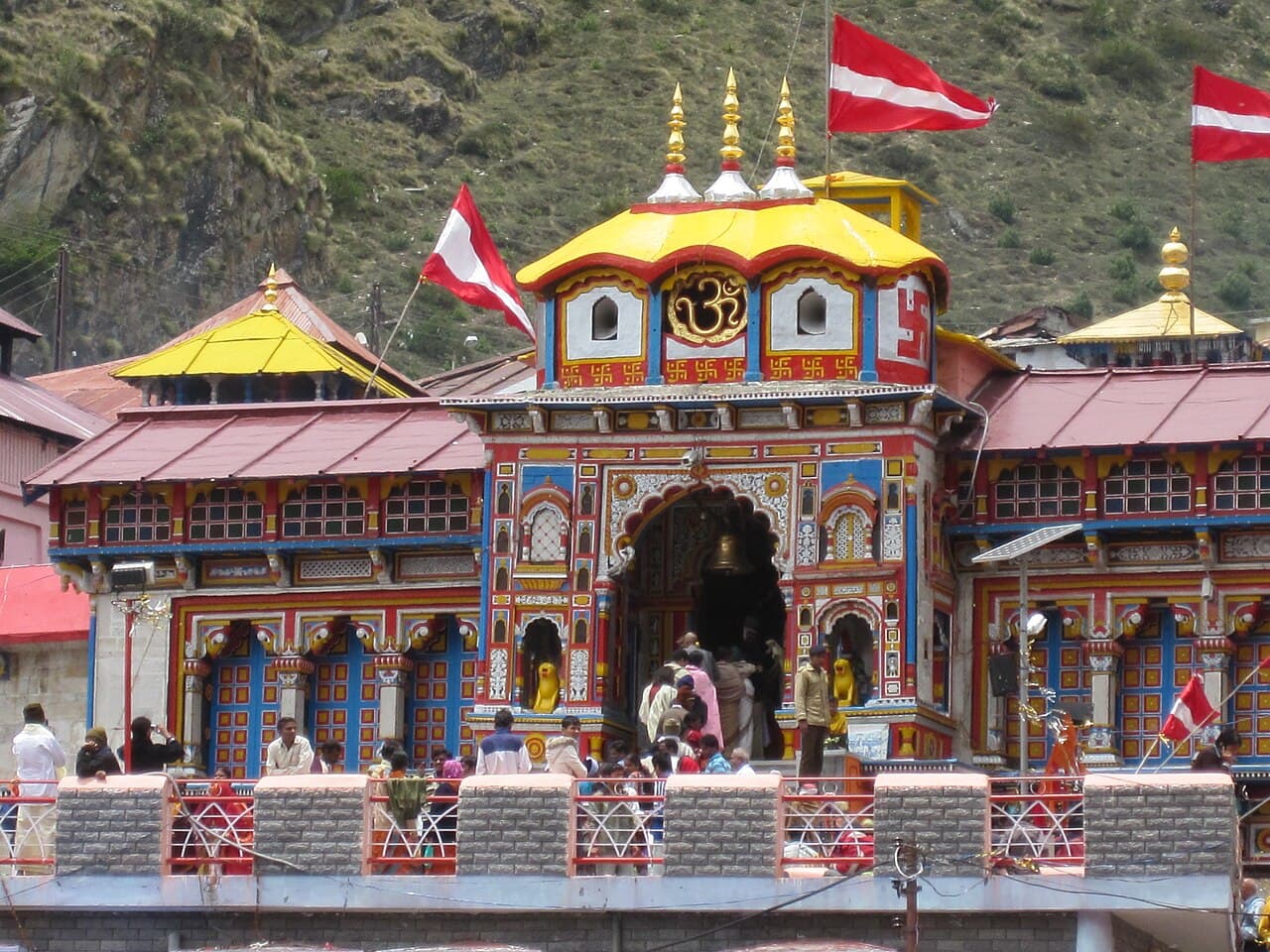
Badrinath
Chamoli, Uttarakhand
Vishnu as Badrinarayan in the high Himalaya — the northern seat of the Char Dham, on the Alaknanda between the Nar and Narayan peaks.
- 2~1372 km aerial distance
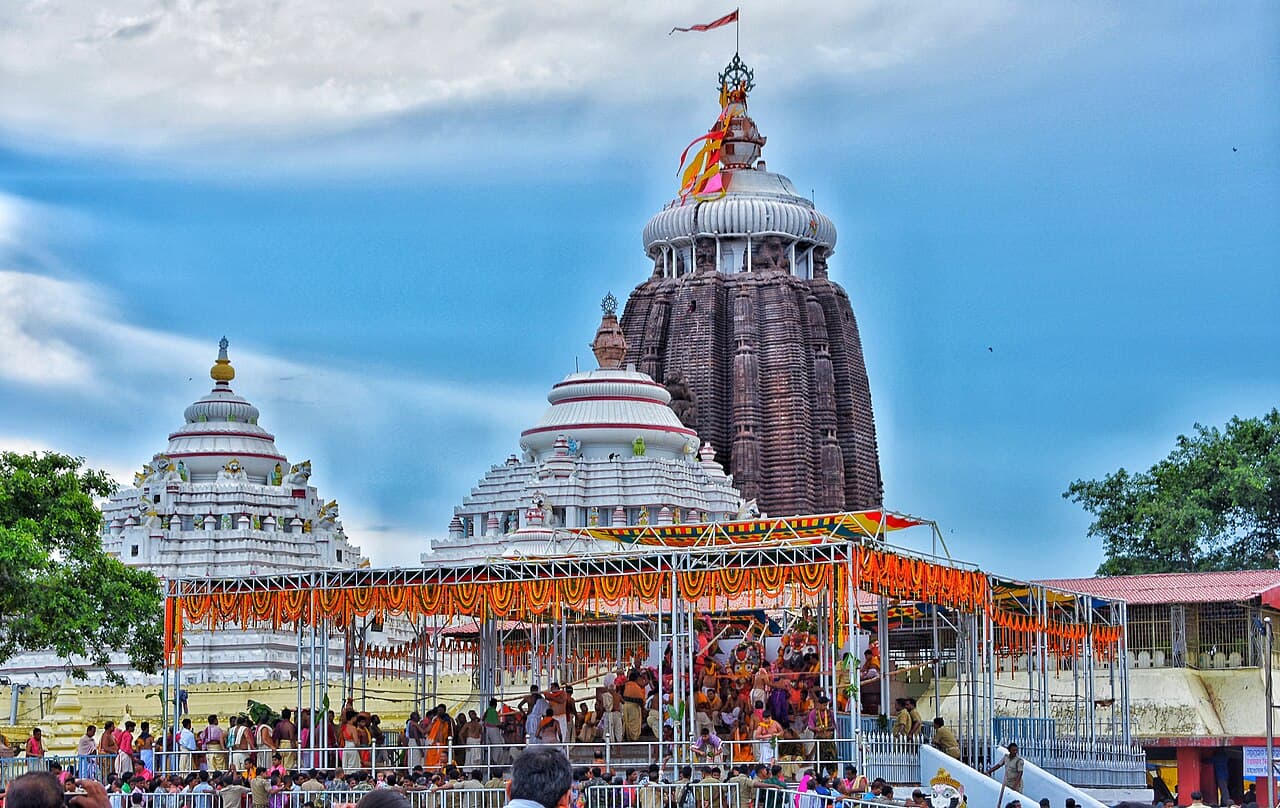
Jagannath Puri
Puri, Odisha
Lord Jagannath of Puri — the eastern seat of the Char Dham, famed for the world's grandest Rath Yatra.
- 3~1362 km aerial distance

Ramanathaswamy (Rameshwaram)
Rameswaram, Tamil Nadu
Where Rama worshipped Shiva before crossing to Lanka — a Jyotirlinga and Char Dham with India's longest temple corridor.
- 4~1815 km aerial distance
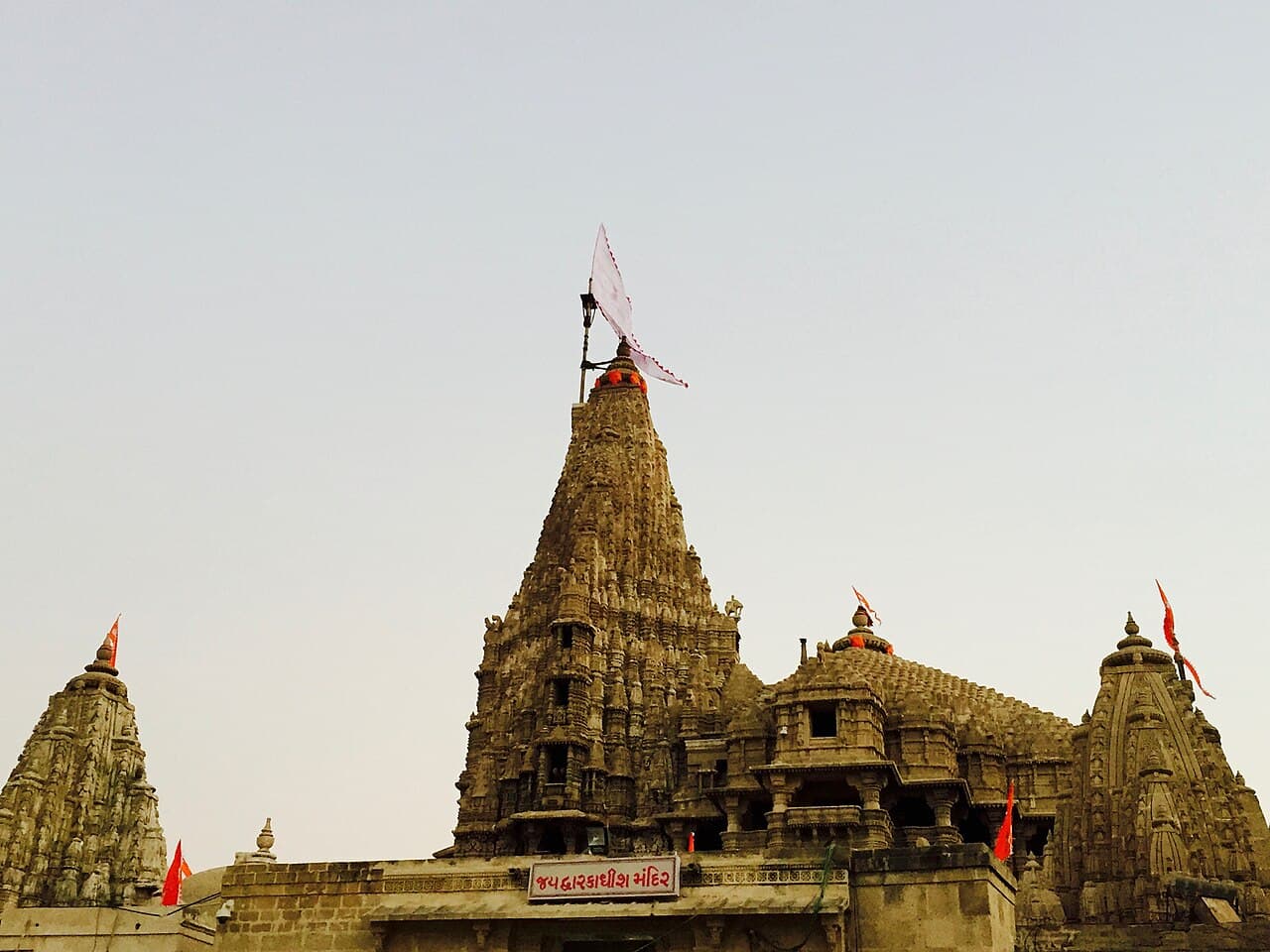
Dwarkadhish
Dwarka, Gujarat
Krishna's fabled sea-kingdom of Dwarka — the western seat of the Char Dham, rising in five storeys above the Gomti.
Frequently Asked Questions
How many days are needed for the Char Dham yatra?
There is no fixed requirement. A continuous circuit of all four dhams by road and rail typically takes two to three weeks, since the route covers roughly 6,000 kilometres or more. Most pilgrims instead take one dham per trip — usually three to five days each including travel — and complete the Char Dham over several years. Keep extra buffer days for Badrinath, where mountain weather can disrupt schedules.
What is the correct order for the Char Dham yatra?
The traditional practice is a clockwise circuit of India, like a parikrama: Badrinath in the north, then Puri in the east, then Rameshwaram in the south, and finally Dwarka in the west. That said, scriptures do not prescribe a single compulsory sequence, and many pilgrims visit the dhams in whatever order their circumstances allow. What matters in tradition is completing all four with devotion.
Is this the same as the Uttarakhand Char Dham?
No. The all-India Char Dham consists of Badrinath, Puri, Rameshwaram and Dwarka, spread across the four directions of the country. The Uttarakhand circuit — Yamunotri, Gangotri, Kedarnath and Badrinath — is properly called the Chota Char Dham and lies entirely in the Garhwal Himalayas. The two circuits share only Badrinath. This guide covers the all-India Char Dham established by Adi Shankaracharya.
When is Badrinath open?
Badrinath opens only for a summer season, generally from late April or early May until October or November; the exact opening and closing dates are announced each year according to the Hindu calendar. Through winter the shrine remains closed under heavy snow, and the deity's winter worship continues in the Joshimath area. Always confirm the current year's dates before finalising travel plans.
Can the Char Dham be done by train?
Largely, yes. Puri, Rameshwaram and Dwarka all have their own railway stations with direct trains from major cities. Badrinath has no rail link — pilgrims take a train to Haridwar or Rishikesh and then continue roughly 300 kilometres by road. IRCTC also operates special tourist trains from time to time that cover the Char Dham circuit as a package; check current schedules before booking.