
Where Rama worshipped Shiva before crossing to Lanka — a Jyotirlinga and Char Dham with India's longest temple corridor.
- Deity
- Shiva / Vishnu
- Location
- Rameswaram, Tamil Nadu
- Category
- Jyotirlinga · Char Dham
- Established
- Expanded 12th–18th c. (Pandya, Setupati)
- Setting
- Pamban island, Gulf of Mannar
- Best Time to Visit
- October to April
- Both a Jyotirlinga and the southern Char Dham
- Where Rama worshipped Shiva to expiate the killing of Ravana (Ramayana)
- India's longest temple corridor — 1,200+ carved pillars
- Twenty-two theerthams (sacred wells); Agni Theertham is the sea itself
- Present grandeur owed to the Setupati rulers (17th–18th c.)
- Traditionally paired with Kashi in a single great pilgrimage
- On Pamban island, reached across the Pamban bridge
Significance
For pilgrims Rameswaram is doubly holy — a Jyotirlinga of Shiva and a Char Dham of the wider pilgrimage — and it is traditionally paired with Kashi: to carry Ganga water from Varanasi and offer it here, and to bear sand from Rameswaram back to the Ganga, completes one of the great journeys of Hindu India.
Central to the pilgrimage are the twenty-two theerthams, the sacred water-bodies within and around the temple, held to stand for the twenty-two arrows in Rama's quiver; pilgrims bathe at each in turn, beginning with the Agni Theertham, the sea itself, before taking darshan. The rite of the theerthams — drenched and dripping through the vast corridors — is unlike any other Jyotirlinga's.
The temple is the culminating stop of the Rama pilgrimage that runs down the length of the peninsula, and it opens onto a wider sacred geography — Dhanushkodi at the island's tip, where the bridge to Lanka is said to have begun, and the Gandhamadhana hill with its shrine of Rama's feet. The crystal (sphatika) linga worshipped at dawn and the ritual bathing at the theerthams give the darshan here a rhythm found nowhere else among the twelve.
History
Ramanathaswamy stands on Pamban island, off the south-eastern tip of Tamil Nadu in the Gulf of Mannar, where the mainland reaches toward Sri Lanka. Here Shiva is worshipped as Ramanatha, 'the lord of Rama', and the temple is at once one of the twelve Jyotirlingas and the southern seat of the Char Dham — a rare double sanctity.
By the Ramayana it was Rama himself who worshipped Shiva at this spot: to expiate the sin of killing Ravana, a Brahmin, he installed a Shivalinga on the shore, sending Hanuman to fetch one from Kailash and, when he was delayed, fashioning one from sand so the auspicious hour would not pass. Both lingas, tradition holds, are honoured in the sanctum still.
The temple grew over centuries under many hands — expanded by the Pandyas, endowed even by Jaffna kings of Sri Lanka, and brought to its present grandeur above all by the Setupati rulers of Ramanathapuram, whose Muthuramalinga Setupati raised the great third corridor in the eighteenth century.
Architecture
Ramanathaswamy is Dravidian temple-building at its most expansive. Its glory is the third prakara, the outer corridor — reckoned the longest of any temple in India, running several hundred metres around the complex on more than twelve hundred individually carved pillars, their bases and capitals worked in the ornate late-Nayaka and Setupati manner.
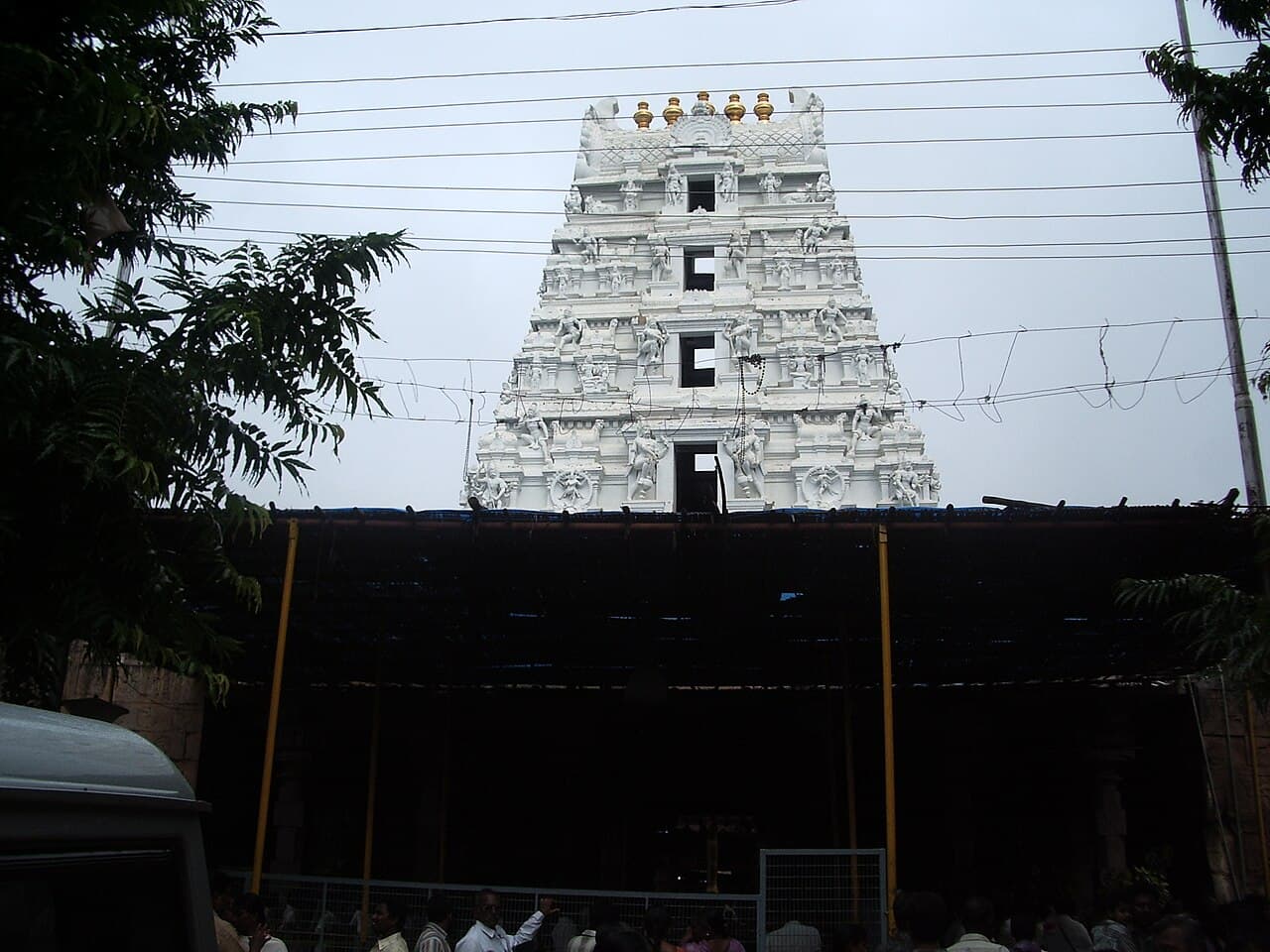
Tall gopurams rise over the gateways, the eastern rajagopuram climbing above fifty metres, and the long, shadowed, pillared aisles — receding to a point far down their length — are among the most photographed sights in Indian sacred architecture. Within, the two lingas of Rama's founding are enshrined, and the twenty-two theertham wells are set about the courts.
Festivals
Timings
Open daily ~5:00 AM – 1:00 PM and 3:00 PM – 9:00 PM; theertham baths in the morning.
Rameswaram sits at the end of Pamban island, reached across the sea by the historic Pamban rail and road bridges. Its railway station (code RMM) is barely a kilometre from the temple, and the train's crossing of the Pamban bridge is a journey in itself; the nearest airport is at Madurai, about a hundred and seventy kilometres away by road. Pilgrims often come on from Madurai and pair the visit with Dhanushkodi at the island's tip.
Timings are indicative — please confirm with the temple trust before travelling.
Videos
Nearby Temples

Frequently Asked Questions
Where is Ramanathaswamy (Rameshwaram) Temple located?+
Ramanathaswamy (Rameshwaram) Temple is in Rameswaram, Tamil Nadu, India.
Which deity is worshipped at Ramanathaswamy (Rameshwaram) Temple?+
Ramanathaswamy (Rameshwaram) Temple is dedicated to Shiva / Vishnu.
Which tradition does Ramanathaswamy (Rameshwaram) belong to?+
Ramanathaswamy (Rameshwaram) is one of the Jyotirlinga temples dedicated to Shiva.
What are the timings of Ramanathaswamy (Rameshwaram) Temple?+
Open daily ~5:00 AM – 1:00 PM and 3:00 PM – 9:00 PM; theertham baths in the morning.
What is the best time to visit Ramanathaswamy (Rameshwaram) Temple?+
October to April
When was Ramanathaswamy (Rameshwaram) Temple established?+
Ramanathaswamy (Rameshwaram) Temple — Expanded 12th–18th c. (Pandya, Setupati).
Photo: Ssriram mt · CC BY-SA 4.0