
The Ashtavinayaka Yatra is one of Maharashtra's most cherished pilgrimages — a circuit of eight ancient Ganesha temples set in the countryside around Pune, each enshrining a swayambhu (self-manifested) murti with its own legend told in the Ganesha and Mudgala Puranas. The traditional darshan sequence begins at Mayureshwar in Morgaon and proceeds to Siddhivinayak at Siddhatek, Ballaleshwar at Pali, Varadvinayak at Mahad, Chintamani at Theur, Girijatmaj at Lenyadri, Vighnahar at Ozar and Mahaganapati at Ranjangaon. By custom, the yatra is considered complete only when the pilgrim returns to Morgaon for a closing darshan of Mayureshwar — the journey ends where it began, at the feet of the same deity. All eight temples lie within Maharashtra, spread across the Pune, Raigad and Ahmednagar districts, most within about 25–110 km of Pune city.
For planning purposes, most pilgrims treat the yatra as a two-day road circuit from Pune — roughly 620–660 km of driving in all — while those who prefer an unhurried pace take a comfortable three days. The temples fall into natural clusters. Theur, Ranjangaon and Morgaon lie to the east and south-east of the city, with Siddhatek further out on the banks of the Bhima river in Ahmednagar district. Pali and Mahad sit westward in Raigad district, reached over the ghats near Khopoli off the Mumbai–Pune corridor, while Lenyadri and Ozar lie to the north near Junnar. A common two-day pattern covers the eastern temples on one day and the Raigad and Junnar clusters on the other, though tour operators sequence the stops in several workable ways. Keep in mind that Girijatmaj at Lenyadri is a cave temple carved into a hillside — reaching it involves a climb of about 280 stone steps, the only such ascent on the circuit.
The best window for the yatra is post-monsoon through winter — August to February — when the river plains and the ghats around Pali are green and the weather stays pleasant for temple queues and the Lenyadri climb. Ganesh Chaturthi (August–September) is the most atmospheric time, with all eight temples decorated and festive, but expect very long darshan lines, heavy road traffic and full hotels; Maghi Ganesh Jayanti (January–February) draws similar crowds. Summer is workable but hot on the plains. Practical tips: start each day early to reach the first temple by opening time, wear footwear that slips off easily, carry water and light snacks since several stretches between temples are rural, keep buffer time in the plan, and check aarti timings in advance if you wish to attend one — early mornings at Morgaon are especially serene.
The route, in darshan order
- 1
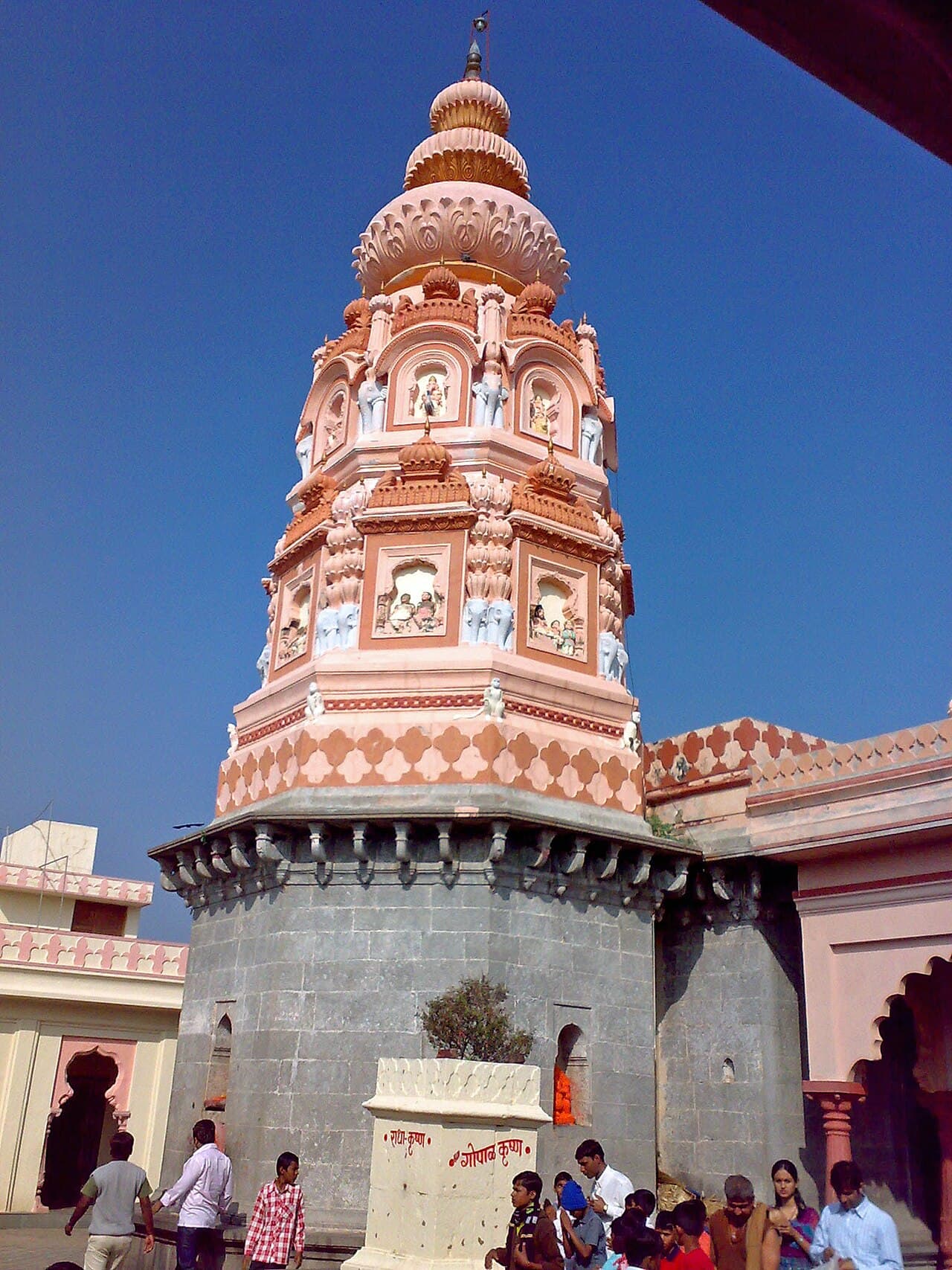
Mayureshwar, Morgaon
Morgaon, Pune, Maharashtra
The first and last bow of the Ashtavinayak yatra — where Ganesha, riding his peacock, slew the demon Sindhu at Morgaon on the Karha.
- 2~47 km aerial distance
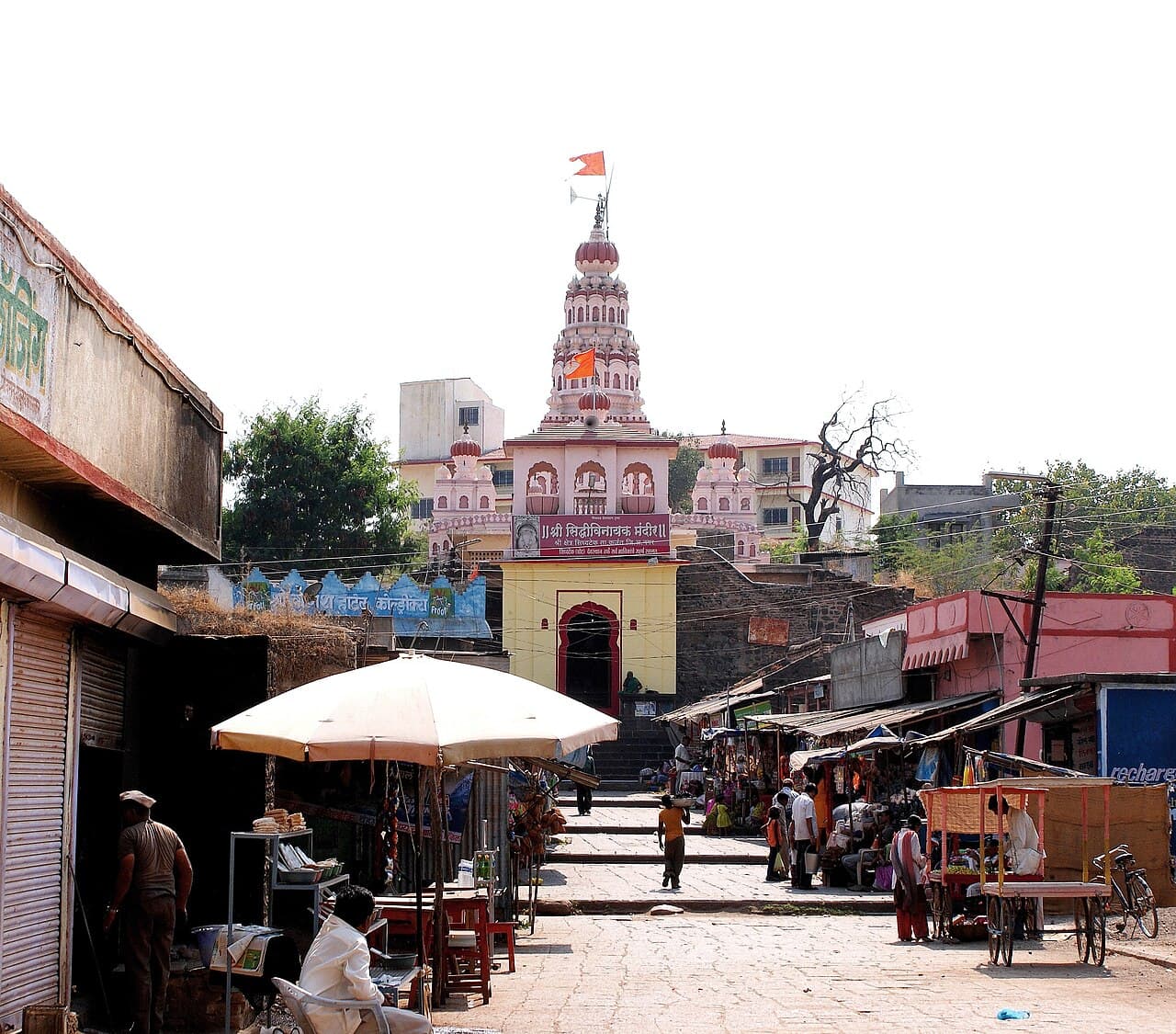
Siddhivinayak, Siddhatek
Siddhatek, Ahilyanagar, Maharashtra
The only right-trunked Ganesha of the eight — Siddhivinayak on a hill above the Bhima, the giver of siddhi, attainment.
- 3~159 km aerial distance
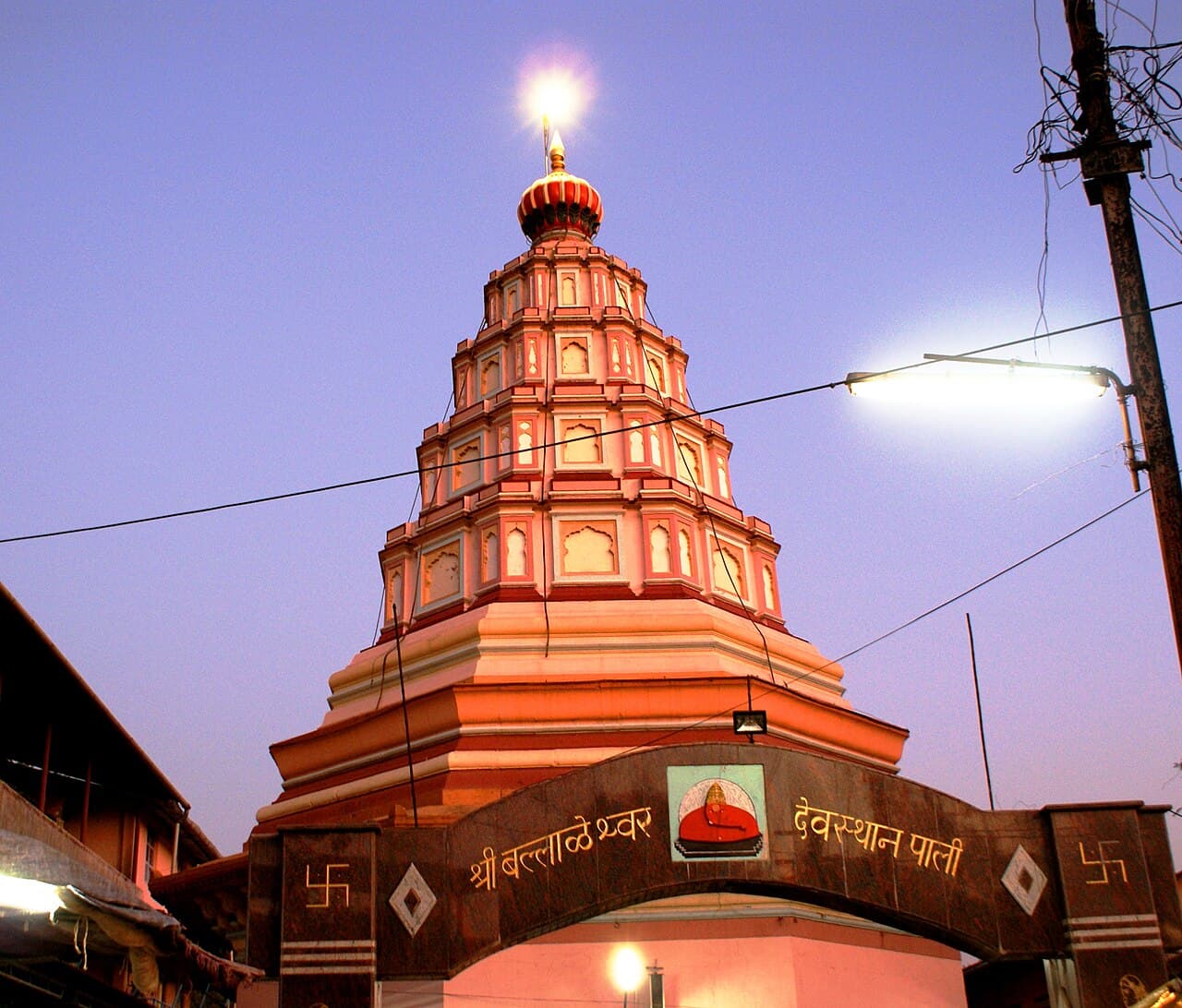
Ballaleshwar, Pali
Pali, Raigad, Maharashtra
The only Ashtavinayak named for a devotee — the child Ballal — set between Sarasgad fort and the Amba, its prasad the besan laddoo.
- 4~37 km aerial distance
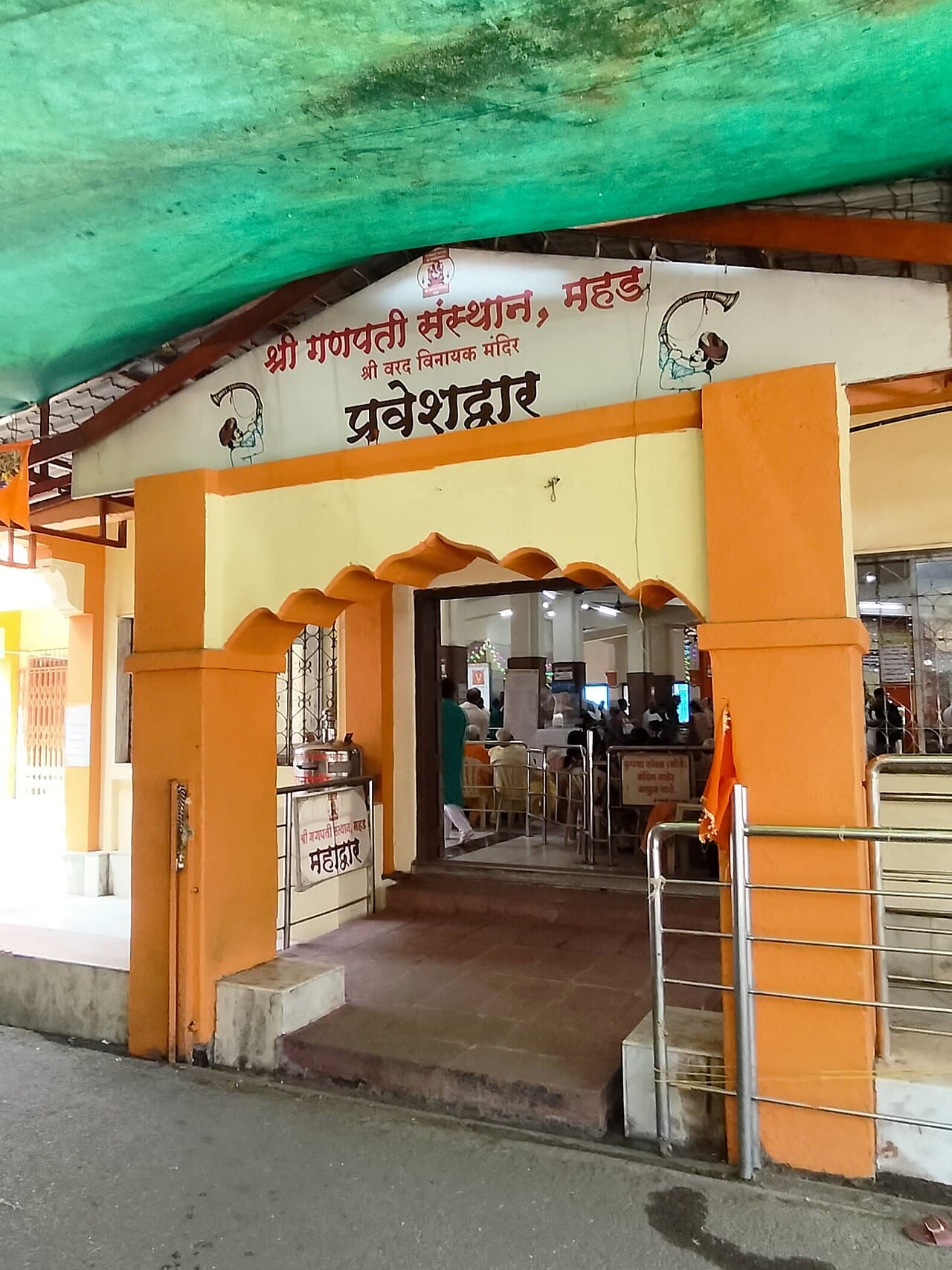
Varadvinayak, Mahad
Mahad, Raigad, Maharashtra
The boon-giver of the eight — Varadvinayak of Mahad village, where a Nandadeep lamp is said to have burned since 1892.
- 5~74 km aerial distance
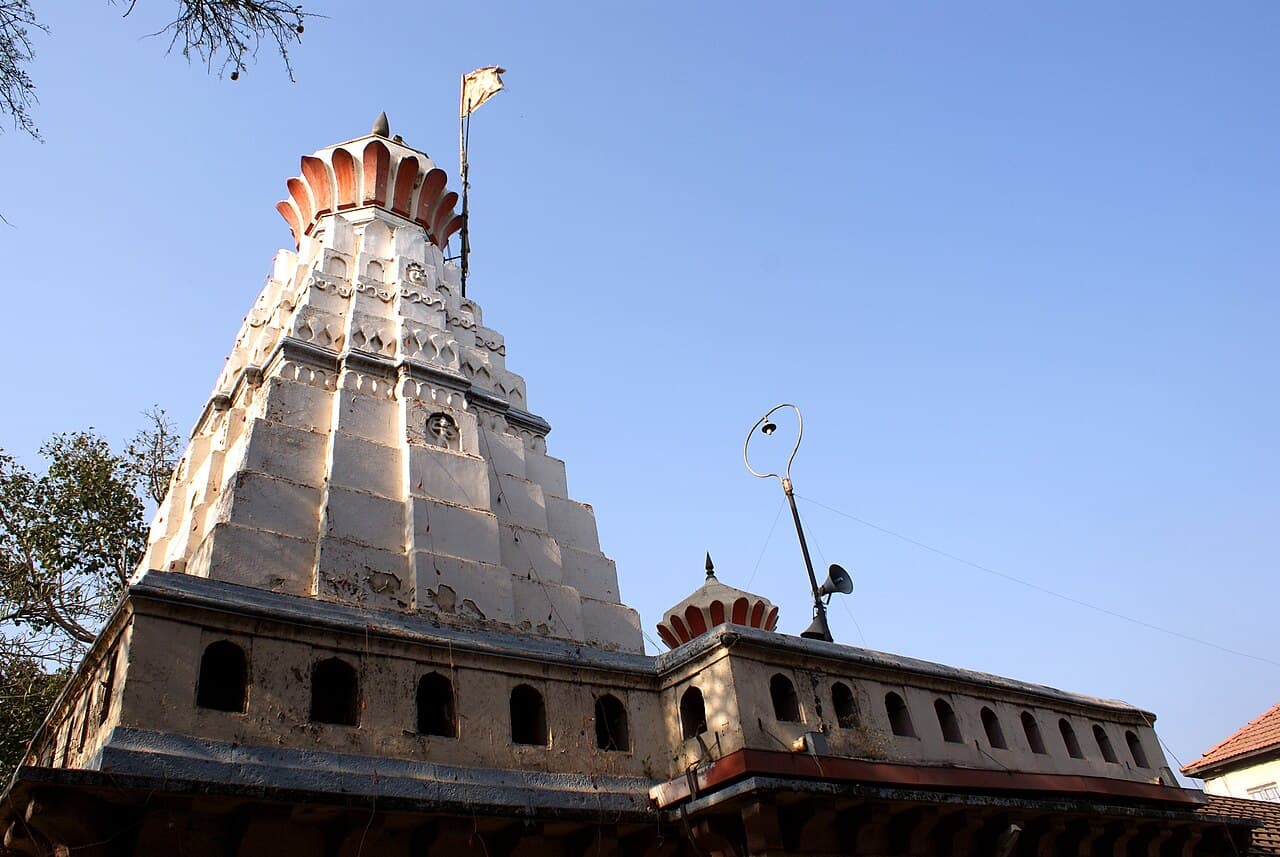
Chintamani, Theur
Theur, Pune, Maharashtra
The Ganesha who stills the restless mind — the fifth Ashtavinayak, on the river-meet at Theur and a cherished shrine of the Peshwas.
- 6~82 km aerial distance
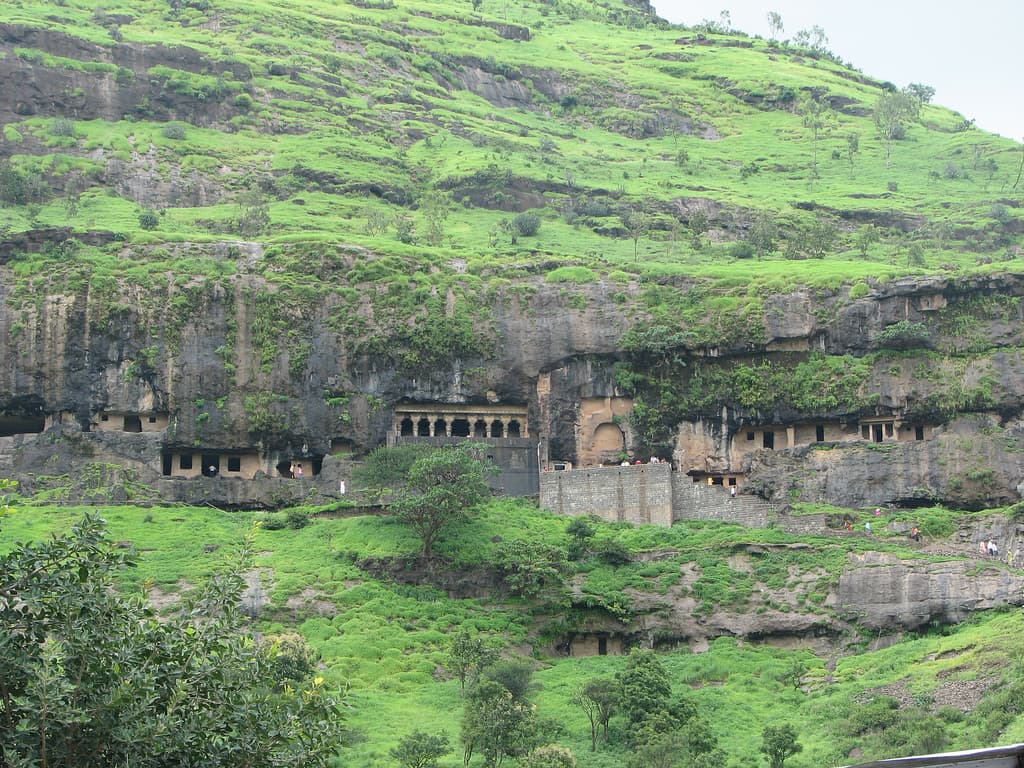
Girijatmaj, Lenyadri
Lenyadri, Pune, Maharashtra
The only hill-and-cave Ganesha of the eight — Girija's son, enshrined in an ancient rock-cut Buddhist vihara above the Kukadi.
- 7~10 km aerial distance
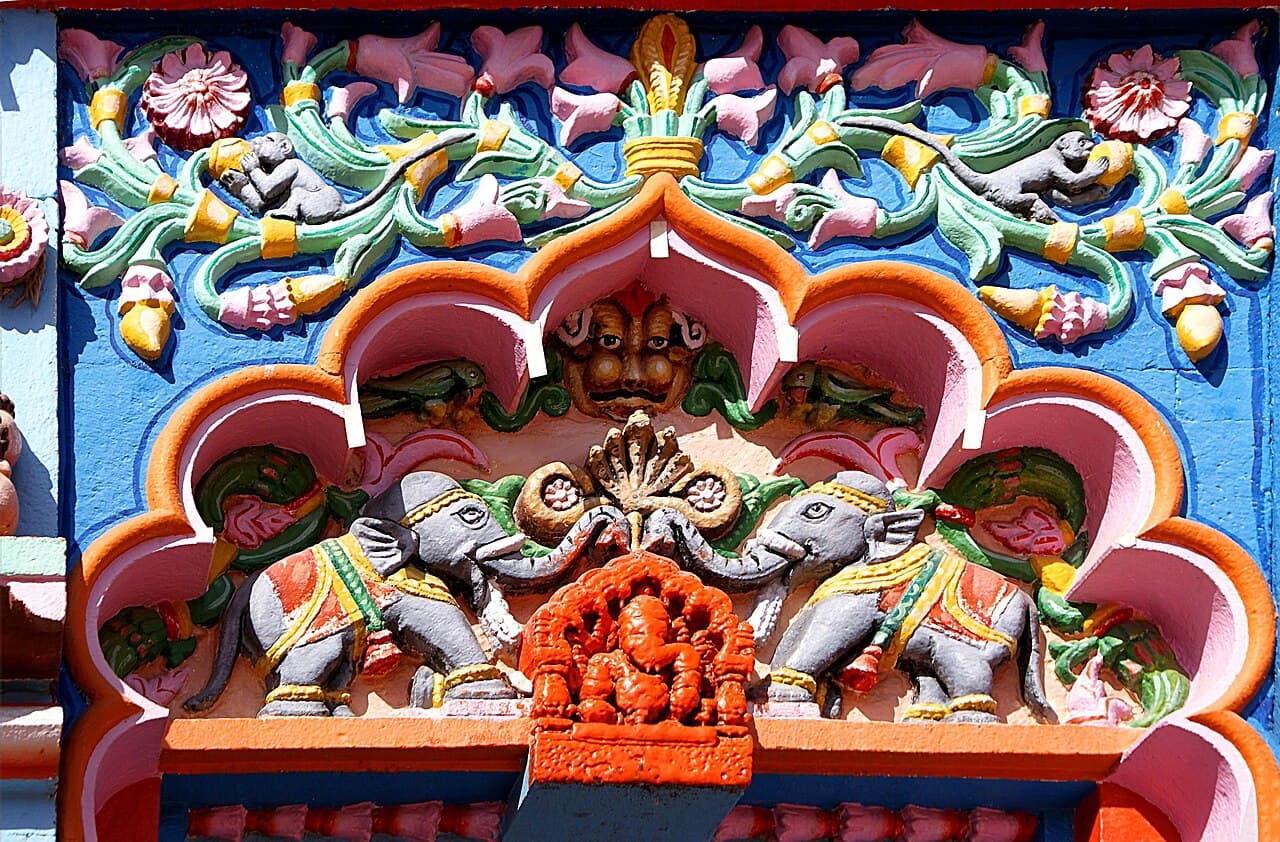
Vighnahar, Ozar
Ozar, Pune, Maharashtra
The remover of obstacles on the Kukadi — the golden-domed Ozar shrine where Ganesha subdued the demon Vighnasura.
- 8~57 km aerial distance
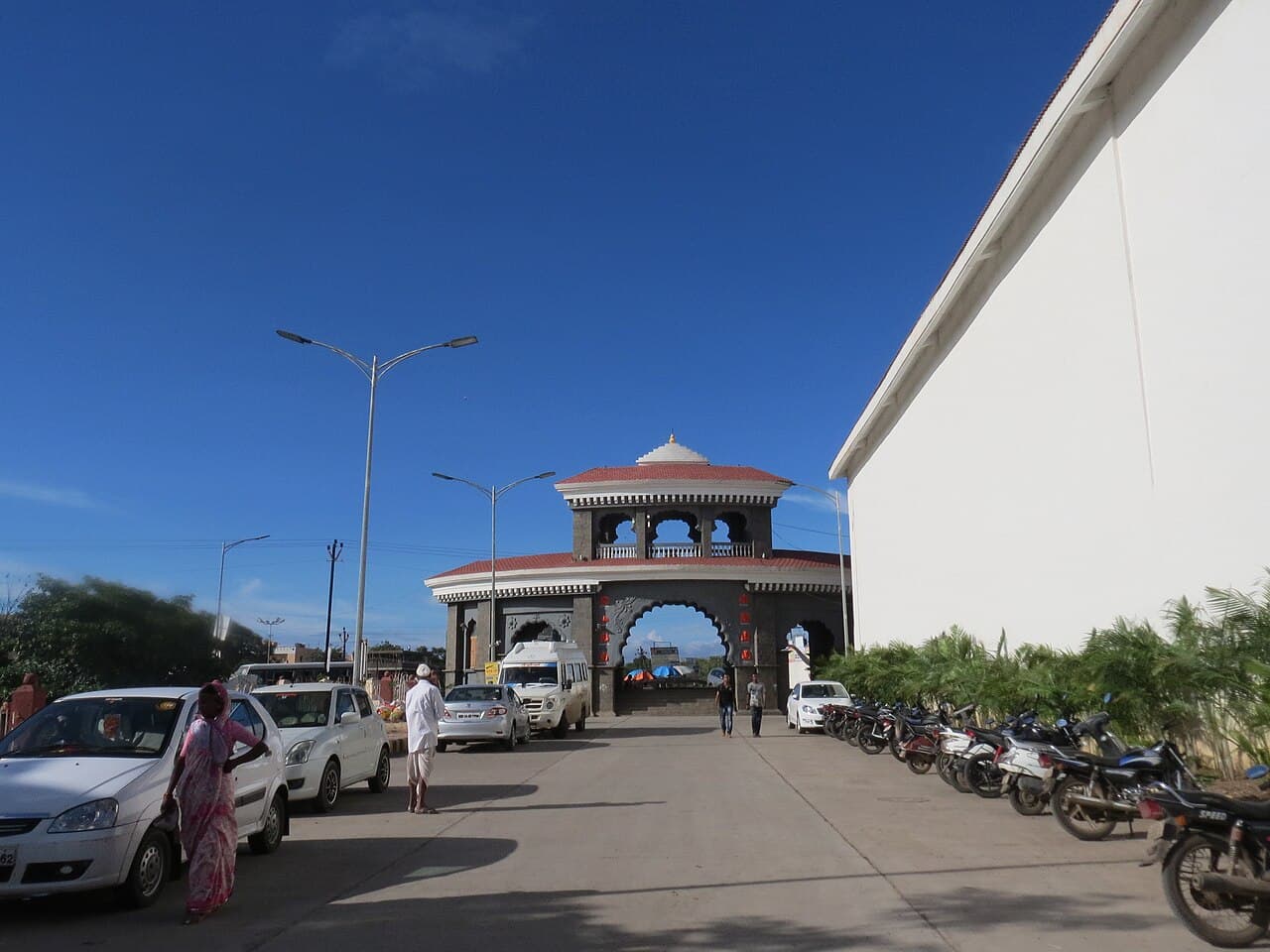
Mahaganapati, Ranjangaon
Ranjangaon, Pune, Maharashtra
The mightiest of the eight — the Ranjangaon shrine where Shiva himself invoked Ganesha before facing the demon Tripurasura.
Frequently Asked Questions
How many days does the Ashtavinayak yatra take?
Most pilgrims complete the circuit in two days by road from Pune, covering roughly 620–660 km in all — typically the eastern temples (Theur, Ranjangaon, Morgaon, Siddhatek) on one day and the Raigad and Junnar clusters (Pali, Mahad, Lenyadri, Ozar) on the other. A three-day itinerary is more relaxed, leaving time for aartis and the Lenyadri climb.
What is the correct Ashtavinayak darshan order?
The traditional sequence is Mayureshwar (Morgaon) → Siddhivinayak (Siddhatek) → Ballaleshwar (Pali) → Varadvinayak (Mahad) → Chintamani (Theur) → Girijatmaj (Lenyadri) → Vighnahar (Ozar) → Mahaganapati (Ranjangaon), followed by a return to Morgaon to complete the yatra. In practice, many pilgrims and tour operators reorder the temples by geography to save driving time, which is widely accepted — what matters most is darshan at all eight.
Where should the yatra start?
Traditionally at Morgaon, about 65–70 km south-east of Pune. Mayureshwar is regarded as the principal (adya) seat among the eight, and custom holds that the yatra both begins with his darshan and ends with a second darshan at the same temple. Pilgrims travelling from Mumbai often adapt the starting point for convenience, but the Morgaon-to-Morgaon circuit remains the traditional ideal.
Which is the best season for the yatra, and what about Ganesh Chaturthi?
August to February is the best window — post-monsoon greenery followed by cool, comfortable winter weather. Ganesh Chaturthi (August–September) is the most festive time, with special decorations and utsavs at all eight temples, but darshan queues run very long and hotels fill up; Maghi Ganesh Jayanti (January–February) is similarly busy. For unhurried darshan, choose weekdays outside the festival periods.
Can the yatra be done by public transport, or is a car needed?
A private car or taxi is the most practical option, since the temples are spread across three districts with rural connecting roads. MSRTC state buses do reach all eight temple towns via hubs like Pune, Daund, Khopoli and Junnar/Narayangaon, but connections take patience and usually stretch the yatra beyond three days. MSRTC and private operators also run popular two-day Ashtavinayak package tours from Pune and Mumbai.