
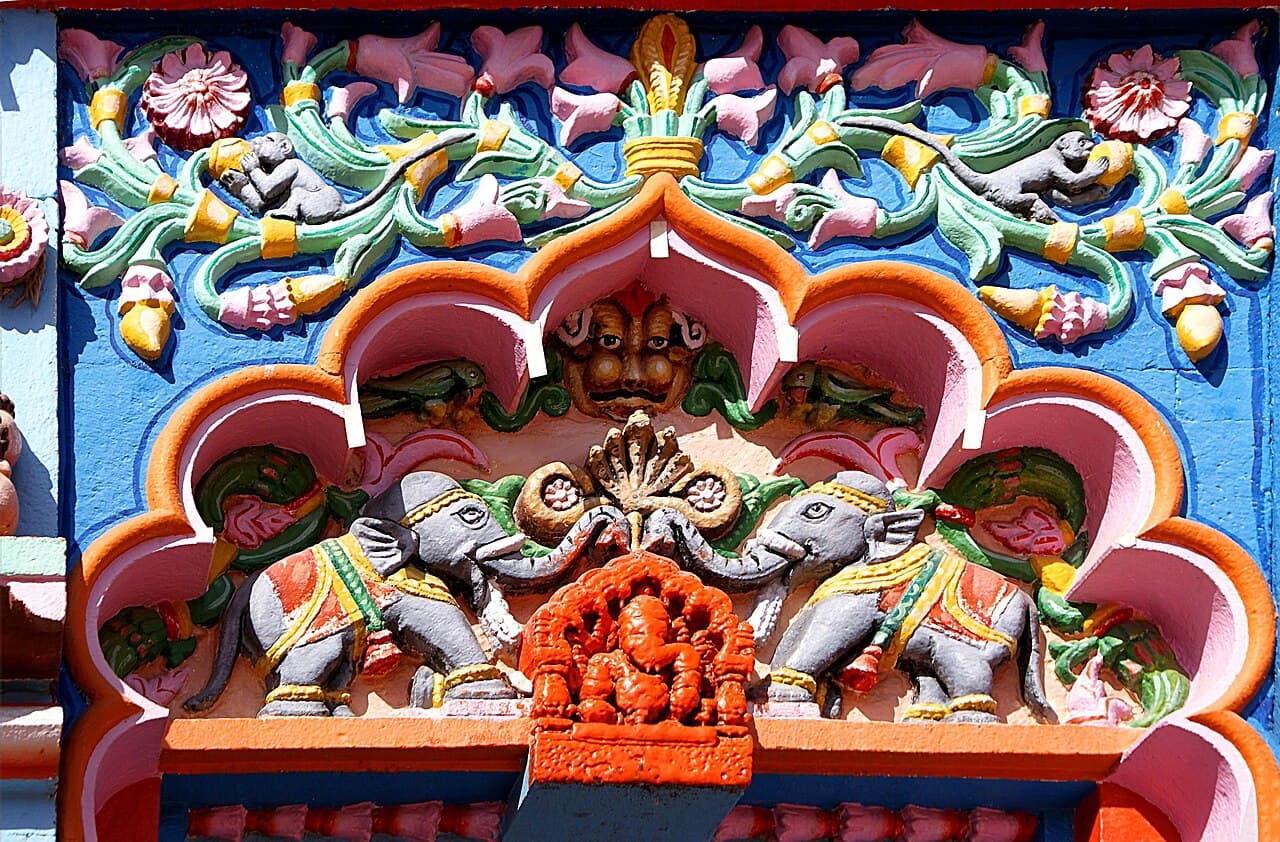
The remover of obstacles on the Kukadi — the golden-domed Ozar shrine where Ganesha subdued the demon Vighnasura.
- Deity
- Ganesha (Vighneshwar)
- Location
- Ozar, Pune, Maharashtra
- Category
- Ashtavinayaka
- Established
- Ancient shrine; golden dome attributed to Chimaji Appa (c. 1739); front hall renovated 1967
- Setting
- On the bank of the Kukadi river near Junnar, close to the Yedgaon dam
- Best Time to Visit
- October to February; and the five-day Kartik Poornima illumination
- Seventh shrine of the Ashtavinayak, on the Kukadi near Junnar
- Ganesha as Vighneshwar, who subdued the obstacle-demon Vighnasura
- The only Ashtavinayak crowned by a golden dome (Sonyacha Kalash)
- Swayambhu image, east-facing, with a left-curving trunk
- Consorts Riddhi and Siddhi flank the deity
- Golden spire attributed to Chimaji Appa after the fall of Vasai (1739)
- Set within high, fortified stone walls
Significance
To pray to Vighneshwar is to ask for the clearing of the path — the removal of the vighnas, the obstacles, that stand between a devotee and their purpose — and among the eight Ashtavinayak shrines Ozar is the one where that role is named most directly. Pilgrims come especially before new undertakings, from weddings to journeys to the start of a business.
The image is swayambhu and faces east, its trunk turned to the left, with a diamond set on the brow and jewels at the navel; brass figures of Ganesha's consorts Riddhi and Siddhi stand at either side. The temple's signature celebration falls at Kartik Poornima, when for five nights the deepmalas and the whole shrine are lit with thousands of oil lamps and the golden dome glows above the river — one of the loveliest sights on the entire circuit.
History
Ozar stands on the bank of the Kukadi river near Junnar, in the same green upland of Pune district as its neighbour Lenyadri, and here Ganesha is worshipped as Vighneshwar or Vighnahar — the Lord who removes obstacles. The tale the temple keeps is of a demon born of obstruction itself: when King Abhinandana's great sacrifice slighted Indra, the enraged god loosed a being named Vighnasura, who set about wrecking every rite and yajna across the land. Besieged, the sages turned to Ganesha, who fought and subdued the demon; Vighnasura, humbled, begged that he trouble the Lord's devotees no more and asked only that his name be joined to Ganesha's — and so the deity is Vighneshwar, master of obstacles.
The shrine's most famous feature, its gilded spire, belongs to the 18th century. It is traditionally attributed to Chimaji Appa, brother of the Peshwa Bajirao I, who is said to have plated the dome in gold after wresting the fort of Vasai (Bassein) from the Portuguese in 1739; a later renovation of the front hall, in 1967, is credited to the devotee Appa Shastri Joshi.
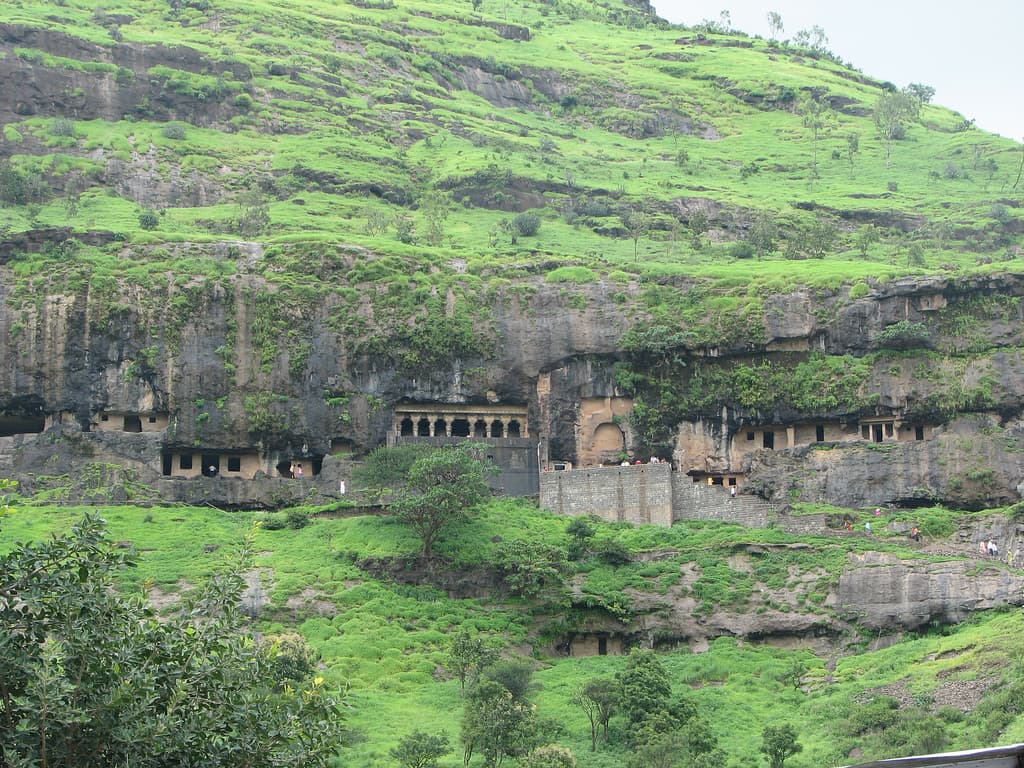
Ringed by high, fortified stone walls, the temple has the settled solidity of a place tended for centuries. The Kukadi valley around it, with the Yedgaon reservoir close by, is a gentle, well-watered stretch quite unlike the drier Deccan to the south, and Ozar is usually counted the seventh halt on the Ashtavinayak round, close enough to Lenyadri that pilgrims take the two together.
Architecture
Alone among the eight, Ozar is crowned by a golden dome and pinnacle — the Sonyacha Kalash — that catches the morning light above the sanctum. The temple stands within a courtyard enclosed by thick, fortified stone walls, entered through a grand gateway flanked by carved stone dvarapalas, the guardian figures, beneath a richly worked lintel; two tall deepmalas, the Deccan's stone lamp-towers, rise by the entrance.
Within are two halls in sequence — an outer hall some twenty feet high with three doorways, and an inner hall leading to the shrine — their walls carrying murals of Ganesha's legends and, at the sanctum, a later silver-framed doorway. The gilded shikhara aside, it is a temple built to endure, its fortifications a reminder of the uncertain centuries in which it grew.
Festivals
Timings
Open daily from about 5:00 AM to 11:00 PM, with no long afternoon break; the morning and evening aartis fall around 7:30 AM and 10:00 PM, and the temple opens earlier on Sankashti and Angaraki Chaturthi. Confirm current hours locally.
Ozar lies about 85 km north of Pune, up the Pune–Nashik highway to Narayangaon and then some eight kilometres on toward Junnar; Lenyadri is only a short drive away, so the two are almost always visited together as the sixth and seventh shrines of the circuit. The nearest major railhead and airport are both at Pune, around ninety kilometres to the south. Buses and taxis serve the town, and the temple sits close to the Kukadi and the Yedgaon dam.
Timings are indicative — please confirm with the temple trust before travelling.
Nearby Temples
Frequently Asked Questions
Where is Vighnahar, Ozar Temple located?+
Vighnahar, Ozar Temple is in Ozar, Pune, Maharashtra, India.
Which deity is worshipped at Vighnahar, Ozar Temple?+
Vighnahar, Ozar Temple is dedicated to Ganesha (Vighneshwar).
Which tradition does Vighnahar, Ozar belong to?+
Vighnahar, Ozar is one of the Ashtavinayaka temples dedicated to Ganesha.
What are the timings of Vighnahar, Ozar Temple?+
Open daily from about 5:00 AM to 11:00 PM, with no long afternoon break; the morning and evening aartis fall around 7:30 AM and 10:00 PM, and the temple opens earlier on Sankashti and Angaraki Chaturthi. Confirm current hours locally.
What is the best time to visit Vighnahar, Ozar Temple?+
October to February; and the five-day Kartik Poornima illumination
When was Vighnahar, Ozar Temple established?+
Vighnahar, Ozar Temple — Ancient shrine; golden dome attributed to Chimaji Appa (c. 1739); front hall renovated 1967.
Photo: Borayin Maitreya Larios · CC BY 2.0