More than five thousand years ago, Mathura trembled under the tyranny of King Kamsa. When a divine voice prophesied that the eighth child of his sister Devaki would destroy him, Kamsa threw Devaki and her husband Vasudeva into prison and killed each newborn as it arrived. Then, on the dark, storm-lashed midnight of Ashtami in the month of Bhadrapada, under the Rohini nakshatra, the eighth child was born — and the prison itself bowed to him. Locks fell open, chains slipped away, and the guards sank into deep sleep. Vasudeva placed the infant Krishna in a basket and carried him across the flooding Yamuna, the great serpent Shesha spreading his hoods as an umbrella against the rain, until he reached Gokul and laid the child in the care of Nanda Baba and Mother Yashoda. That midnight moment of divine birth is the heart of Janmashtami.
The festival recreates it hour by hour. Devotees fast through the day, temples are dressed in flowers and jhankis depicting Krishna's leelas, and the night passes in jagran — bhajans and kirtans building toward twelve o'clock. At the stroke of midnight, conches and bells announce the birth; the deity of Laddu Gopal receives abhishek with panchamrit, is dressed in new clothes, and is rocked gently in a decorated cradle as devotees sing “Nand ke anand bhayo, Jai Kanhaiya Lal ki.” Through the following days of Jhulan, the child Krishna swings in flower-decked jhulas. In Maharashtra the celebration spills onto the streets the next day as Dahi Handi, when teams of Govindas build swaying human pyramids to break a pot of curd hung high above — just as little Krishna once raided the butter pots of Gokul.
Two temples anchor this festival like no others. The Shri Krishna Janmabhoomi temple in Mathura stands upon the very prison cell where Krishna was born; on Janmashtami night, lakhs of pilgrims fill its courtyards for the midnight maha-abhishek, while nearby Vrindavan glows with celebrations at Banke Bihari and across the town. Far to the west, the Dwarkadhish temple in Dwarka honours Krishna as the king he became after leaving Mathura, celebrating his janmotsav with flag rituals, abhishek and night-long darshan. Between Mathura, where his story began, and Dwarka, where he reigned as Dwarkadhish, the festival traces the full arc of the Lord's earthly leela — which is why these two dhams are its beating heart.
Janmashtami in Mathura & Vrindavan
Mathura is where the story begins, and on Janmashtami night the city keeps its oldest appointment. Shri Krishna Janmabhoomi stands over the prison cell in which Devaki gave birth; the day there passes in kirtan and in jhankis that retell the leelas hour by hour, while lakhs of pilgrims move through the courtyards in a darshan queue that never quite ends. At midnight the Bhagavata Bhavan fills with conches and bells for the maha-abhishek — the deity bathed in panchamrit at the very hour of the birth, on the very ground where it is believed to have happened. In the old town nearby, the Dwarkadhish temple keeps the same vigil in its own style, and the Yamuna ghats stay awake until dawn.
Vrindavan answers with the rarest darshan in its calendar. By the temple's own tradition Banke Bihari ji is not woken for a daily Mangala Aarti — there is none on ordinary mornings — so the single Mangala Aarti of the whole year is the one performed at Janmashtami midnight, after the maha-abhishek. That makes it the most sought-after darshan of the night: the gates open into the small hours and the crowd flows through until morning. Around it the whole town keeps festival, Prem Mandir lit end to end and ISKCON's Krishna Balaram Mandir holding abhishek and kirtan through the night. Braj does not stop when the night does — the next day belongs to Nandotsav, celebrated at Nandgaon and across the villages as Nanda Baba once celebrated the news of a son, while Maharashtra, on that same day, breaks its Dahi Handi.
Shri Krishna Janmabhoomi, Mathura
The complex stands over the prison cell held to be Krishna's exact birthplace. Day-long jhankis and kirtan build towards the midnight maha-abhishek with panchamrit at Bhagavata Bhavan, witnessed by lakhs of pilgrims.
Banke Bihari — the year's only Mangala Aarti
Vrindavan's Banke Bihari temple holds no Mangala Aarti on ordinary days; the one Mangala Aarti of the year falls at Janmashtami midnight. Darshan runs through the night into the early morning — check the temple's official schedule before you travel.
Dwarkadhish Mathura & a town-wide Vrindavan
Mathura's old-town Dwarkadhish temple celebrates alongside the Janmabhoomi, while Vrindavan glows end to end — Prem Mandir illuminated, abhishek and kirtan at ISKCON's Krishna Balaram Mandir, and the Yamuna ghats busy until first light.
Nandotsav — the morning after
The day after the birth, Nandgaon and all of Braj keep Nandotsav — Nanda Baba's own celebration of his son's arrival — with sweets, colour and dancing. In Maharashtra that same day is Dahi Handi: Saturday, 5 September 2026.
Where to take darshan

Shri Krishna Janmabhoomi
Mathura, Uttar Pradesh
The temple complex over the prison cell in Mathura where Krishna was born at midnight — the heart of Braj and one of the holiest grounds of the Vaishnava world.
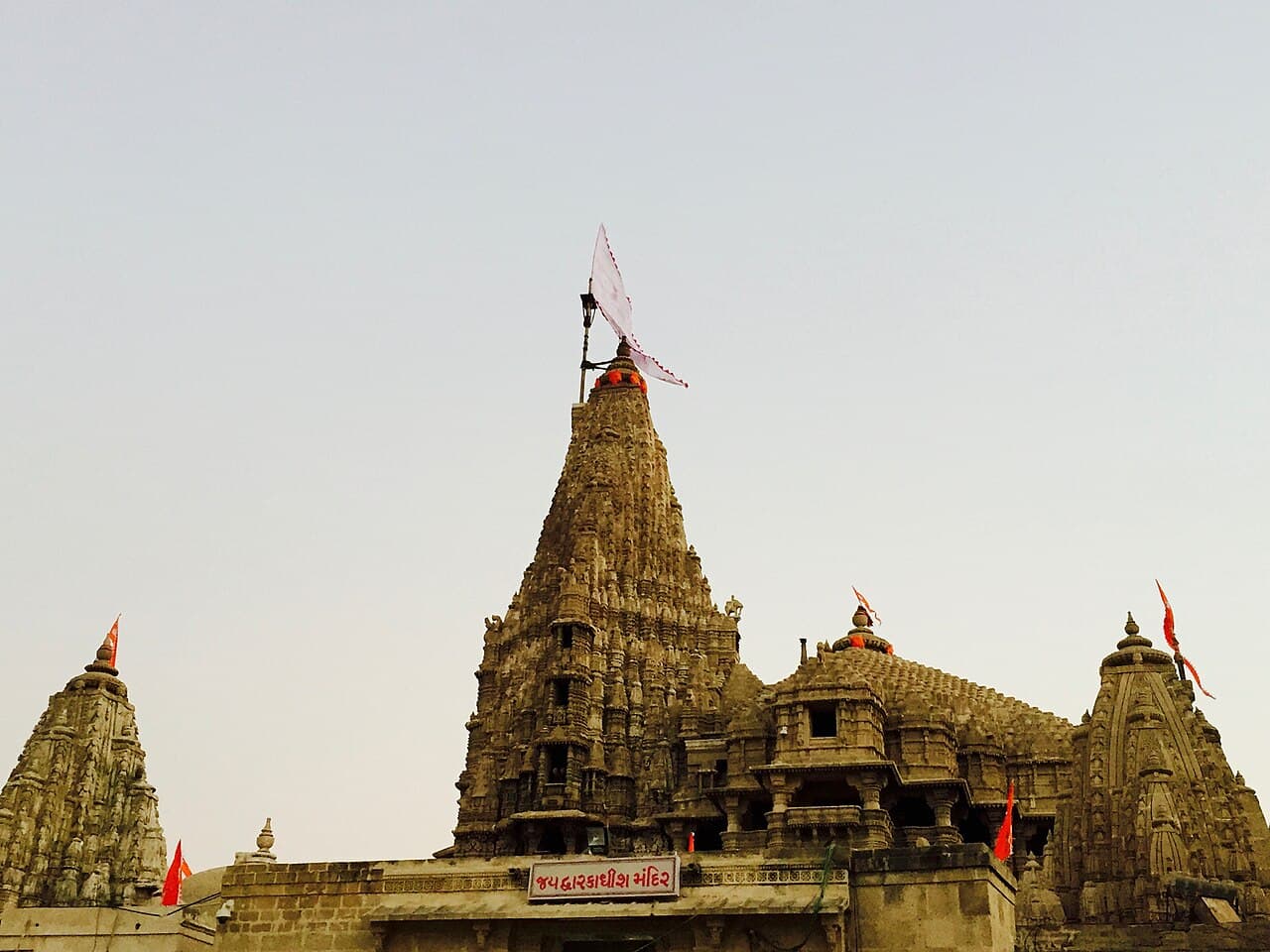
Dwarkadhish
Dwarka, Gujarat
Krishna's fabled sea-kingdom of Dwarka — the western seat of the Char Dham, rising in five storeys above the Gomti.
Frequently Asked Questions
When is Janmashtami in 2026?+
Krishna Janmashtami falls on Friday, 4 September 2026. The Nishita (midnight) puja muhurat is around 11:57 PM to 12:43 AM on the night of 4–5 September (Drik Panchang, New Delhi). In 2026, Smarta and ISKCON/Vaishnava calendars both observe the same day, 4 September, and Dahi Handi follows on Saturday, 5 September 2026.
Why is Janmashtami celebrated at midnight?+
According to the scriptures, Krishna was born at midnight — the Nishita kaal — on the Ashtami of Bhadrapada's dark fortnight, under the Rohini nakshatra, inside Kamsa's prison in Mathura. Devotees therefore fast through the day and keep vigil with bhajans until the stroke of twelve, when the birth is celebrated with abhishek, aarti and conch shells, recreating that sacred moment each year.
Where is Janmashtami celebrated most grandly?+
Mathura and Vrindavan, the land of Krishna's birth and childhood, host the grandest celebrations — above all at Shri Krishna Janmabhoomi and Vrindavan's Banke Bihari temple. Dwarka's Dwarkadhish temple in Gujarat celebrates its king's janmotsav with equal splendour. Mumbai and Maharashtra are famous for Dahi Handi, while ISKCON temples across India and the world hold massive abhishek and kirtan festivals.
What is Dahi Handi?+
Dahi Handi, celebrated mainly in Maharashtra the day after Janmashtami (Saturday, 5 September in 2026), re-enacts child Krishna's butter-stealing leelas. An earthen pot filled with curd, butter and prize money is strung high above the street, and teams of young Govindas climb onto each other's shoulders, building human pyramids several tiers tall, to break it as crowds cheer and drench them with water.
What happens at Krishna Janmabhoomi on Janmashtami?+
The Krishna Janmabhoomi temple in Mathura stands over the prison cell believed to be Krishna's exact birthplace. On Janmashtami, lakhs of devotees gather for darshan; the day passes in kirtan and jhankis, and at midnight the deity receives a grand maha-abhishek with panchamrit amid conches and bells, followed by shringar in new poshak, cradle ceremony and aarti at Bhagavata Bhavan.
What is special about Banke Bihari temple on Janmashtami?+
Banke Bihari in Vrindavan holds no Mangala Aarti on ordinary days — the only Mangala Aarti of the entire year is performed at midnight on Janmashtami, following the maha-abhishek. That single aarti is the most sought-after darshan of the night: the gates stay open through the night into the early morning and the crowds are immense. Check the temple's official schedule and plan your arrival well before midnight.