The mightiest of the eight — the Ranjangaon shrine where Shiva himself invoked Ganesha before facing the demon Tripurasura.
- Deity
- Ganesha (Mahaganapati)
- Location
- Ranjangaon, Pune, Maharashtra
- Category
- Ashtavinayaka
- Established
- Sanctum and basement by Madhavrao Peshwa (18th c.); older stonework of the 9th–10th-century style; later additions by Kibe, Holkar and Shinde
- Setting
- On the Pune–Ahmednagar road, northeast of Pune
- Best Time to Visit
- October to February; and the Ganesh festivals
- Eighth and final shrine of the Ashtavinayak before the return to Morgaon
- Worshipped as Mahaganapati, the mightiest of the eight forms
- Where Shiva is said to have invoked Ganesha before defeating Tripurasura
- East-facing swayambhu image between Riddhi and Siddhi; trunk turns left
- Aligned so the sun's rays fall on the deity (during the Dakshinayan)
- Stone sanctum built by Madhavrao Peshwa
- A hidden 'Mahotkat' idol is spoken of in legend, though trustees deny it
Significance
As the Great Ganapati, the deity of Ranjangaon is turned to when the obstacle is largest — the form whose worship steadied even Shiva before battle. It is the note of power on which the eight-temple journey ends, and for many the arrival here, after the seven shrines before it, is the emotional summit of the yatra.
The image faces east, seated cross-legged on a lotus between his consorts Riddhi and Siddhi, its trunk turned to the left; it is held swayambhu. Tradition tells of an original idol, called Mahotkat, hidden in a cellar beneath the shrine and said to have ten trunks and twenty arms — though the temple's own trustees say no such image exists, and it is best treated as legend rather than established fact. Whatever lies below, the Ganesha above is worshipped as the mightiest of the eight.
History
Ranjangaon lies on the old road from Pune toward Ahmednagar, and its Ganesha is Mahaganapati — the Great Ganapati, held to be the most powerful form among the eight. The temple's story reaches back to the gods themselves: when the demon Tripurasura, master of three flying cities, had grown all but invincible, even Shiva could not prevail until, at this spot, he first worshipped Ganesha to clear the obstacle before him. Honoured and invoked, Ganesha granted the strength by which Shiva destroyed the three cities and their lord — earning Shiva the name Tripurari, and giving the town he is said to have founded here, once called Manipur, its shrine.
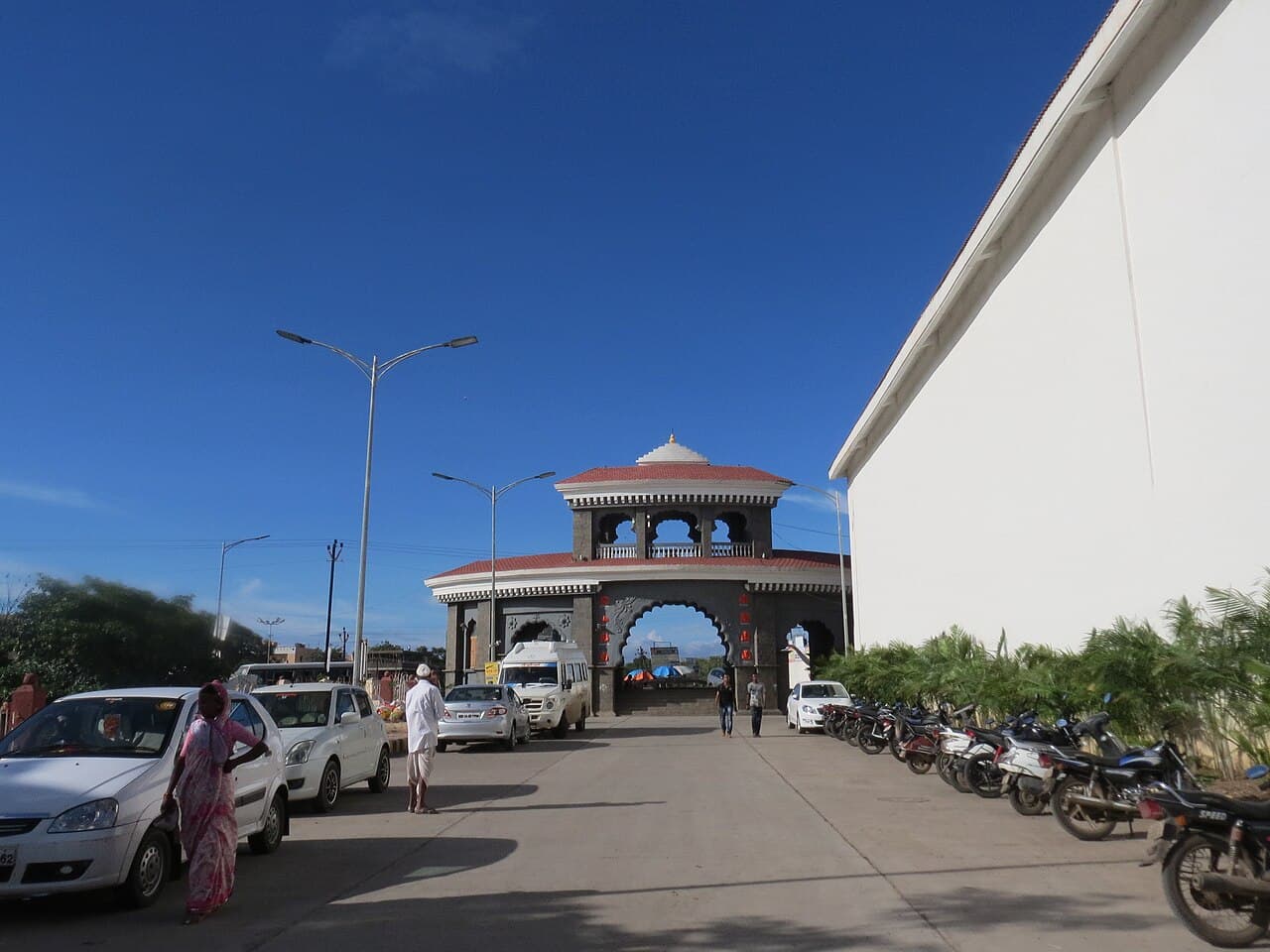
The visible temple is of the Peshwa age, though a founding in the 9th or 10th century is sometimes proposed from the style of its older stonework. Madhavrao Peshwa is credited with building the stone sanctum and a chamber beneath it, and later patrons — Sardar Kibe of Indore among them, with the Holkars and Shindes — added the surrounding hall and courtyard cells, with a Nagarkhana raised over the gate. The temple faces east down the old highway, and travellers have long broken their journey here between Pune and the Deccan.
Ranjangaon is usually the eighth and last of the Ashtavinayak shrines before the pilgrim returns to Morgaon to close the circuit, and its Mahaganapati is invoked above all for strength in the face of great difficulty.
Architecture
The temple is built so that, at certain times of the year, the rising sun sends its light straight onto the deity — an alignment sources tie to the sun's southward course, the Dakshinayan, rather than to the equinox of popular retelling. Its imposing main gateway is guarded by images of Jaya and Vijaya and topped by a Nagarkhana, the drum-chamber, with two tall deepmalas standing before it, kindled on festival nights.
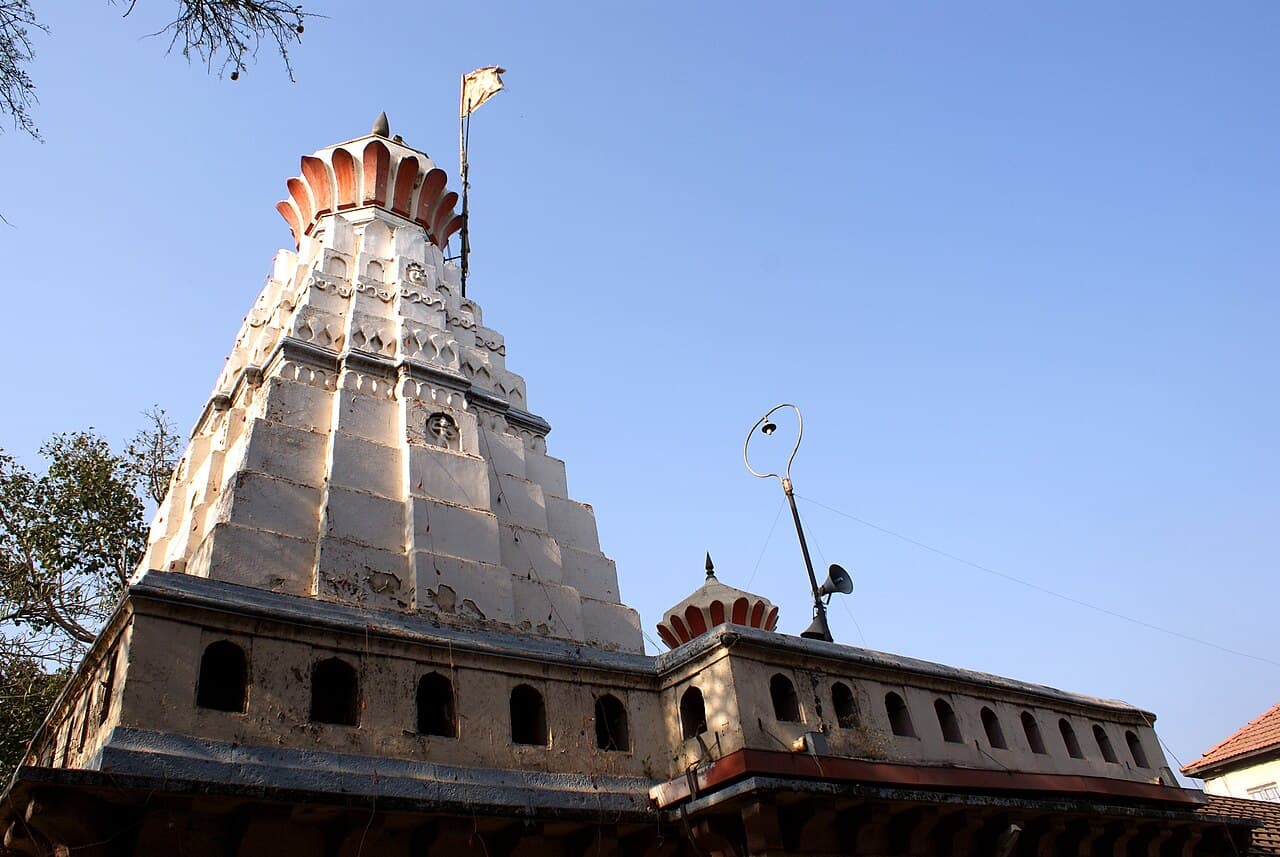
Within the courtyard, walls, cells (owaris) and lamp-towers frame a sanctum of sober Peshwa-era stonework raised over an older core. The proportions are broad and solid, fitting the temple's name — everything here is built on a great scale, as befits the Great Ganapati.
Festivals
Timings
Open daily from about 5:00 AM to 10:00 PM, from the morning abhishek to the evening Shej aarti, with longer hours on festival days. Confirm current timings locally.
Ranjangaon sits about 50 km northeast of Pune on the Pune–Ahmednagar highway, roughly an hour and a half by road through Koregaon Bhima and Shikrapur; state buses are frequent. The nearest railhead and airport are both at Pune. As the last of the eight shrines it is often reached at the end of a full Ashtavinayak circuit, before the closing return to Morgaon, but it is also an easy addition to a Pune itinerary for those not making the whole round.
Timings are indicative — please confirm with the temple trust before travelling.
Videos
Nearby Temples

Frequently Asked Questions
Where is Mahaganapati, Ranjangaon Temple located?+
Mahaganapati, Ranjangaon Temple is in Ranjangaon, Pune, Maharashtra, India.
Which deity is worshipped at Mahaganapati, Ranjangaon Temple?+
Mahaganapati, Ranjangaon Temple is dedicated to Ganesha (Mahaganapati).
Which tradition does Mahaganapati, Ranjangaon belong to?+
Mahaganapati, Ranjangaon is one of the Ashtavinayaka temples dedicated to Ganesha.
What are the timings of Mahaganapati, Ranjangaon Temple?+
Open daily from about 5:00 AM to 10:00 PM, from the morning abhishek to the evening Shej aarti, with longer hours on festival days. Confirm current timings locally.
What is the best time to visit Mahaganapati, Ranjangaon Temple?+
October to February; and the Ganesh festivals
When was Mahaganapati, Ranjangaon Temple established?+
Mahaganapati, Ranjangaon Temple — Sanctum and basement by Madhavrao Peshwa (18th c.); older stonework of the 9th–10th-century style; later additions by Kibe, Holkar and Shinde.
Photo: Booradleyp1 · CC BY-SA 4.0