
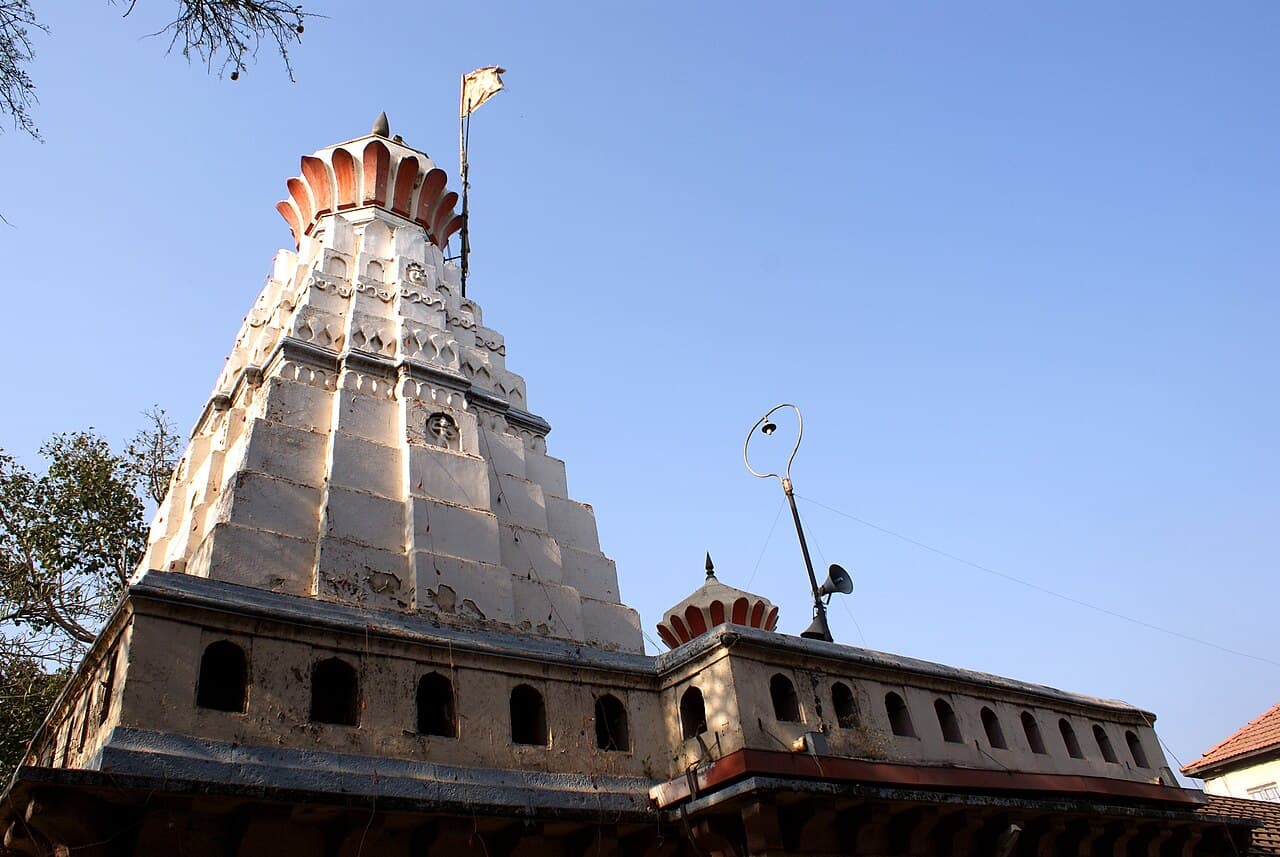
The Ganesha who stills the restless mind — the fifth Ashtavinayak, on the river-meet at Theur and a cherished shrine of the Peshwas.
- Deity
- Ganesha (Chintamani)
- Location
- Theur, Pune, Maharashtra
- Category
- Ashtavinayaka
- Established
- Inner shrine attributed to the Morya Gosavi line; hall and expansion by Madhavrao Peshwa (18th c.)
- Setting
- Near the Mula-Mutha's confluence with the Bhima, east of Pune
- Best Time to Visit
- August–September for Ganesh Chaturthi; and the cooler months, October to February
- Fifth shrine of the Ashtavinayak, the eight Ganesha temples around Pune
- Worshipped as the Ganesha who stills worry (chinta)
- Swayambhu image, seated and east-facing, with a left-curving trunk
- Tutelary deity of the Peshwa ruler Madhavrao I
- Madhavrao died at Theur in 1772; his queen Ramabai became sati here
- Wooden sabha-mandapa gifted by Madhavrao Peshwa
- Set near the meeting of the Mula-Mutha and Bhima rivers
Significance
Chintamani is the fifth halt on the Ashtavinayak yatra, the circuit of eight swayambhu Ganesha shrines around Pune that Maharashtrian pilgrims traditionally complete in a single loop, beginning and ending at Morgaon. Its name is also its promise: release from chinta, the gnawing worry that clouds the mind. Devotees come to lay their anxieties before the Lord and carry away a measure of the peace the jewel stands for.
The image is swayambhu — held to be self-arisen rather than sculpted — seated cross-legged and facing east, brow and body bright with sindoor and the eyes set with precious stones; like most of the Ashtavinayak Ganeshas, its trunk curves to the left. Smaller shrines to Shiva, to Vishnu with Lakshmi, and to Hanuman ring the sanctum, so that a single visit gathers several devotions into one. Set among old trees near the river, Theur is among the most visited of the eight, its quiet befitting the deity believed to quiet the heart.
History
Theur lies a little east of Pune, near where the Bhima gathers in the waters of the Mula-Mutha, and here Ganesha is worshipped as Chintamani — the one who restores the chintamani, the jewel of a settled mind. By the Mudgala Purana, a covetous prince named Guna seized the wish-granting Chintamani gem from the hermitage of the sage Kapila; Ganesha destroyed the thief and recovered the jewel, though Kapila, having tasted the Lord's presence, chose Ganesha over the gem itself. In an older telling it was Brahma who, his mind in turmoil, found his chinta stilled by meditating on Ganesha beneath the kadamba groves that once gave the place its name, Kadambanagar.
The shrine is ancient, but its living history is bound to the Ganapatya saint Morya Gosavi and his descendants, credited by tradition with the inner sanctum, and above all to the Peshwas. Madhavrao I, greatest of the Peshwa rulers, took Chintamani as his tutelary deity, endowed and enlarged the temple, and came here before and after his campaigns to sit in its calm.
It was at Theur that Madhavrao died in 1772, and his wife Ramabai became sati upon his pyre. The Peshwa wada beside the temple — once his residence — still houses the shrine's administration, and that braiding of statecraft with devotion gives Chintamani a singular place in Maharashtra's memory.
Architecture
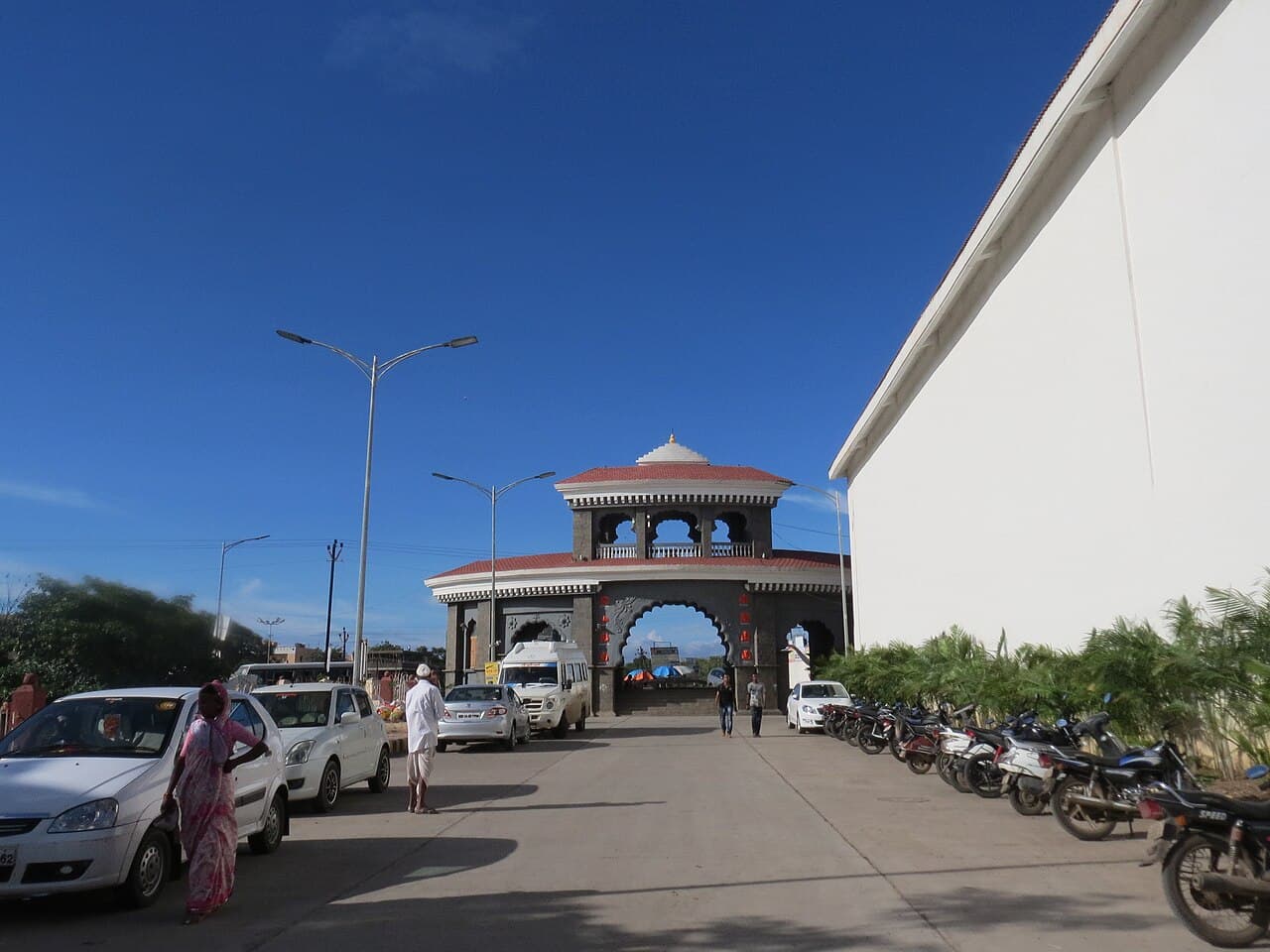
The temple is entered through a north-facing gateway, modest against the scale of the complex, while the deity within looks east. Its broad wooden sabha-mandapa — the assembly hall — was the gift of Madhavrao Peshwa, and a black-stone fountain once played inside it; a large bell hangs at the entrance and a ring of courtyard shrines completes the 18th-century Maratha ensemble.
The building favours the plain, durable stonework of its age over lavish ornament, valued less for carving than for the unbroken worship it has sheltered. Tall deepmalas, the stone lamp-towers of the Deccan, stand in the courtyard and are kindled on festival nights, and beyond the walls the Peshwa wada and the riverside ghats draw pilgrims to bathe before darshan.
Festivals
Timings
Open daily from about 5:00 AM to 10:00 PM, through the cycle of Kakad, Madhyan and Shej aartis; hours extend on Sankashti and Angaraki Chaturthi. Timings vary by source — confirm before travelling.
Theur lies about 25 km east of Pune. The usual approach runs along the Pune–Solapur highway to Loni Kalbhor and then some five kilometres north to the village; Loni Kalbhor is the nearest suburban railway halt, while Pune Junction (around 25 km) is the main railhead and Pune airport is roughly the same distance. State buses and taxis serve the temple, an easy day-trip from the city that many fold into a longer Ashtavinayak journey by road alongside Morgaon and Ranjangaon.
Timings are indicative — please confirm with the temple trust before travelling.
Nearby Temples
Frequently Asked Questions
Where is Chintamani, Theur Temple located?+
Chintamani, Theur Temple is in Theur, Pune, Maharashtra, India.
Which deity is worshipped at Chintamani, Theur Temple?+
Chintamani, Theur Temple is dedicated to Ganesha (Chintamani).
Which tradition does Chintamani, Theur belong to?+
Chintamani, Theur is one of the Ashtavinayaka temples dedicated to Ganesha.
What are the timings of Chintamani, Theur Temple?+
Open daily from about 5:00 AM to 10:00 PM, through the cycle of Kakad, Madhyan and Shej aartis; hours extend on Sankashti and Angaraki Chaturthi. Timings vary by source — confirm before travelling.
What is the best time to visit Chintamani, Theur Temple?+
August–September for Ganesh Chaturthi; and the cooler months, October to February
When was Chintamani, Theur Temple established?+
Chintamani, Theur Temple — Inner shrine attributed to the Morya Gosavi line; hall and expansion by Madhavrao Peshwa (18th c.).
Photo: Borayin Maitreya Larios · CC BY 2.0