
Devata
The shining ones, each sovereign in his own dham — Ayyappa of the eighteen steps, Brahma at Pushkar, Shani open to the sky, and Surya the visible god.
5 TemplesDeva is the shining one; the word itself is light. And devata is what a deva becomes to the one who worships him — not a power to be managed, but a lord to be approached. This tradition gathers the great gods of Bharat who keep their own dhams and are served on their own terms, each sovereign where he stands. Ayyappa is Hariharaputra, the son of Hari and of Hara, and no other lord is reached the way he is reached: by forty-one days of living differently before the first step of the road is walked. Brahma is Jagatpita, the father of the world, and his living worship beside the lake at Pushkar is among the rarest things this land keeps. Shani is Suryaputra, the son of the sun, and he is the judge who returns to a life exactly what that life has earned — a friend, as the trust that serves him at Shingnapur says in those very words, and not a foe. Surya is Pratyaksha Daivam, the visible god, the one among the great ones whom every eye on earth sees each morning. No lord named on this page stands in another's shadow, and no seat here is a lesser seat: what follows is each deva's own praise.
Sabarimala is Ayyappa's, and there the pilgrimage is itself the worship. He is Sree Dharma Sastha, born — as the Travancore Devaswom tells it — of Mohini and Shiva, laid on the bank of the Pampa and raised at Pandalam as Manikandan, for the golden chain at his throat; he cast Mahishi down at the Azhutha, came back riding a tiger, loosed an arrow that fell upon Sabari's hill and asked for a temple there, saying he would grace those who came after forty-one days of vratham. His shrine stands deep in forest ringed by eighteen hills, and no vehicle reaches it: the last stage is walked. The devotee takes the mala from a priest or from a Guru Swami who has climbed eighteen times, keeps the mandala vratham in black cloth and simple celibate living, and on the eve of setting out binds the irumudi — ghee poured into a coconut drained of its water, attachment out and longing in. Without it none may set foot on the pathinettam padi, the eighteen steps sheathed in panchaloha, read as the senses and the gunas, as vidya and avidya. Over the whole of it stands the Devaswom's own declaration for the shrine: Tatvamasi, thou art that. On that road every pilgrim, of whatever caste or creed, is addressed only as Ayyappa and as Swami.
Brahma is the creator, and at Pushkar he is Jagatpita, worshipped as the father of the world. Rajasthan's tourism department carries the shrine's origin back some two thousand years and gives the standing structure to the fourteenth century, remembering Adi Shankara among its renovators; within the sanctum stands the chaturmukhi image, four-faced, with Gayatri beside him, and the red shikhara with its hamsa can be seen from a distance across the valley. Its inner sanctum is kept, as the Ministry of Tourism records, by priests of the sanyasi order, and devotees have studded its marble floor and walls with silver coins bearing their names. Rajasthan calls it the only temple in the world dedicated to Lord Brahma; the Ministry states it more carefully — there are only a few Brahma temples in the world, and this is the oldest among them — and the careful sentence is the more astonishing one, for of the Trimurti it is the creator whose living worship is rarest, and here it has never stopped. Below the temple lies the water the scriptures call Tirtha Raj, king of all pilgrimage, ringed by fifty-two bathing ghats; Savitri keeps the hillock behind, and on Kartik Purnima the fair fills the town while pilgrims bathe in the lake before they climb the steps.
Shani is the son of Surya and the lord of consequence, and Shingnapur is where he is served without a wall between him and the sky. The trust that keeps him states his nature plainly: he is the judge of our thoughts, he gives the fruits of one's karma, he gives happiness and sorrow in proportion to what was done — and he is to be understood as a friend, not as a foe. His murti is swayambhu, a black stone the trust gives as about five feet nine inches high, which came to the village in a flood some three and a half centuries ago, caught in the branches of a berry tree, and moved only when a maternal uncle and his nephew carried it, as he had asked in a dream. Over him there is no roof at all, and none has ever held: he does not live in the shade of anything. The village keeps his sayings as four — there is God, but no temple; a home, but no door; a tree, but no shade; fear, but no enemy — and the second is the custom Shingnapur is known for, houses left doorless in his keeping, which the trust and the villagers alike ascribe to his own wish. Oil is what is offered, poured over the stone by the boxful and the quintal. Saturday is his day, kept with fasting by the elders of the village, and Shani Amavasya and Shani Jayanti bring lakhs.
Surya is worshipped in Bharat before any temple was raised for him, and he is the one god of whom no image is finally needed — Pratyaksha Daivam, the visible god, seen and not merely believed. At Arasavalli on the Kalinga coast, a kilometre east of Srikakulam, he is Suryanarayana Swamy: the Devasthanam holds that Sage Kasyapa installed him for the welfare of mankind and that Indra raised the shrine and dug the Indra Pushkarini with his vajra, while the temple's inscriptions are read to Devendra Varma, ruler of the Kalinga kingdom, in the later seventh century, with his successors' grants before the eleventh endowing perpetual lamps and a school for students of the sastras and the Vedas. The Lord stands with his consorts Usha, Chhaya and Padmini, Mathara and Pingala at his feet, Sanaka and Sanandana above holding the umbrellas and Aruna driving the chariot — all carved from one block of finely polished black granite — and the shrine is built so that twice a year, in the early hours, the rays pass the five gateways to fall on the feet of the image and stay a few minutes. Five deities stand here together, Aditya, Ambika, Vishnu, Ganesha and Maheswara, on the temple's own teaching that God is one and that there is no difference between Siva and Kesava. Far to the north, at Deo in Bihar's Aurangabad district, the same Lord is worshipped at sunrise and at sunset alike beneath a tower a hundred feet high crowned like an umbrella, which the district gives to the fifteenth century and to Bhairavendra Singh, a Chandravanshi king of Umga, while the custom of bathing in its Brahma Kund is carried back to the era of King Ayel. At Chhath the kunds and the ghats fill, and arghya is given first to the setting sun and then, before dawn, to the rising.
The Pilgrimage Circuit
There is no circuit here, and there cannot be one: these are not stations of a single journey but sovereign seats, each sought on its own terms and in its own season. Sabarimala is walked to, and only in the months its doors stand open — the Mandala–Makaravilakku season above all — after the forty-one days have been kept. Pushkar is a bath in the Tirtha Raj and then the climb to the red shikhara, and Kartik Purnima is its great gathering. Shingnapur is a Saturday and a measure of oil under a sky that never closes over the Lord. Arasavalli is a Sunday, a dip in the Indra Pushkarini and the early hour, with Ratha Saptami above all. Deo is Chhath, when the Surya Kund and the ghats fill and arghya is given to the setting sun and again to the rising. What binds these dhams is not a road but a recognition — that each of these lords is complete where he stands, and that a devotee who has come to one of them has not come to a part of something else.
Devata Temples
See all on the map →A hand-researched beginning, not a full count — more great temples of this tradition are added as our research completes.

Sabarimala Sree Dharma Sastha
Sabarimala, Pathanamthitta, Kerala
Hari and Hara's son on a forest hill reached only on foot — where forty-one days of vratham and the irumudi on the head earn the eighteen golden steps.

Suryanarayana Swamy, Arasavalli
Arasavalli, Srikakulam, Andhra Pradesh
Surya as Suryanarayana Swamy at Arasavalli — the Pratyaksha Daivam, the visible god, cut with his consorts from one block of black granite, where twice a year the early light comes through five gates to rest on his feet.

Jagatpita Brahma Mandir, Pushkar
Pushkar, Ajmer, Rajasthan
Brahma the Creator as Jagatpita, father of the worlds — four-faced in marble beside the lotus lake tradition says he made, in one of the very few living Brahma shrines of Bharat, under a red shikhara marked with the hamsa.

Shani Shingnapur
Shingnapur, Ahilyanagar, Maharashtra
Shani, the just lord of karma, at Shingnapur on the Deccan plain — a self-manifest black stone on an open platform, with no roof between the deity and the sky, in a village whose houses keep no doors.
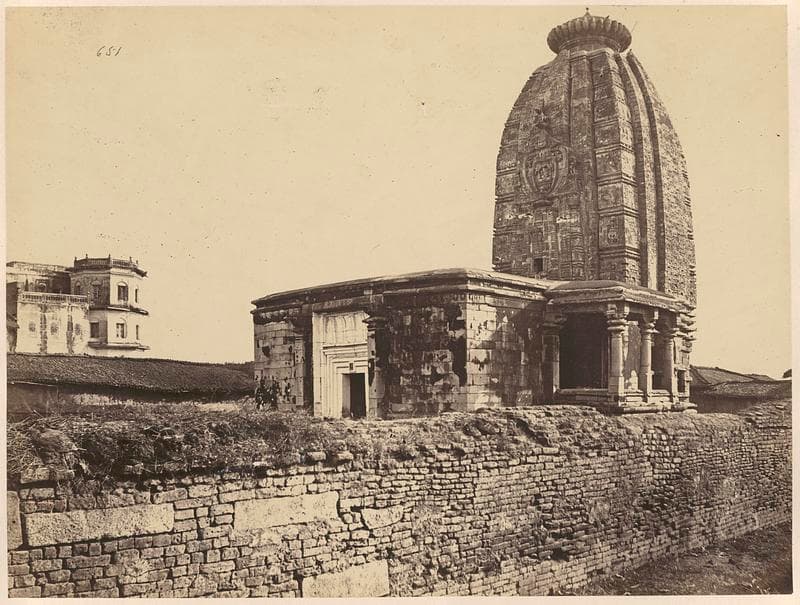
Deo Surya Mandir
Deo, Aurangabad, Bihar
The Sun temple that turns to the setting sun — Surya's seat at Deo in Bihar's Aurangabad district, where a hundred feet of shikhara stands over a west-facing door and Chhath fills the kunds twice a year.
Frequently Asked Questions
Which temples belong to the Devata tradition?+
The dhams of the great devas who keep their own seats across Bharat — Sabarimala Sree Dharma Sastha in the Kerala forest, where Ayyappa is worshipped as the son of Hari and Hara; the Jagatpita Brahma Mandir beside the lake at Pushkar in Rajasthan; Shani at Shingnapur in Maharashtra, under an open sky; and Surya at Arasavalli on the Kalinga coast of Andhra Pradesh and at Deo in Bihar's Aurangabad district. Devata is the oldest word for them all — deva, the shining one — and it is used here in its plain sense: each of these lords is sovereign in his own dham, served with his own vratam, his own day of the week and his own festival. More are added as the research completes: the devas keep their seats the length of Bharat, and no listing of their dhams is ever finished.
Who is Ayyappa, and why does Sabarimala stand in this tradition?+
Ayyappa is Sree Dharma Sastha, Hariharaputra — the son of Hari and of Hara, born of Mohini and Shiva as the Travancore Devaswom tells it, and worshipped at Sabarimala as Naishtika Brahmachari, in unbroken celibacy. He belongs to both his fathers' houses and is contained by neither: his worship carries its own discipline end to end — the forty-one-day mandala vratham, the irumudi that alone opens the eighteen steps, the ghee of the devotee's own coconut poured at the neyyabhishekam, and Harivarasanam sung as the lamps go out. MereMandir therefore lists him where he is sovereign, in his own dham, rather than under Vishnu or under Shiva.
Is the Brahma temple at Pushkar the only one in the world?+
It is the oldest and the greatest of the very few. Rajasthan's tourism department calls it the only temple in the world dedicated to Lord Brahma; the Ministry of Tourism puts it more precisely — there are only a few Brahma temples in the world, and this temple is the oldest among them — adding that for the longest period Pushkar's was believed to be the world's only one. Either way the point holds: of the Trimurti it is the creator whose living worship is rarest, and at Pushkar it has never stopped. The sanctum holds the four-faced image with Gayatri beside him, the red shikhara carries the hamsa, Savitri keeps the hillock behind the temple, and the lake below is ringed by fifty-two bathing ghats.
Is Shani to be feared?+
The trust that serves him at Shingnapur answers in its own words: God Shani is to be understood as a friend and not as a foe. He is the son of Surya and the judge of what a life has actually done — he gives the fruits of one's karma and gives happiness and sorrow in proportion to it — so what a devotee brings before him is not a remedy but an honest reckoning. His worship is plain: oil poured over the swayambhu black stone, which stands on an open platform with no roof at all, because, as Shingnapur's own saying has it, here there is God but no temple. Saturday is his day, kept with fasting by the elders of that village, and Shani Amavasya and Shani Jayanti bring the year's greatest gatherings.
When is the best time to seek darshan at these dhams?+
Each keeps its own reckoning. Sabarimala is not open through the year: the Mandala kaalam runs forty-one days from the first of Vrishchikam, Makaravilakku follows at Makara Sankranti, and the shrine otherwise opens for the first days of each Malayalam month, for Vishu and for the ten-day Painkuni utsavam of Meenam. Pushkar's great day is Kartik Purnima, when the fair fills the town and pilgrims bathe in the lake before the darshan. Shingnapur fills every Saturday of the year and overflows on Shani Amavasya and Shani Jayanti. Arasavalli keeps Sunday as Surya's own day and Ratha Saptami — the seventh of the bright fortnight of Magha, kept there as the Lord's birthday — as its greatest, while twice a year, in the early hours, the rays reach the feet of the image through the five gateways and stay a few minutes. Deo's day is Chhath, on the sixth of Kartik's bright fortnight, when arghya is given to the setting sun and again at dawn to the rising. October to March is the kindest weather at the northern and Deccan seats.