
Temples in Madhya Pradesh
3 Temples*
A hand-researched beginning, not a full count — more great temples of this state are added as our research completes.
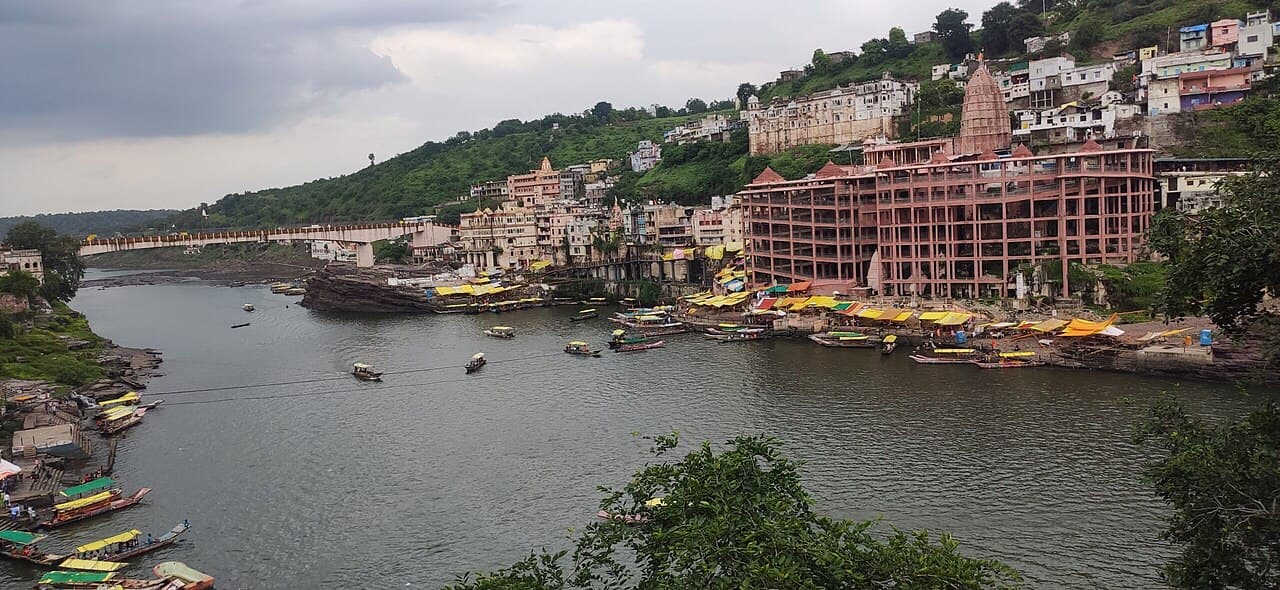
Madhya Pradesh lies at the heart of Bharat, and two of the twelve Jyotirlingas stand in its western half, on two sacred rivers. At Ujjain on the Kshipra — one of the seven Mokshapuris, and long a seat of learning whose meridian once measured time for this land — Shiva is Mahakal, the Lord of Time, and the city reveres him as its own sovereign; by old custom no other king was to pass the night within it, for Mahakal alone reigns there. His linga is swayambhu, self-manifested, and dakshinamukhi, the only one of the twelve to face south; alone among them he is woken each dawn with the Bhasma Aarti, bathed in sacred ash before the sun rises, for which devotees book their place weeks ahead. In Sawan he is carried through his streets in the royal Sawari processions, and every twelfth year the Simhastha Kumbh brings the multitudes to bathe in the Kshipra. Southward, in the Narmada valley, the river parts around Mandhata island, whose shape is said to trace the syllable ॐ, and there Omkareshwar is worshipped as the lord of the Om sound — together with Mamleshwar on the southern bank, for neither shrine alone is the whole and a full darshan crosses the Narmada. The island is a great station of the Narmada Parikrama, and at nightfall the lamps of the Narmada aarti go down the dark water.
Far to the east, where the Vindhyan hills lift above the plains at Maihar, Sharda Mata keeps the Trikuta hill — Sharda who is Saraswati, goddess of learning, and to this town simply Maihar Devi. The name itself is read as mai-haar, the Mother's necklace, from the tradition that Sati's necklace fell here — the tradition by which Maihar honours its hill as a Peetha of the Devi. The climb is reckoned at 1,063 steps by the state's tourism department and at 1,001 by the district, and a ropeway carries up those who cannot walk it; at the foot of the hill stands the akhara of Alha and Udal, the Bundelkhand warrior-brothers whom tradition names her first devotees, and Maihar still tells that Alha, granted deathlessness, takes the first darshan — that when the doors are opened in the Brahma Muhurta the worship is found already done. This is also the town where Ustad Allauddin Khan founded the Maihar gharana, whose music passed on to Pandit Ravi Shankar and Ustad Ali Akbar Khan. The geography is honest about itself. Ujjain and Omkareshwar lie about 140 kilometres apart and make one journey, Indore's Devi Ahilyabai Holkar airport being roughly 55 kilometres from Ujjain and 80 from Omkareshwar, with Ujjain's own junction barely two kilometres from Mahakal's gate. Maihar is some 600 kilometres east of them — a separate journey, and best made by rail: the town has its own station on the Katni–Satna main line with Satna Junction about 35 kilometres off, while the nearest airfields are Jabalpur, about 160 kilometres away, and Khajuraho, about 140.
Jyotirlinga
New to this tradition? Read the overview →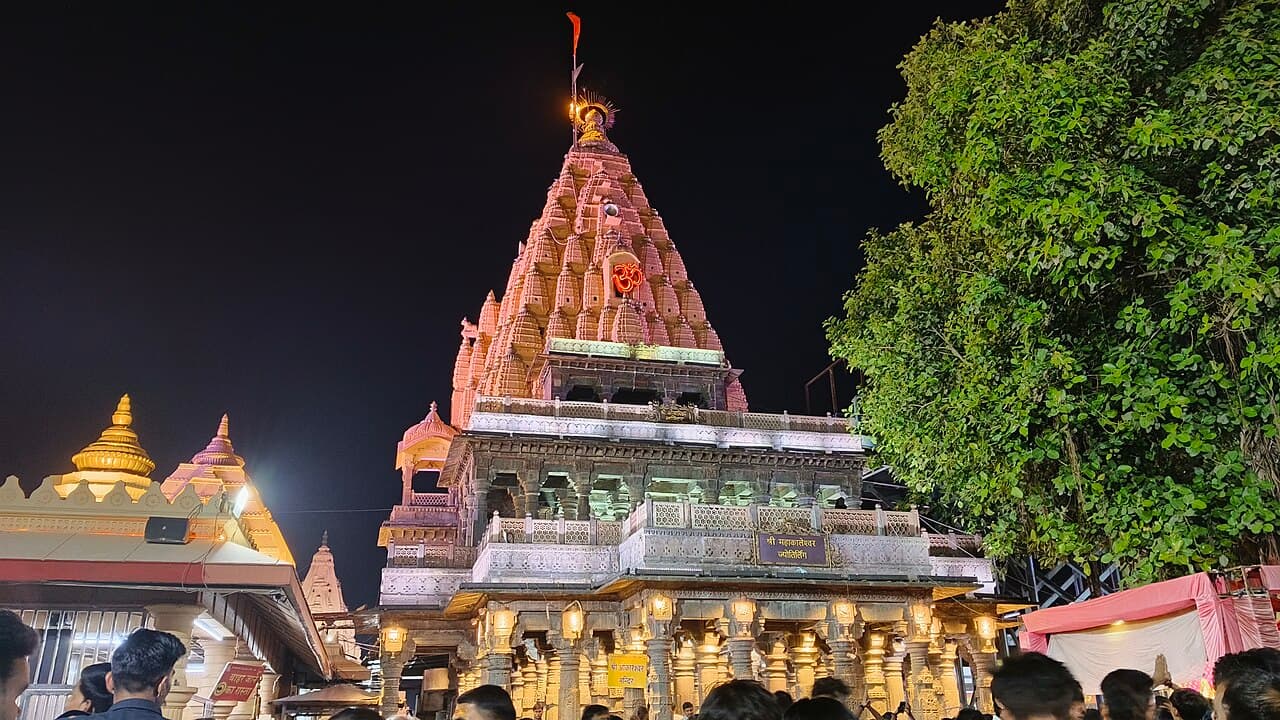

Frequently Asked Questions
How many major temples are listed in Madhya Pradesh on MereMandir?+
Three — Mahakaleshwar at Ujjain on the Kshipra, Omkareshwar on Mandhata island in the Narmada, and Maa Sharda on the Trikuta hill at Maihar in the east. Between them they cover two of the traditions on MereMandir: two of the twelve Jyotirlingas — Mahakal, the south-facing swayambhu Lord of Time whom Ujjain reveres as its sovereign, and the lord of the Om sound on his island, worshipped together with Mamleshwar across the river — and a Devi seat where Sharda, who is Saraswati, keeps her hill above the Vindhyan plains.
Which Jyotirlingas are in Madhya Pradesh?+
Two of the twelve. Mahakaleshwar at Ujjain is the only one that faces south — dakshinamukhi, towards the direction of Yama — its lingam swayambhu rather than ritually installed, and the only Jyotirlinga woken each dawn with the Bhasma Aarti. Omkareshwar stands on Mandhata island in the Narmada, whose shape is said to trace the syllable ॐ, and is unique in being worshipped as a pair: Omkareshwar on the island and Mamleshwar on the southern bank are counted the single Jyotirlinga, so a complete darshan crosses the river. Maa Sharda at Maihar belongs to the Devi tradition rather than to the twelve.
Can Madhya Pradesh's temples be covered in one trip?+
Honestly, no — they make two journeys, and it is better to plan them that way. Ujjain and Omkareshwar lie about 140 kilometres apart in the west, both within easy reach of Indore's Devi Ahilyabai Holkar airport — roughly 55 kilometres to Ujjain, about 80 to Omkareshwar — and Ujjain's junction is barely two kilometres from Mahakal's gate; two or three days cover the pair with time for the Narmada ghats. Maihar lies some 600 kilometres east in the Vindhyan uplands and is best reached by rail, having its own station on the Katni–Satna main line with Satna Junction about 35 kilometres away; by air the nearest fields are Jabalpur, about 160 kilometres off, and Khajuraho, about 140. Pilgrims usually take Maihar with an eastern circuit rather than with Ujjain.
What is the best season to visit temples in Madhya Pradesh?+
October to March, before the heat of the uplands builds. The great days follow the tithis: Maha Shivaratri at both Jyotirlingas; the whole month of Sawan at Ujjain, when Mahakal is carried through the city in the royal Sawari processions; Nag Panchami, the single day of the year the Nagchandreshwar shrine above Mahakal's sanctum is opened; Narmada Jayanti and Kartik Purnima on the ghats at Omkareshwar; and both Navratras, Chaitra and Ashwin, at Maihar, when the fair fills the town and the steps are thronged from before dawn. Every twelfth year the Simhastha Kumbh gathers the multitudes to the Kshipra at Ujjain.