
Temples in Uttar Pradesh
12 Temples*
A hand-researched beginning, not a full count — more great temples of this state are added as our research completes.
If Bharat's sacred geography has a heartland, it is Uttar Pradesh. Varanasi — Kashi, often called the world's oldest living city — holds Kashi Vishwanath, the Jyotirlinga of Shiva as lord of the universe, its corridor now opening the sanctum directly to the Ganga ghats; beside it stand Annapurna, the goddess who feeds Kashi, and Kaal Bhairav, the Kotwal of the city, without whose leave a Kashi yatra is held incomplete. Downstream at Vindhyachal, where the Vindhya hills meet the Ganga, the goddess Vindhyavasini is worshipped as the ever-present Adi Shakti; the Devi tradition holds that she chose this spot as her eternal abode. And it is in Uttar Pradesh that the janmabhoomi tradition — worship at the very birthplace of the divine — finds its two greatest expressions: Shri Ram Janmabhoomi at Ayodhya, where Ram Lalla was enshrined in the grand new mandir in January 2024, and Shri Krishna Janmabhoomi at Mathura.
Around Mathura opens Braj, the land of Krishna's childhood, and it carries the largest share of the state's temples: Dwarkadhish in Mathura's old town near Vishram Ghat; Banke Bihari and Rangji in Vrindavan, about 11 kilometres away; and Gokul across the Yamuna, where the infant Krishna was raised. The whole state sorts itself into two unhurried journeys. In the east, Kashi Vishwanath, Annapurna and Kaal Bhairav lie within a walk of one another in Varanasi's old lanes, Vindhyavasini is barely 70 kilometres off — so Varanasi and Vindhyachal are almost always done as one trip, many pilgrims adding Prayagraj in between — and Ayodhya, about 200 kilometres from Varanasi, joins the same eastern circuit. In the west, Mathura, Vrindavan and Gokul sit on the Delhi–Agra corridor and are covered together as the Braj yatra. Between the Ganga's ghats, the Vindhya hills, the birthplaces of Ram and Krishna and the whole of Braj, Uttar Pradesh compresses much of Sanatan Dharma's living history into a single state.
Jyotirlinga
New to this tradition? Read the overview →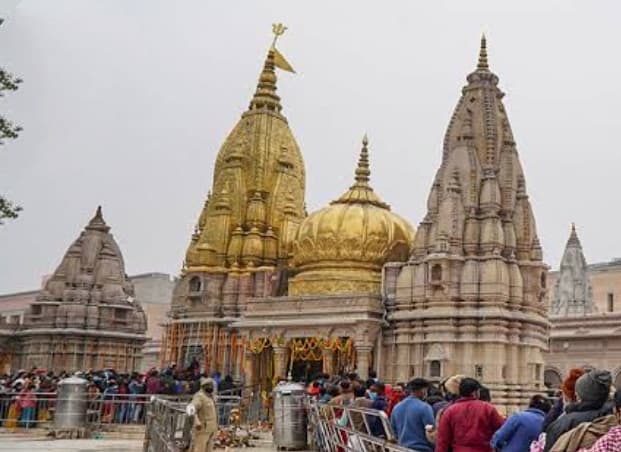
Shakti Peethas
New to this tradition? Read the overview →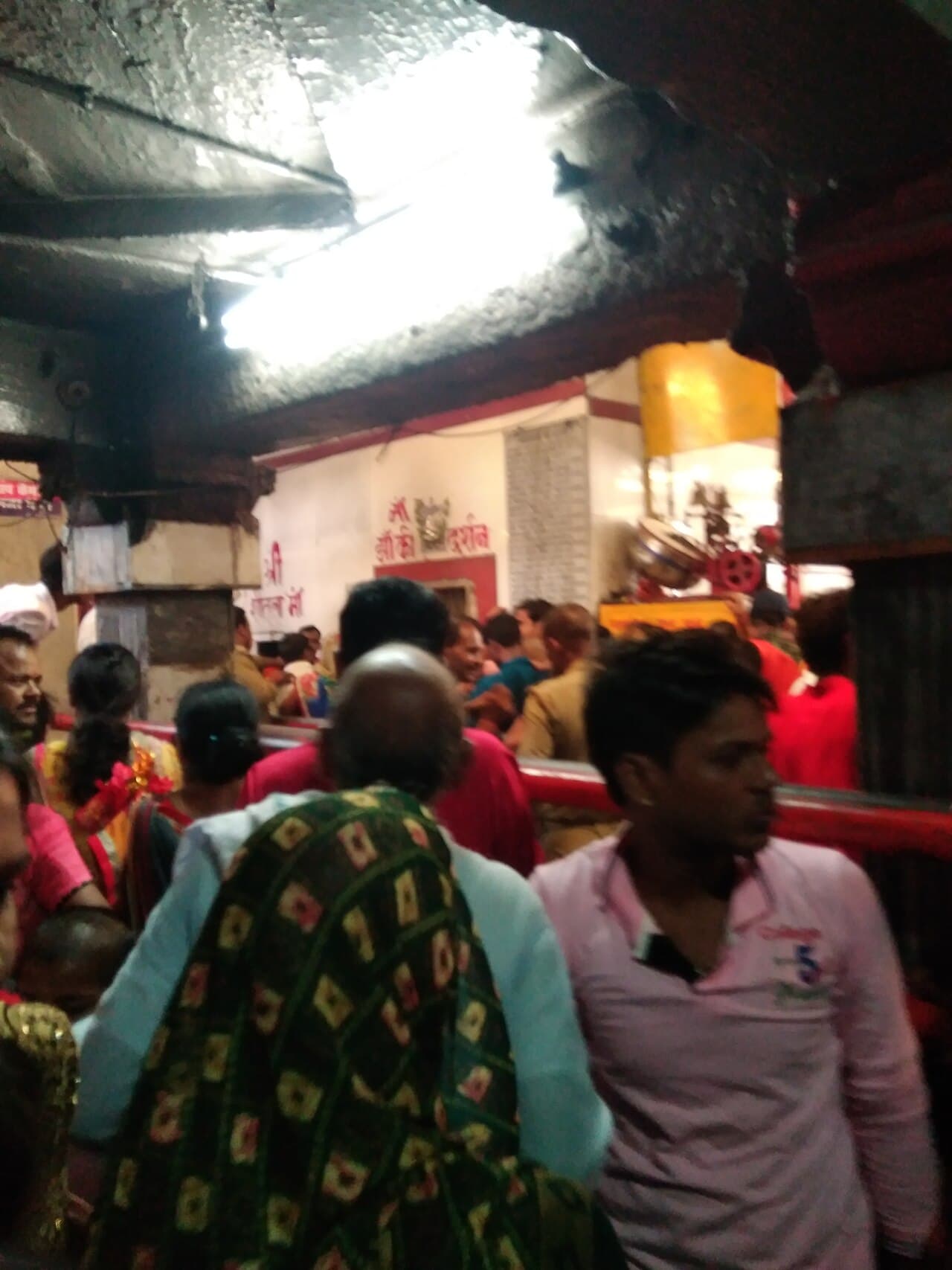
Janmabhoomi
New to this tradition? Read the overview →
Shri Ram Janmabhoomi (Ram Lalla)
Ayodhya, Uttar Pradesh
The grand new temple over Rama's birthplace on the Sarayu — consecrated in January 2024, where the Lord is worshipped as the child Ram Lalla.

Shri Krishna Janmabhoomi
Mathura, Uttar Pradesh
The temple complex over the prison cell in Mathura where Krishna was born at midnight — the heart of Braj and one of the holiest grounds of the Vaishnava world.
Vishnu Desam
New to this tradition? Read the overview →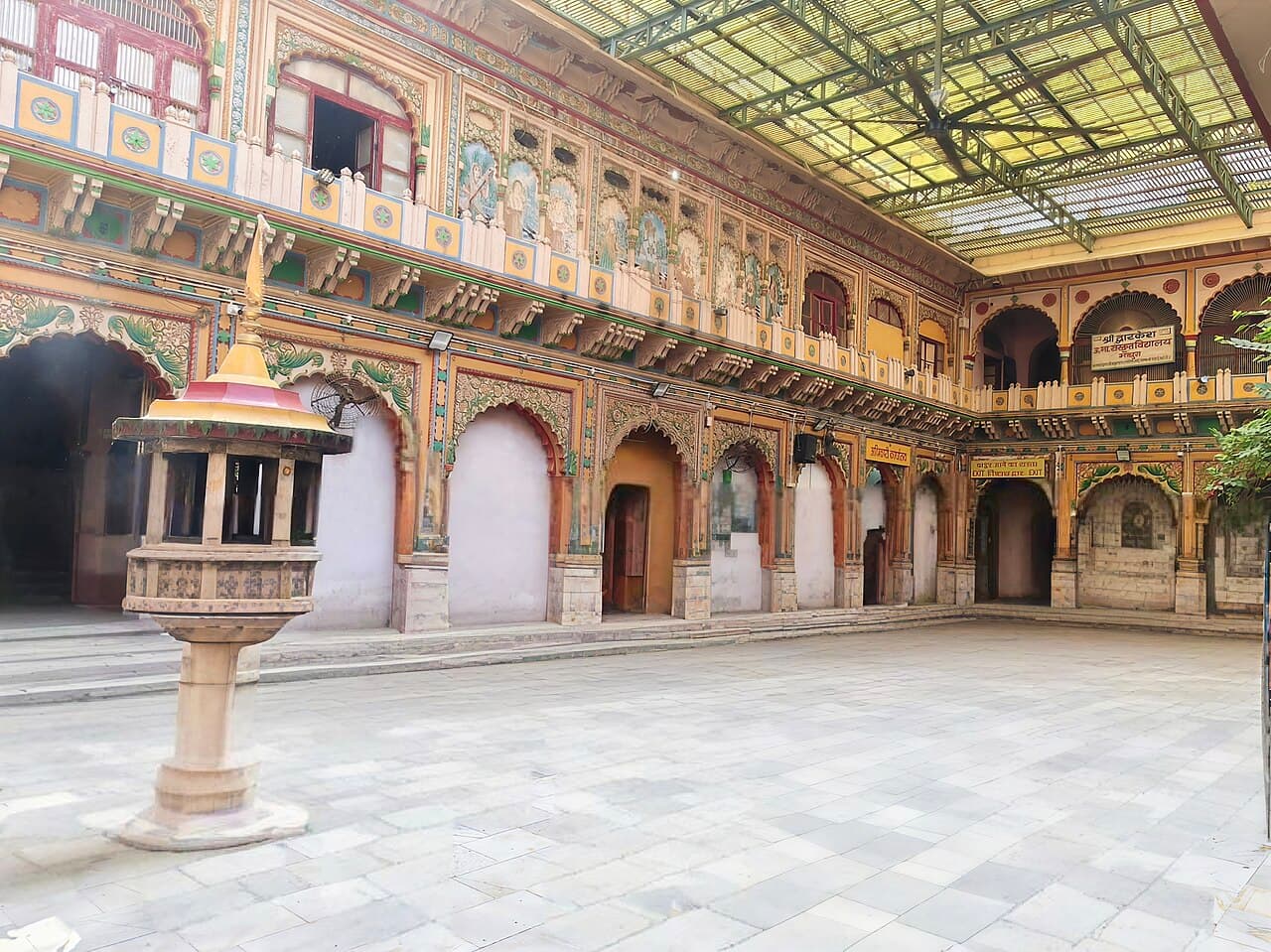
Shri Dwarkadhish, Mathura
Mathura, Uttar Pradesh
Krishna kept as a king in a merchant's mansion — the Pushtimarg haveli above Mathura's Vishram Ghat, where the doors open eight times a day and not once between.
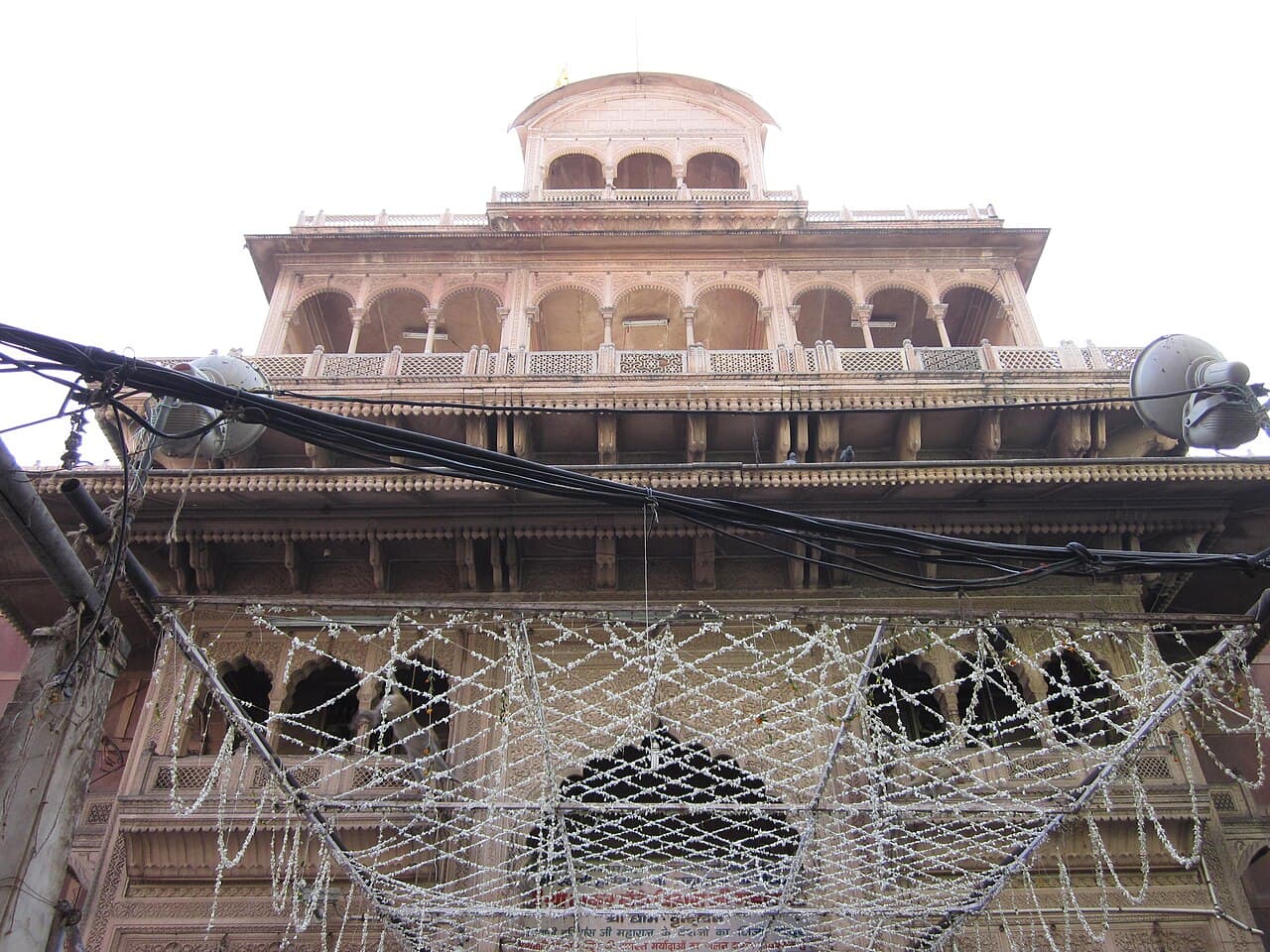
Shri Banke Bihari Mandir, Vrindavan
Vrindavan, Mathura, Uttar Pradesh
Krishna as Banke Bihari, revealed to Swami Haridas in the grove of Nidhivan — where the curtain closes every few minutes, no bell is ever rung, and the Mangala aarti comes once a year.
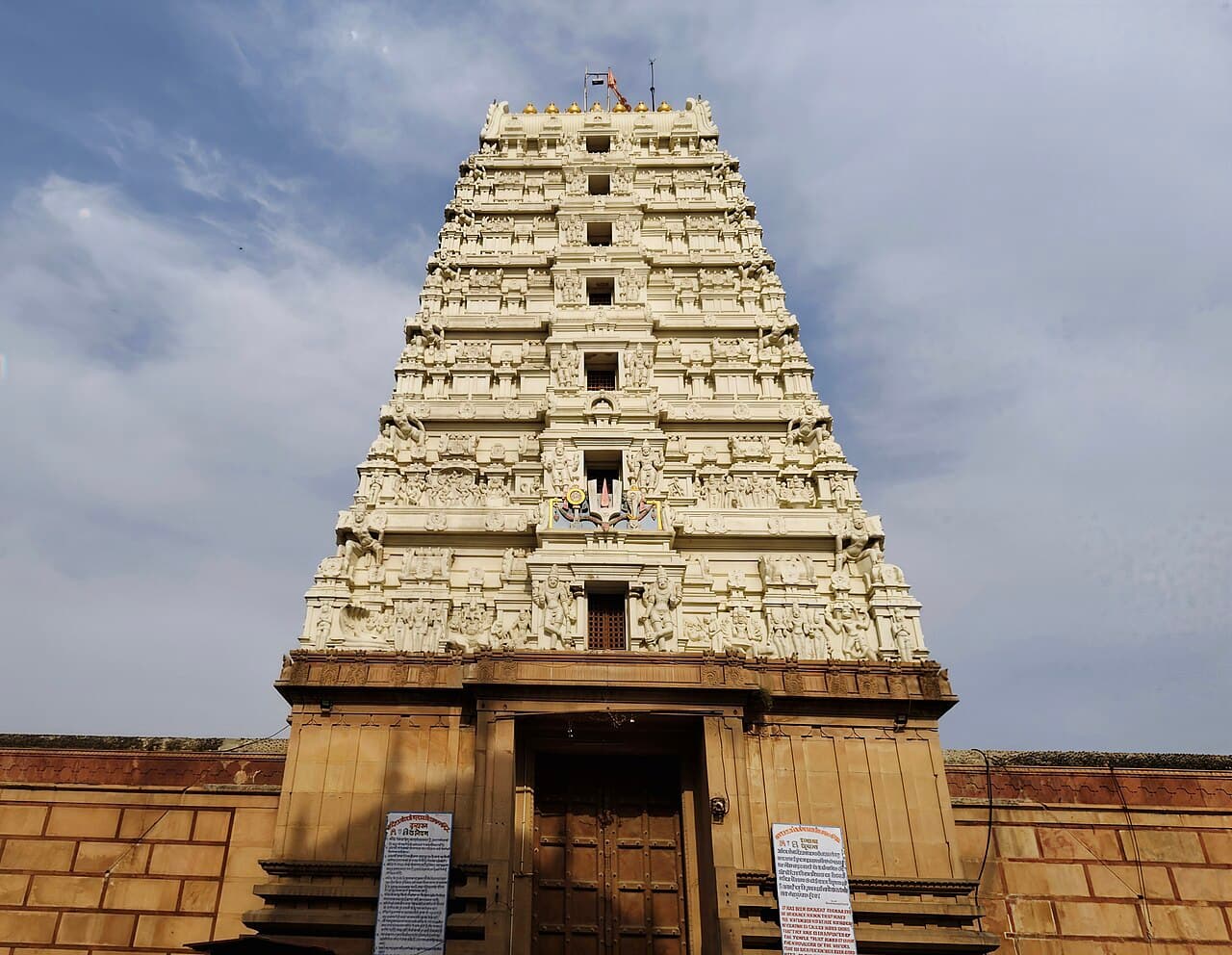
Shri Rangji (Ranganatha), Vrindavan
Vrindavan, Mathura, Uttar Pradesh
A seven-storey Dravidian gopuram and a fifty-foot gilded flagstaff in the middle of Braj — Ranganatha of the South brought north in 1851 to keep Andal's wish to live at Krishna's feet in Vrindavan.
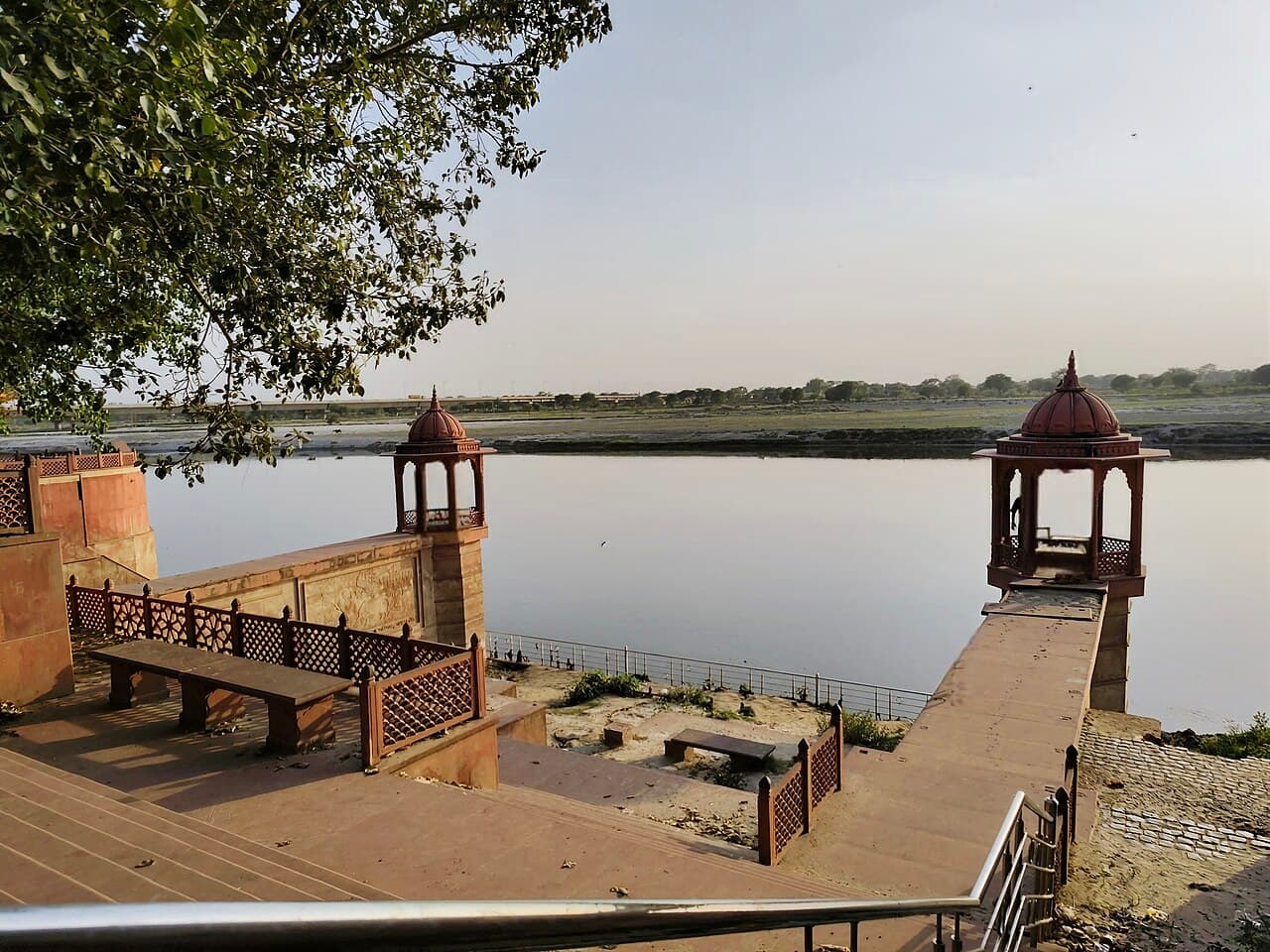
Shri Gokulnath Ji, Gokul
Gokul, Mathura, Uttar Pradesh
The haveli of Gokulnath Ji in the lanes of Gokul — principal shrine of the town Krishna was carried to the night he was born, seat of the fourth house of Vallabhacharya's Pushtimarg, hearth of the infancy leelas.
Shiva Mahadev
New to this tradition? Read the overview →


Hanuman Garhi, Ayodhya
Ayodhya, Uttar Pradesh
The fort-temple on its mound in the heart of Ayodhya, where Pavanputra Hanuman keeps watch over Ramkot — seventy-six steps up, and by long custom the first darshan of the city, taken before Ram Lalla's.

Sankat Mochan Hanuman Mandir, Kashi
Varanasi, Uttar Pradesh
Hanuman as Sankat Mochan, the reliever of troubles — a grove-shaded temple beside the Assi, raised where Goswami Tulsidas is held to have had darshan of him, its murti turned towards Rama.
Frequently Asked Questions
How many major temples are listed in Uttar Pradesh on MereMandir?+
Ten — three in Varanasi (Kashi Vishwanath, the Annapurna Devi mandir beside it and Kaal Bhairav, the Kotwal of Kashi), Vindhyavasini at Vindhyachal, Shri Ram Janmabhoomi in Ayodhya, and five across Braj: Shri Krishna Janmabhoomi and Dwarkadhish in Mathura, Banke Bihari and Rangji in Vrindavan, and Gokul's principal Krishna shrine. Between them they cover five of the traditions on MereMandir — a Jyotirlinga of Shiva, two Devi shrines, a guardian Bhairav of the Shiva Mahadev tradition, the two foremost janmabhoomi temples and the Vaishnava temples of Braj.
Which Jyotirlingas are in Uttar Pradesh?+
One — Kashi Vishwanath in Varanasi, among the most revered of the twelve Jyotirlingas. Tradition holds that Kashi is Shiva's own city and that he grants liberation to those who leave the body there. The Kashi Vishwanath corridor, opened in 2021, now connects the sanctum directly to the Ganga ghats. Kashi's two other temples listed here — Annapurna and Kaal Bhairav — belong to the Shakti and Shiva Mahadev traditions rather than to the twelve.
Can Varanasi and Vindhyachal be visited on the same trip?+
Easily — Vindhyachal is only about 70 kilometres from Varanasi, roughly a two-hour drive through Mirzapur district, so most pilgrims combine Vindhyavasini with the Kashi temples, which stand within a walk of one another in the old lanes: Kashi Vishwanath, Annapurna beside it and Kaal Bhairav in the heart of the old city. Many extend the circuit to Prayagraj and on to Ayodhya, about 200 kilometres away, for a complete eastern Uttar Pradesh yatra.
What is the best season for temple visits in Uttar Pradesh?+
October to March, when the plains are cool. The festive high points cluster in and around this window: Dev Deepawali on the Varanasi ghats (Kartik Purnima), Navratri melas at Vindhyavasini, Ram Navami in Ayodhya, and Janmashtami and Holi across Mathura, Vrindavan and the rest of Braj. Summers regularly cross 40°C, so early-morning darshan is advised then.