
Temples in West Bengal
3 Temples*
A hand-researched beginning, not a full count — more great temples of this state are added as our research completes.
West Bengal is the land of Kali-bhakti: the Mother is worshipped here as Kali and as Tara, the first two of the ten Mahavidyas, and sung to in the Shyama Sangeet that Bengal has kept since Ramprasad Sen. In the south of Kolkata, on the Adi Ganga — the old channel of the Hooghly — stands Kalighat, the city's most revered Shakti Peetha, where tradition holds that the toes of Sati's right foot fell and where the Devi is served as Dakshina Kali, the benevolent Kali who faces south: a black touchstone image, three-eyed, its tongue of gold and its arms sheathed in silver, with her Bhairava Nakuleshwar in the same precinct. The name Kolkata itself is widely held to descend from this ghat sacred to Kali. North of the city, on the eastern bank of the Hooghly, rises Rani Rashmoni's nine-spired Dakshineswar, where the Mother is Bhavatarini, she who carries her children across the ocean of worldly existence; her image was installed there in 1855, and before it Sri Ramakrishna Paramahamsa kept the Mother's service some thirty years.
Far to the north, in Birbhum, she is Tara. Tarapith stands beside the Dwarka river, and the older stone image within the shrine shows the Mother giving her breast to Shiva; the great cremation ground beside the temple has been a place of sadhana for generations, inseparable from the memory of the sadhak Bamakhepa, who worshipped there, and Kaushiki Amavasya on the Bhadra new moon is its greatest night. The journeys arrange themselves simply. Dakshineswar is the northern terminus of the Kolkata Metro's Blue Line and Kalighat a station down the same line, so both are comfortably done in a single day, with the ferry from Dakshineswar's ghat crossing to Belur Math on the far bank; Tarapith is a rail journey north from the city, Rampurhat being its railhead. Durga Puja in Ashwin is Bengal's great season, and Kali Puja follows on the Kartik new moon, the night the courtyards fill with lamps.
Shakti Peethas
New to this tradition? Read the overview →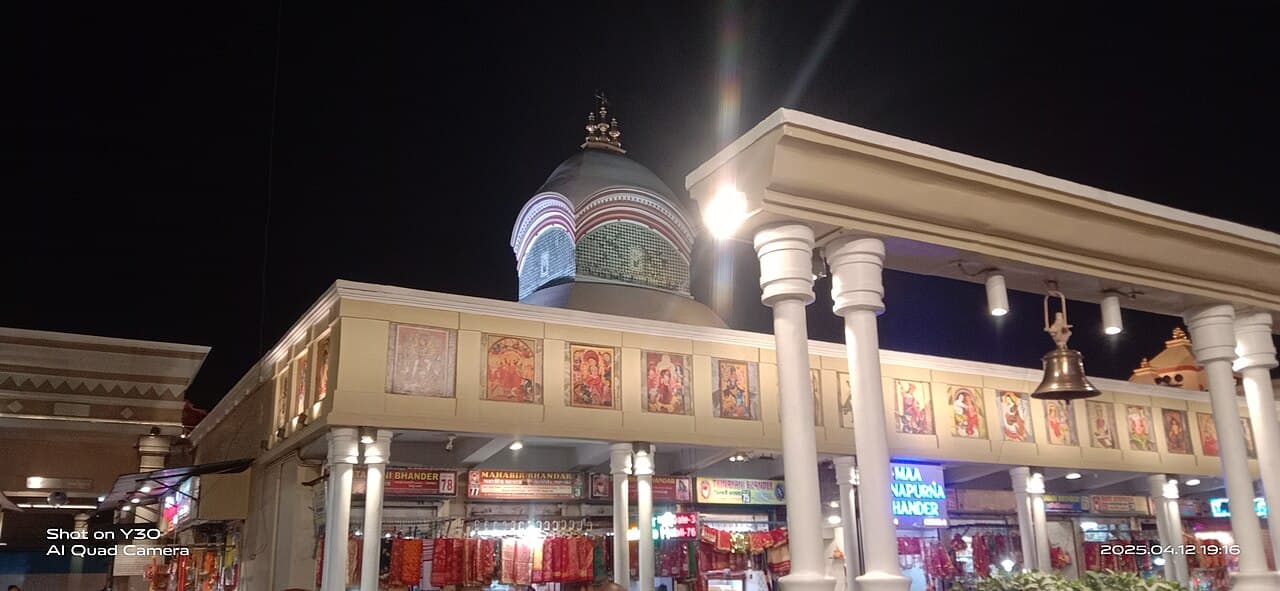

Dakshineswar Kali
Dakshineswar, Kolkata, West Bengal
Rani Rashmoni's nine-spired temple on the Hooghly, where Ma Bhavatarini is worshipped and where Sri Ramakrishna Paramahamsa kept the Mother's service for thirty years.

Tarapith
Tarapith, Birbhum, West Bengal
Ma Tara of Birbhum — the Siddhapeeth on the Dwarka where the Mother is worshipped in stone as she gives her breast to Shiva, and where the sadhak Bamakhepa kept his vigil.
Frequently Asked Questions
How many major temples are listed in West Bengal on MereMandir?+
Three — Kalighat on the Adi Ganga in south Kolkata, Dakshineswar on the Hooghly north of the city, and Tarapith beside the Dwarka in Birbhum. All three are seats of the Mother, worshipped in Bengal as Kali and as Tara: an ancient Peetha at the heart of the city, the nineteenth-century temple where Sri Ramakrishna kept his long service before Ma Bhavatarini, and the tantric shrine of Ma Tara out in the Birbhum countryside.
Which of Bengal's temples are Shakti Peethas?+
Kalighat foremost: the toes of Sati's right foot are said to have fallen there, and eastern tradition counts it among the four Adi Peethas, the primal seats of the Goddess. Tarapith is revered as a Siddhapeeth, a seat of tantric attainment, where Bengal holds that Sati's third eye — the nayan tara — fell. Dakshineswar makes no such claim; it is hallowed instead by Rani Rashmoni's founding and by the life Sri Ramakrishna lived within it.
Can Bengal's Kali temples be covered in one trip?+
Yes, and easily. Dakshineswar is the northern terminus of the Kolkata Metro's Blue Line and Kalighat a station on the same line, so the two are comfortably done in a day, with the ferry from Dakshineswar's ghat to Belur Math across the Hooghly a natural addition. Tarapith lies north in Birbhum, reached by train to Rampurhat, its railhead, and a short road run beyond it. Three or four unhurried days cover Kolkata and Birbhum together.
What is the best season to visit temples in West Bengal?+
October to February, when the delta is dry and cool, and the festive heart of the year falls inside it: Durga Puja in Ashwin, which the whole of Bengal keeps, and Kali Puja on the Kartik new moon. Dakshineswar observes two further Kali Pujas, Ratanti in Magh and Phalaharini in Jyeshtha, while Tarapith's greatest night is Kaushiki Amavasya on the Bhadra new moon, in the closing weeks of the monsoon. Summers are hot and humid, so early-morning darshan is best then.