
Temples in Odisha
3 Temples*
A hand-researched beginning, not a full count — more great temples of this state are added as our research completes.
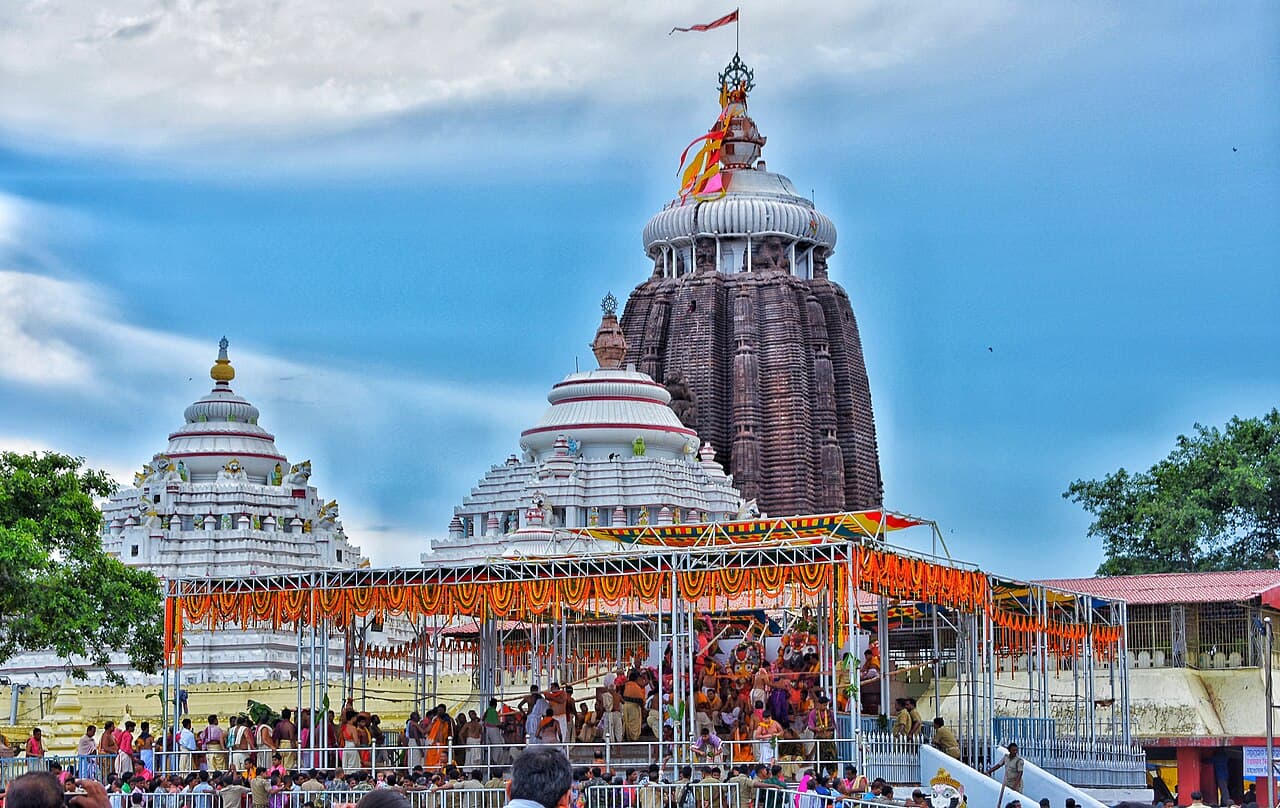
Odisha is Kalinga, and the deula — the tall curving tower that crowns its temples — is the shape this land's devotion took in stone. On the coast at Puri, upon the ridge the scriptures call Nilachala, the Blue Hill, stands the kshetra the Puranas name Purushottama: Jagannath, Lord of the Universe, worshipped not in stone but in neem wood beside his elder brother Balabhadra and their sister Subhadra — the eastern seat of the Char Dham and one of the Sapta Puri. In the same walled enclosure the Devi is Bimala, and Puri holds that what is offered to the Lord does not become Mahaprasad until it has been offered to her; that Mahaprasad, cooked over wood fires in one of the world's largest temple kitchens, is shared at the Ananda Bazaar without distinction of caste or standing. On Ashadha Shukla Dwitiya the three deities come out to the Bada Danda, the Grand Road, and are drawn on their towering chariots to the Gundicha temple, returning some days later in the Bahuda — the yatra by which the whole of Bharat knows Puri.
Inland, the capital is named for the Lord it keeps. Bhubaneswar is Ekamra Kshetra, the field of the one mango tree beneath which tradition says the linga was found, and there Shiva is worshipped as Tribhuvaneshwara, lord of the three worlds — Lingaraja, a Harihara in whom Shiva and Vishnu are one, a shrine the state's own account calls a syncretisation of Shaivism and Vaishnavism. His sandstone deula rises about 55 metres above a walled compound crowded with more than a hundred lesser shrines, the crown of the Kalinga school; beside it lies the Bindusagar, whose water tradition holds gathered from every river and stream, and in which the Lord's rites are still kept. On Ashokashtami, the eighth of the bright fortnight of Chaitra, Lingaraja rides out on the Rukuna Rath to the Rameshwar shrine — a chariot festival Bhubaneswar has kept for a thousand years, and one that, unlike Puri's, is never turned about: for the homeward leg the deities are simply set to face the other way. Far to the south in Ganjam, the twin goddesses Tara and Tarini keep their hill above the Rushikulya, reached by 999 steps or by the ropeway, and Odia tradition counts them among the four Adi Shakti Peethas together with Bimala at Puri, Kamakhya and Kalighat; on the four Tuesdays of Chaitra the Chaitra Parba fills the hill. Bhubaneswar is the gateway, with Biju Patnaik International Airport and the state's principal rail junction: Puri lies about 60 kilometres south, its own station a terminus a short way from the temple, and Tara Tarini about 175 kilometres further down the coast, Brahmapur (Berhampur) its railhead some 30 kilometres from the foot of the hill.
Shakti Peethas
New to this tradition? Read the overview →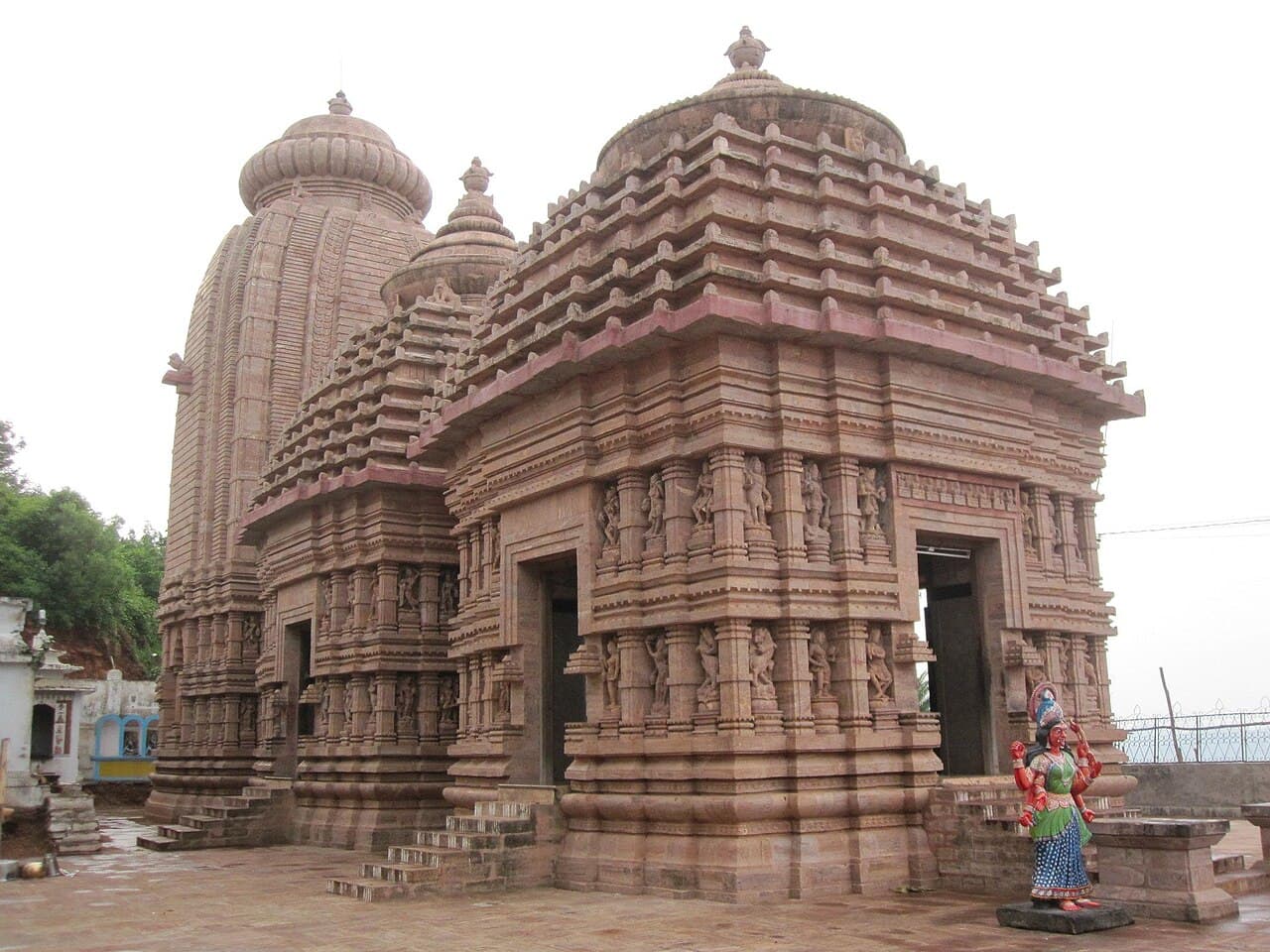
Shiva Mahadev
New to this tradition? Read the overview →
Frequently Asked Questions
How many major temples are listed in Odisha on MereMandir?+
Three — Jagannath at Puri on the Bay of Bengal, Lingaraja in the old town of Bhubaneswar, and Tara Tarini on the Kumari hill above the Rushikulya in Ganjam. Between them they cover three of the traditions on MereMandir: the eastern seat of the Char Dham, where Vishnu is worshipped as Jagannath in neem wood beside Balabhadra and Subhadra; the Shiva Mahadev temple that gave Bhubaneswar its name, where the Lord is Tribhuvaneshwara and Harihara, Shiva and Vishnu honoured together in one stone; and the twin goddesses whom Odia tradition counts among the four Adi Shakti Peethas of the east.
What are Odisha's great chariot festivals?+
Two, and they fall in different seasons. Puri's Rath Yatra is kept on Ashadha Shukla Dwitiya, in June or July: Jagannath, Balabhadra and Subhadra leave the temple for the Bada Danda and are drawn on chariots built afresh each year to the Gundicha temple, returning some days later in the Bahuda Yatra. Bhubaneswar's is the older keeping — the Rukuna Rath of Lingaraja on Ashokashtami, the eighth of the bright fortnight of Chaitra, in March or April, when the Lord rides out to the Rameshwar shrine. Unlike Puri's chariots, the Rukuna Rath is never turned about; for the return the deities are simply set to face the other way.
Can Odisha's temples be covered in one trip?+
Yes, with Bhubaneswar as the base — it has Biju Patnaik International Airport and the state's principal rail junction, and Lingaraja stands in its old town. Puri is about 60 kilometres south, a short run by road, with a well-connected terminus station of its own about three kilometres from the temple. Tara Tarini lies about 175 kilometres further down the coast in Ganjam, its railhead Brahmapur (Berhampur) some 30 kilometres from the hill, where the 999 steps and the ropeway both lead up. Three or four unhurried days cover all three. Entry to the Jagannath and Lingaraja compounds follows the old custom of admitting those of the Hindu faith; at Lingaraja a raised platform beside the wall gives every visitor the view of the great deula.
What is the best season to visit temples in Odisha?+
October to February, when the coast is dry and mild. The great days follow the tithis: Rath Yatra at Puri on Ashadha Shukla Dwitiya (June–July), in the humid weeks when the monsoon comes in; Ashokashtami and the Rukuna Rath at Lingaraja on Chaitra Shukla Ashtami (March–April), the same month whose four Tuesdays bring the Chaitra Parba to Tara Tarini; and Maha Shivaratri, when the fast at Lingaraja is broken only after the Mahadipa, the great lamp, has been raised to the top of the deula. Summers are hot and humid on this coast, so early-morning darshan is best then.