
Temples in Himachal Pradesh
4 Temples*
A hand-researched beginning, not a full count — more great temples of this state are added as our research completes.
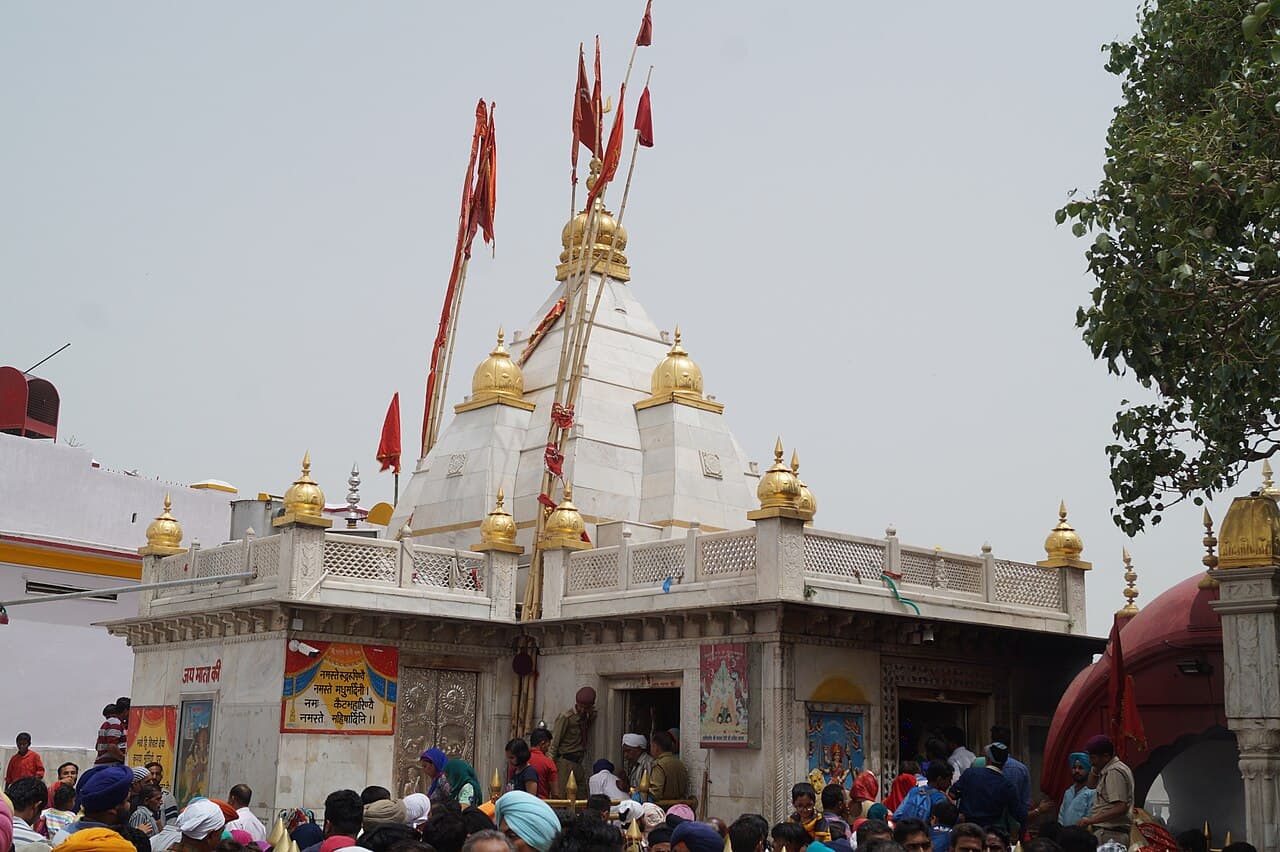
Himachal Pradesh, where the plains break into the first ranges of the western Himalaya, keeps a corridor of Devi shrines that pilgrims of the north have walked for centuries. At Jawalamukhi in Kangra the Mother is worshipped in the most elemental of her forms — no image at all, but natural flames rising unceasingly from clefts in the rock, nine of them, each honoured by the name of a goddess; the Shakti Peetha tradition holds that Sati's tongue fell here. To the south, on a Shivalik summit twelve hundred metres above the blue Gobind Sagar, stands Naina Devi, where by the same tradition Sati's eyes fell — and to whom devotees pray above all for the healing of sight. And in the Kangra valley, beneath the Dhauladhar and on the bank of the Baner, Chamunda Devi is enshrined as Chamunda Nandikeshwar Dham, the Devi worshipped in the company of Shiva, brought down in an earlier age — at her own consent — from her remote hill shrine to this more approachable place.
Together they make one of the great goddess pilgrimages of the north. The Kangra shrines lie in the same valley and are almost always taken together, most pilgrims joining Brajeshwari at Kangra town and Chintpurni in Una, with which Himachal's Devi circuit is traditionally counted; Gaggal is the valley's airport and Pathankot its broad-gauge railhead. Naina Devi stands to the south in Bilaspur district, a little above Anandpur Sahib and roughly a hundred and ten kilometres up from Chandigarh, so it falls naturally at the start of the journey for those driving in from the plains and at the close for those coming down from Kangra. In both Navaratras these hills fill with pilgrims, and at Naina Devi the Shravan Ashtami mela draws the same great crowds.
Shakti Peethas
New to this tradition? Read the overview →


Frequently Asked Questions
How many major temples are listed in Himachal Pradesh on MereMandir?+
Three — Jwala Ji at Jawalamukhi in Kangra, where the goddess is worshipped as living flame; Chamunda Devi, the Chamunda Nandikeshwar Dham on the bank of the Baner in the same district; and Naina Devi, on her Shivalik summit above the Gobind Sagar in Bilaspur. All three belong to the Shakti tradition, and together they form the Devi corridor of the western Himalaya — the pilgrimage Himachal is most loved for.
Which of Himachal's temples are Shakti Peethas?+
Jwala Ji and Naina Devi are both counted among the fifty-one Shakti Peethas — the tongue of Sati at the one, her eyes at the other. Chamunda Devi is not named in that pan-India list, but she is revered as one of Himachal's five great Devi shrines, the circuit that also gathers Brajeshwari at Kangra and Chintpurni in Una; on the road the pilgrim makes no distinction between them.
Can Himachal's Devi shrines be covered in one trip?+
Yes — this is the classic Devi darshan of the north. Jwala Ji and Chamunda Devi share the Kangra valley, Jwala Ji about fifty kilometres from Dharamshala and Chamunda Devi a short drive from it, so a single base covers both, usually with Brajeshwari and Chintpurni added. Naina Devi lies to the south in Bilaspur, about a hundred and ten kilometres from Chandigarh, and most pilgrims take it on the way up from the plains or on the way down. Three or four unhurried days cover the corridor.
What is the best season to visit temples in Himachal Pradesh?+
March to June and September to November are the kindest months in these hills, with clear air and open roads. The two Navaratras, in Chaitra and in Ashwin, are the great occasions at every shrine, and the Shravan Ashtami mela brings its own vast crowds to Naina Devi. Monsoon weeks leave the hill roads slow and landslide-prone, and winter is cold though the temples stay open; early-morning darshan is the quietest in any season.