
Temples in Delhi
3 Temples*
A hand-researched beginning, not a full count — more great temples of this state are added as our research completes.
Beneath the capital's newest avenues lies the oldest Delhi, and its guardians are the Devi. At Mehrauli, beside the Qutb complex, Yogmaya is worshipped — Shri Krishna's sister, the divine child Kamsa raised his arm against, who rose from his hand and announced his doom before vanishing. Her shrine, which tradition carries back to the Pandavas of Indraprastha, is counted among the oldest living places of worship in the National Capital Territory, and it is to her that the Phoolwalon-ki-Sair procession still comes when the rains have passed, bearing floral pankhas to the Devi and to the dargah of Qutbuddin Bakhtiyar Kaki nearby — Hindus and Muslims walking together in one of the city's gentlest festivals.
On the southern ridge — a spur of the ancient Aravalli — Kalika keeps Kalkaji, where the pindi is worshipped as svayambhu, self-manifested, and tradition holds that the Devi arose at this very place to subdue the asuras; the oldest parts of the present structure were raised in the eighteenth century, and from her hill the temple now faces the modern city, the towers of Nehru Place and the Lotus Temple within sight. In the city's heart near Karol Bagh is Jhandewalan, where the Devi's buried vigraha was found through the devotee Badri Das's dream; the jhande — the flags devotees offered as prayers were answered — gave the temple and the locality their name, and the original murti is still enshrined in the cave sanctum below, the seated Devi above. Navratri is this city's living season: through the nine nights of Chaitra and of Ashwin the Devi temples overflow, darshan beginning before dawn. The metro is the practical thread — Kalkaji Mandir station is a Violet–Magenta interchange beside the temple, Jhandewalan station on the Blue Line is a short walk from the Devi's gate, and Qutab Minar station on the Yellow Line leaves a walk through Mehrauli's lanes to Yogmaya.
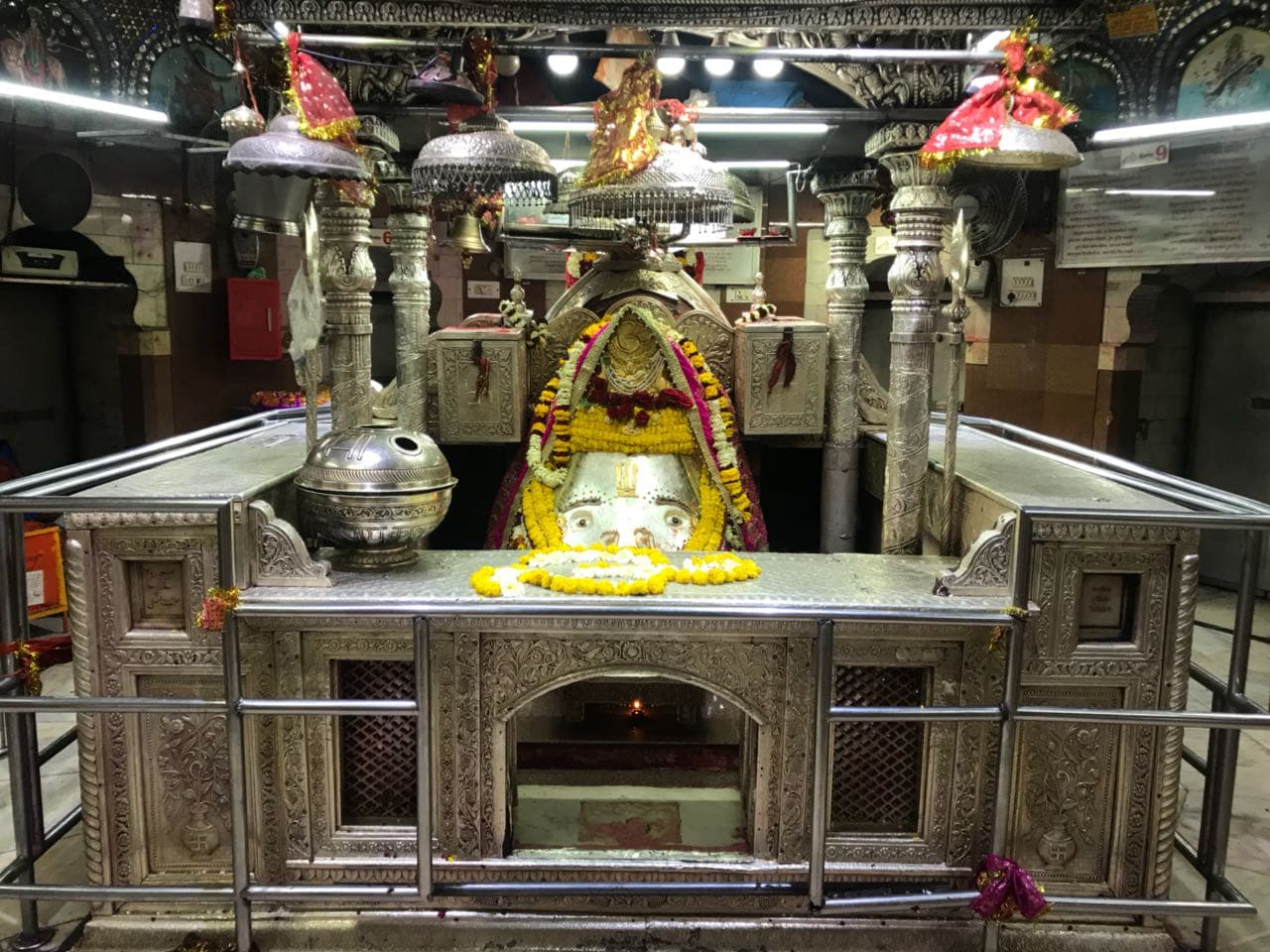
Kalkaji Mandir
Kalkaji, New Delhi, Delhi
Kalika of the Aravalli ridge — the self-manifested pindi on Suryakuta hill, where Delhi has carried its manokamna, its heart's wish, through every age of the city.

Jhandewalan Devi
Jhandewalan, New Delhi, Delhi
The Devi of the flags on Delhi's Aravalli spur — her vigraha found buried through a devotee's dream, worshipped still in the cave below while the Mother sits enthroned in the darbar above.

Yogmaya, Mehrauli
Mehrauli, New Delhi, Delhi
Yogamaya of Mehrauli — the sister of Shri Krishna, who slipped from Kamsa's hand and rose into the sky to announce his doom — worshipped beside the Qutb through every Delhi raised and ruined around her.
Frequently Asked Questions
How many major temples are listed in Delhi on MereMandir?+
Three — Kalkaji on the Aravalli ridge in the city's south, Jhandewalan near Karol Bagh at its heart, and Yogmaya at Mehrauli beside the Qutb complex. All three are shrines of the Devi, the oldest living current of worship in the National Capital Territory: Kalika whose pindi is worshipped as self-manifested, the Mother of the flags found through a devotee's dream, and Yogamaya, Shri Krishna's sister, whose shrine tradition carries back to Indraprastha.
How old are Delhi's Devi temples?+
Their antiquity is held here as tradition, and stated as tradition. Yogmaya's shrine is traced by tradition to the Pandavas of Indraprastha and is counted among the oldest living places of worship in Delhi; Kalkaji's pindi is worshipped as svayambhu — self-manifested — and its sanctity is carried back to the earliest ages, though the oldest parts of the present structure were raised in the eighteenth century; Jhandewalan is the youngest, born of the devotee Badri Das's dream of the Devi's buried vigraha — the jhande, the flags offered as prayers were answered, gave the temple and the locality their name, and the original murti is still enshrined in the cave sanctum below the seated Devi.
Can Delhi's Devi temples be visited in one day?+
Easily, and the metro is the thread. Kalkaji Mandir station, an interchange of the Violet and Magenta lines, stands beside the temple; Jhandewalan station on the Blue Line is a short walk from the Devi's gate; and from Qutab Minar station on the Yellow Line it is about 1.2 kilometres to the Qutb complex, and a few hundred metres further through Mehrauli's lanes to Yogmaya. A single unhurried day covers them — though in Navratri the queues stretch for hours, and the darshan is the sweeter for the wait.
What is the best season to visit Delhi's temples?+
October to March, when the city is cool. The two Navratras — Chaitra in spring and Ashwin in autumn — are Delhi's living season, when Kalkaji and Jhandewalan overflow through the nine nights and darshan begins before dawn. When the rains have passed, Mehrauli keeps Phoolwalon-ki-Sair, the flower-sellers' procession that bears floral pankhas to Yogmaya and to the dargah of Qutbuddin Bakhtiyar Kaki nearby. Summer is fierce on the ridge, so early-morning darshan is best then.