

Yogamaya of Mehrauli — the sister of Shri Krishna, who slipped from Kamsa's hand and rose into the sky to announce his doom — worshipped beside the Qutb through every Delhi raised and ruined around her.
- Deity
- Devi Yogamaya (Yogmaya), the younger sister of Shri Krishna
- Location
- Mehrauli, New Delhi, Delhi
- Category
- Devi
- Established
- Present building of the early 19th century — rebuilt in 1827, in the reign of Akbar II, at the charge of Lala Sethmal by the account commonly given; worship at the site is far older, and tradition carries it to the Mahabharata
- Setting
- In Mehrauli village, inside the line of Lal Kot and a few hundred metres north-west of the Qutb complex, with Anang Tal in the trees to the west
- Best Time to Visit
- October to March; both Navratris and the flower-sellers' Phool Walon ki Sair, kept after the rains, bring the largest gatherings
- Yogamaya — the younger sister of Shri Krishna — in Mehrauli village, a few hundred metres from the Qutb complex
- Bhagavata 10.4: she slipped from Kamsa's hands, rose eight-armed into the sky, and told him his destroyer was born elsewhere
- Tradition gives the first temple to the Pandavas of Indraprastha; the present building is of the early 19th century
- Local accounts name it the one pre-sultanate temple of Delhi still in worship
- Twelfth-century Jain texts call Mehrauli Yoginipura — a name said to come from this shrine
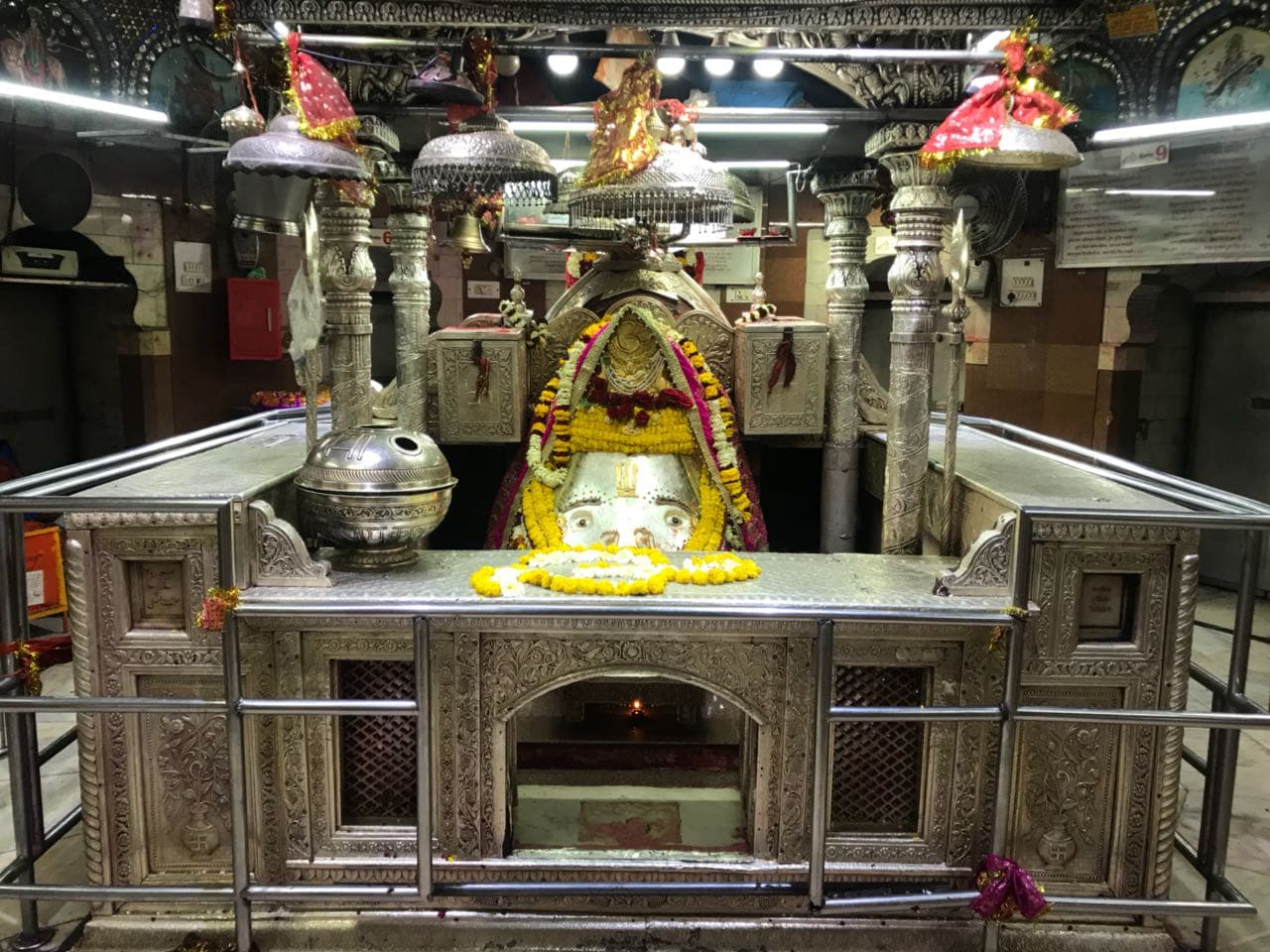
- The Devi is a black stone image set in a marble well about two feet across and a foot deep
- No bells are tolled during the worship; wine and meat are never offered
- Phool Walon ki Sair: after the rains the flower-sellers' pankha comes here and to the dargah of Qutbuddin Bakhtiyar Kaki
- Kept by one hereditary priestly family of the Vatsa gotra, now in its sixteenth generation
- Anang Tal, the tank of Anangpal Tomar, lies in the trees just west of the temple
Significance
Delhi has been founded and refounded many times, and this small shrine has outlived them all. It is spoken of as the oldest living place of worship in the capital — a claim resting not on its stone but on the worship inside, kept unbroken by one hereditary priestly family of the Vatsa gotra now in its sixteenth generation.
Its great days belong to all Mehrauli. After the rains the flower-sellers of Delhi keep the Sair-e-Gul Faroshan — Phool Walon ki Sair, the outing of the flower-sellers — begun in the reign of Akbar II, revived after Independence, and organised now by the Anjuman Sair-e-Gul Faroshan. Shehnai leads a procession of great flowered fans through the Mehrauli bazaar, and the pankha is offered here and at the dargah of Khwaja Qutbuddin Bakhtiyar Kaki a few lanes away — Hindus and Muslims walking together, each offering at both. Delhi's Lieutenant Governor calls it symbolic of the age-old communal harmony and tehzib of the national capital.
The Devi is served with flowers and sweets, and the offering stays sattvic: wine and meat are never brought to her, and the bells at the door are not tolled while the worship goes on. Both Navratris fill the lanes, and Janmashtami is kept here for the brother whose life she saved.
History
The temple of Yogmaya stands in Mehrauli village in south Delhi, a few hundred metres north-west of the Qutb complex and inside the line of Lal Kot — the Tomar Rajput citadel of 1060 CE, the oldest surviving fort in Delhi. No quarter of the city has been lived in longer; Mehrauli is held to have seen a thousand years of continuous occupation. Twelfth-century Jain texts call the settlement Yoginipura, a name said to come from this shrine.
The Devi here is Yogamaya, and her katha is told in the tenth book of the Bhagavata. When Vasudeva carried the newborn Krishna across the Yamuna to Gokul, he brought back in his place the daughter born to Yashoda that same night and laid her in the prison at Mathura. Kamsa seized the child by her feet and dashed her against the stone. She slipped from his hands and rose into the sky — the younger sister of Krishna, manifest as a goddess of eight mighty arms bearing bow and spear, shield and sword, conch, discus and mace — and told him that killing her had gained him nothing: his destroyer was already born elsewhere, and he should spare the helpless children. Mehrauli holds that she took her seat here.
Tradition carries the shrine back to the Mahabharata and gives the first temple to the Pandavas of Indraprastha. That is how Delhi tells it, not how history records it; what the record shows is the survival. Through the sultanate centuries, with the Qutb rising a few hundred paces away, the worship never stopped, and local accounts name this the one pre-sultanate temple of the city still in use. The building the pilgrim sees is of the early nineteenth century — rebuilt in 1827, in the reign of Akbar II, at the charge of Lala Sethmal by the account commonly given — and its fabric has been renewed many times since.
Architecture
The temple is small and plain. An entrance hall opens on a square sanctum of about seventeen feet, flat-roofed under a short tower and spire; the walled enclosure carries towers at its corners, and the floor that was once red stone is now marble.
Within, the Devi is a black stone image set in a marble well some two feet across and a foot deep, dressed in red and heaped with flowers, the Sair's pankhas hanging above her. West of the temple, screened by trees, lies Anang Tal, the tank of Anangpal Tomar.
Festivals
Timings
Open daily from early morning until about 8:30 PM; published opening hours differ between accounts — 4:30 AM and 5:00 AM are both given — so confirm on the day. Navratri and the days of the Phool Walon ki Sair are the most crowded.
Qutab Minar on the Yellow Line is the nearest Metro station: about 1.2 kilometres to the Qutb complex, and a few hundred metres further north-west to the temple. Autos and e-rickshaws run up Anuvrat Marg into Mehrauli village; the last approach is along Kalka Das Marg past the Qutb. Indira Gandhi International Airport is about twelve kilometres by road; New Delhi and Hazrat Nizamuddin are the usual railheads.
Timings are indicative — please confirm with the temple trust before travelling.
Nearby Temples

Frequently Asked Questions
Where is Yogmaya, Mehrauli Temple located?+
Yogmaya, Mehrauli Temple is in Mehrauli, New Delhi, Delhi, India.
Which deity is worshipped at Yogmaya, Mehrauli Temple?+
Yogmaya, Mehrauli Temple is dedicated to Devi Yogamaya (Yogmaya), the younger sister of Shri Krishna.
Which tradition does Yogmaya, Mehrauli belong to?+
Yogmaya, Mehrauli is one of the Devi temples dedicated to Devi (Adi Shakti).
What are the timings of Yogmaya, Mehrauli Temple?+
Open daily from early morning until about 8:30 PM; published opening hours differ between accounts — 4:30 AM and 5:00 AM are both given — so confirm on the day. Navratri and the days of the Phool Walon ki Sair are the most crowded.
What is the best time to visit Yogmaya, Mehrauli Temple?+
October to March; both Navratris and the flower-sellers' Phool Walon ki Sair, kept after the rains, bring the largest gatherings
When was Yogmaya, Mehrauli Temple established?+
Yogmaya, Mehrauli Temple — Present building of the early 19th century — rebuilt in 1827, in the reign of Akbar II, at the charge of Lala Sethmal by the account commonly given; worship at the site is far older, and tradition carries it to the Mahabharata.
Sources & further reading
Photo: Nvvchar · CC BY-SA 3.0