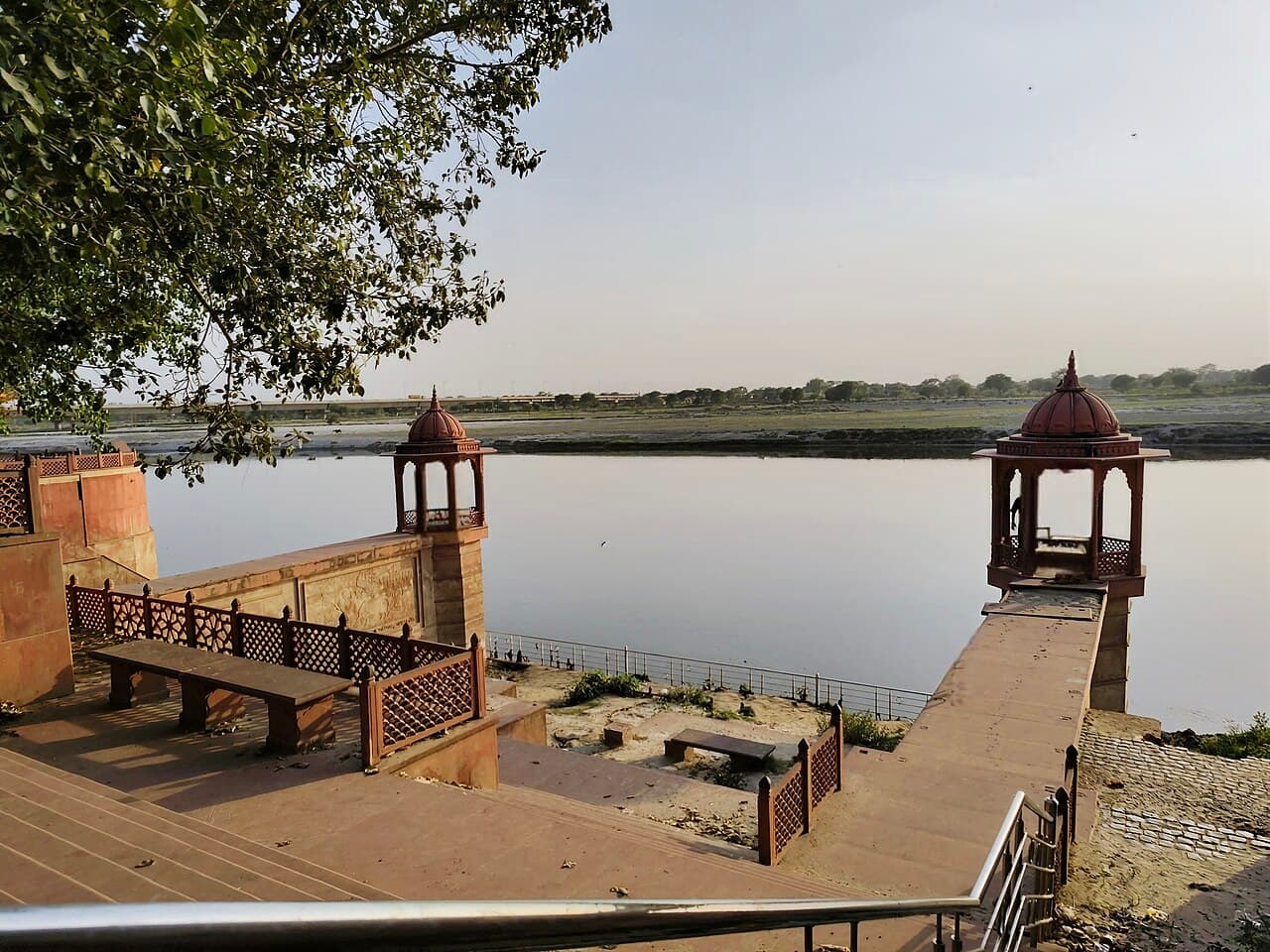
Braj — the land of Krishna's childhood — is a compact stretch of the Yamuna plain in western Uttar Pradesh where almost every village keeps the memory of a leela. This route walks its heart: five darshans across three towns. It begins in Mathura at Shri Krishna Janmabhoomi, raised over the prison cell where the Lord was born to Devaki and Vasudeva on the eighth night of Bhadrapada's dark fortnight, and moves through the old city to Shri Dwarkadhish Mandir — built in 1814 and served in the Pushtimarg seva-krama of Vallabhacharya's sampradaya. Dwarkadhish stands a few steps from Vishram Ghat, the principal ghat of Mathura, where tradition holds that Krishna rested after slaying Kansa, and from which the city's ghat parikrama both starts and ends. Come back to the ghat at dusk: the Yamuna aarti is lit each evening around seven, lamps set on paan leaves are floated out on the current, and the whole riverfront turns to flame and sound. Give Mathura an unhurried half-day and it repays you — the twenty-five ghats, the old bazaars and their peda shops, and a boat pushed out onto the water while the aarti burns behind you.
About eleven to fifteen kilometres upriver lies Vrindavan, which holds the next two darshans. Shri Banke Bihari Mandir enshrines the deity brought forth in the grove of Nidhivan by the sixteenth-century saint-musician Swami Haridas; his samadhi is the first small shrine you meet as you enter Nidhivan, and the grove is locked every evening after aarti — the priests leave Radha's bed made in the Rang Mahal and withdraw, for by custom no one witnesses the night there. Shri Rangji Mandir, consecrated in 1851, carries the Sri Vaishnava tradition of Ranganathaswamy at Srirangam into Braj, its south-Indian gopuram and gilded dhwaja-stambha standing improbably in the Yamuna plain; and Prem Mandir, completed in 2012 by Jagadguru Kripalu Maharaj, closes the Vrindavan leg in white marble and its nightly wash of colour and light. Between temples, walk down to the river — Kesi Ghat, where Krishna bathed after killing the horse-demon Keshi, and Kaliya Ghat, where the hollow kadamba still stands from which he leapt onto the serpent Kaliya's hoods. Then cross to Gokul on the far bank, some ten to fifteen kilometres from Mathura, where the infancy leelas belong: Nanda Baba's house, Brahmand Ghat, and the soft sands of Raman Reti in which pilgrims still roll.
Three towns and five temples make a comfortable two-day yatra, three if you take it slowly — but Braj reaches well beyond them. Govardhan lies about twenty-one kilometres west of Mathura, and its parikrama is the region's great walk: a circuit of 21 km (seven kos) that begins and ends at Danghati or Mansi Ganga and passes Radha Kund and Shyam Kund, Kusum Sarovar and Govind Kund. Pilgrims walk it barefoot and clockwise, keeping the hill always on the right and never climbing it, for Giriraj is worshipped as Krishna's own form; five to six hours is a fair estimate on foot. Barsana, about forty-five kilometres from Mathura, is Radha's own town, her Shriji (Ladli Ji) temple crowning the Bhanugarh hill — and about a week before Holi it becomes the stage of Lathmar Holi, the women of Barsana driving off the men of Nandgaon with staves, the compliment returned at Nandgaon the next day. The complete form of all this is the Braj Chaurasi Kos parikrama, the eighty-four-kos circuit of Braj Mandal — roughly 252 km through twelve vans, twenty-four upvans and twenty kunds, made as a seven-day journey by road or, in the older way, on foot over weeks, most auspiciously in Kartik. October to March is the kindest season; avoid May and June, when the plain crosses 40°C and can approach 45°C. Janmashtami and the Holi week are Braj at its most beautiful and its most crowded — book months ahead, and confirm every temple's darshan hours before you set out, since they shift with the season.
The route, in darshan order
- 1

Shri Krishna Janmabhoomi
Mathura, Uttar Pradesh
The temple complex over the prison cell in Mathura where Krishna was born at midnight — the heart of Braj and one of the holiest grounds of the Vaishnava world.
- 2~1 km aerial distance
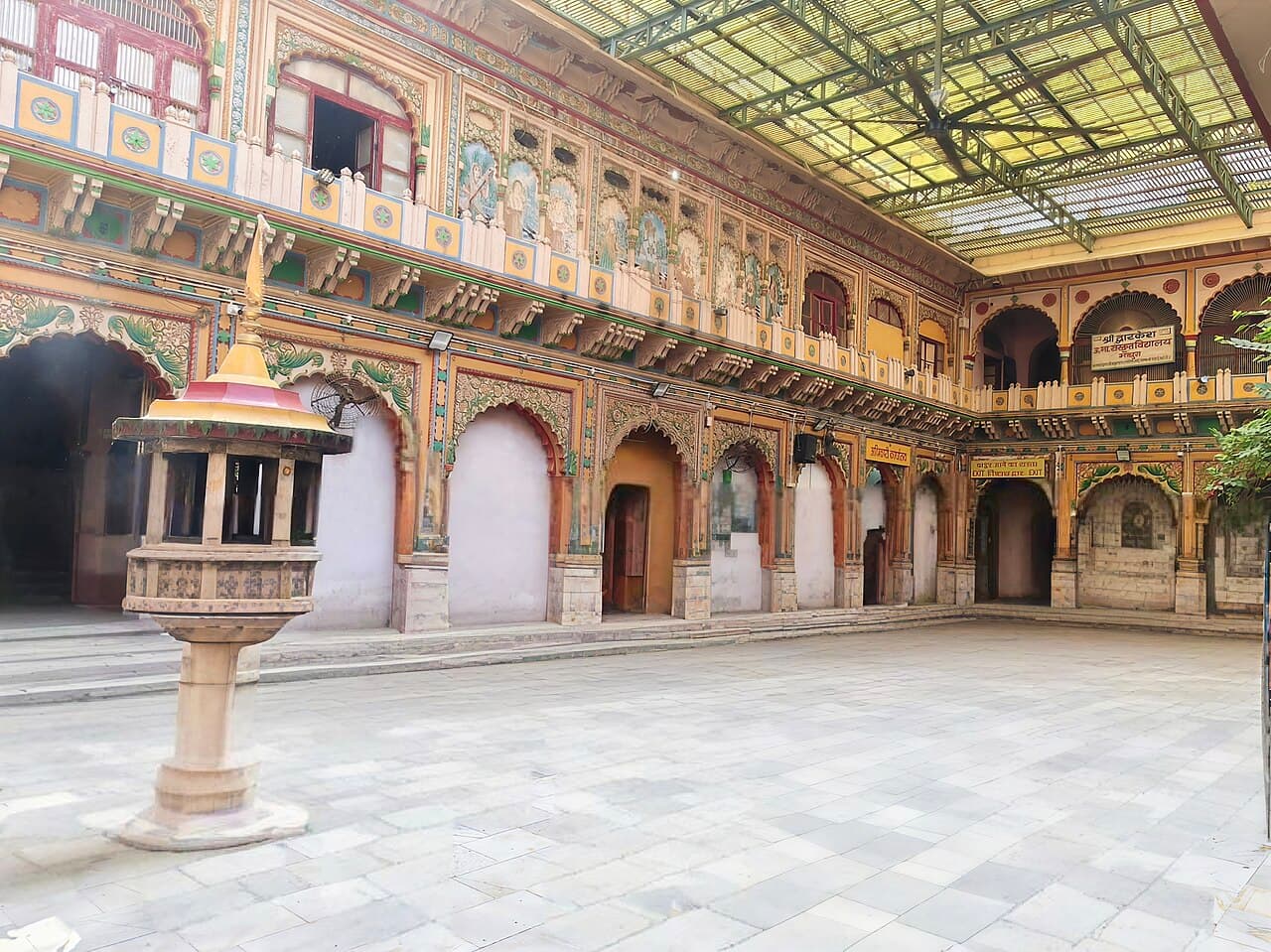
Shri Dwarkadhish, Mathura
Mathura, Uttar Pradesh
Krishna kept as a king in a merchant's mansion — the Pushtimarg haveli above Mathura's Vishram Ghat, where the doors open eight times a day and not once between.
- 3~8 km aerial distance
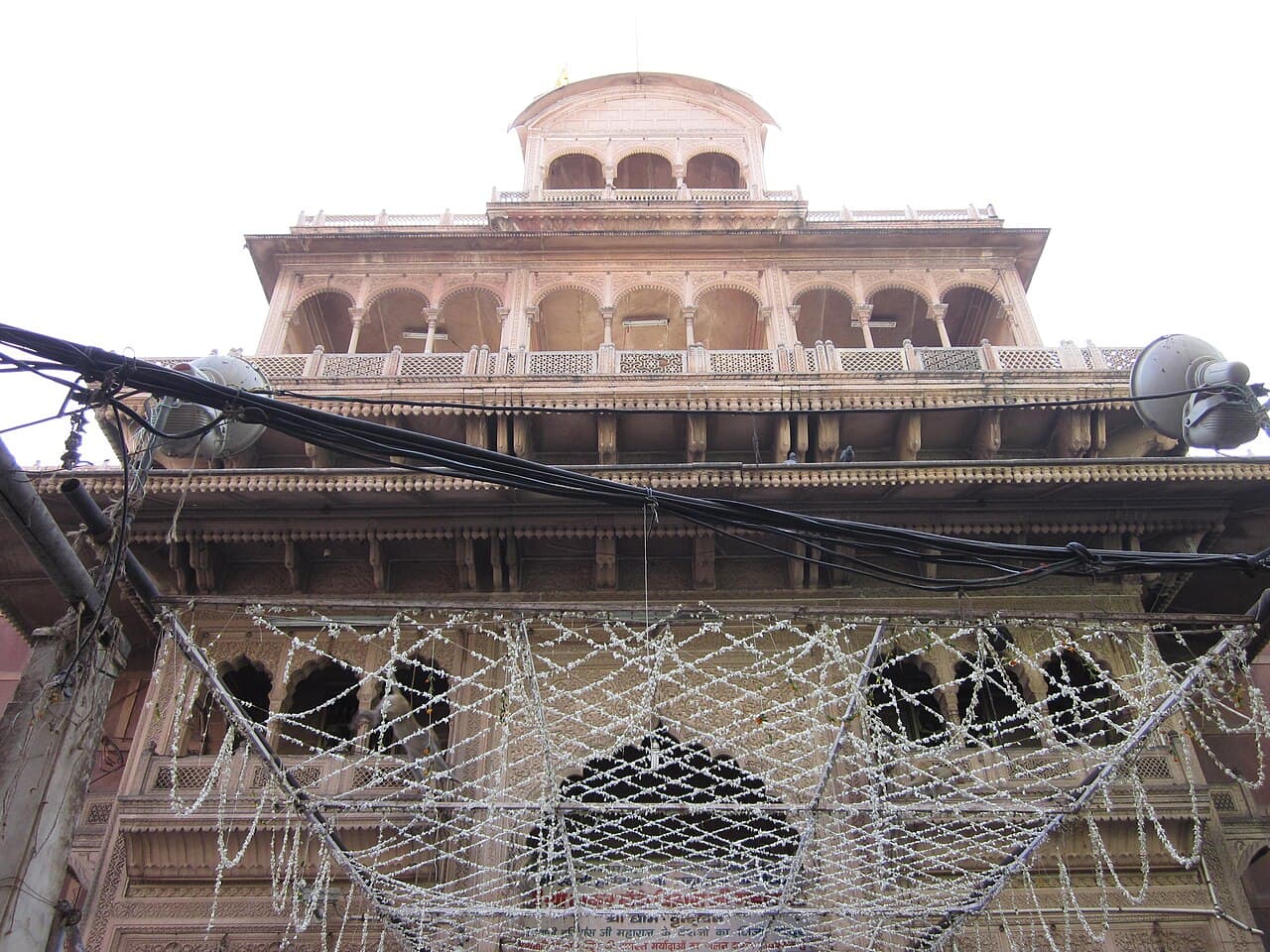
Shri Banke Bihari Mandir, Vrindavan
Vrindavan, Mathura, Uttar Pradesh
Krishna as Banke Bihari, revealed to Swami Haridas in the grove of Nidhivan — where the curtain closes every few minutes, no bell is ever rung, and the Mangala aarti comes once a year.
- 4~1 km aerial distance
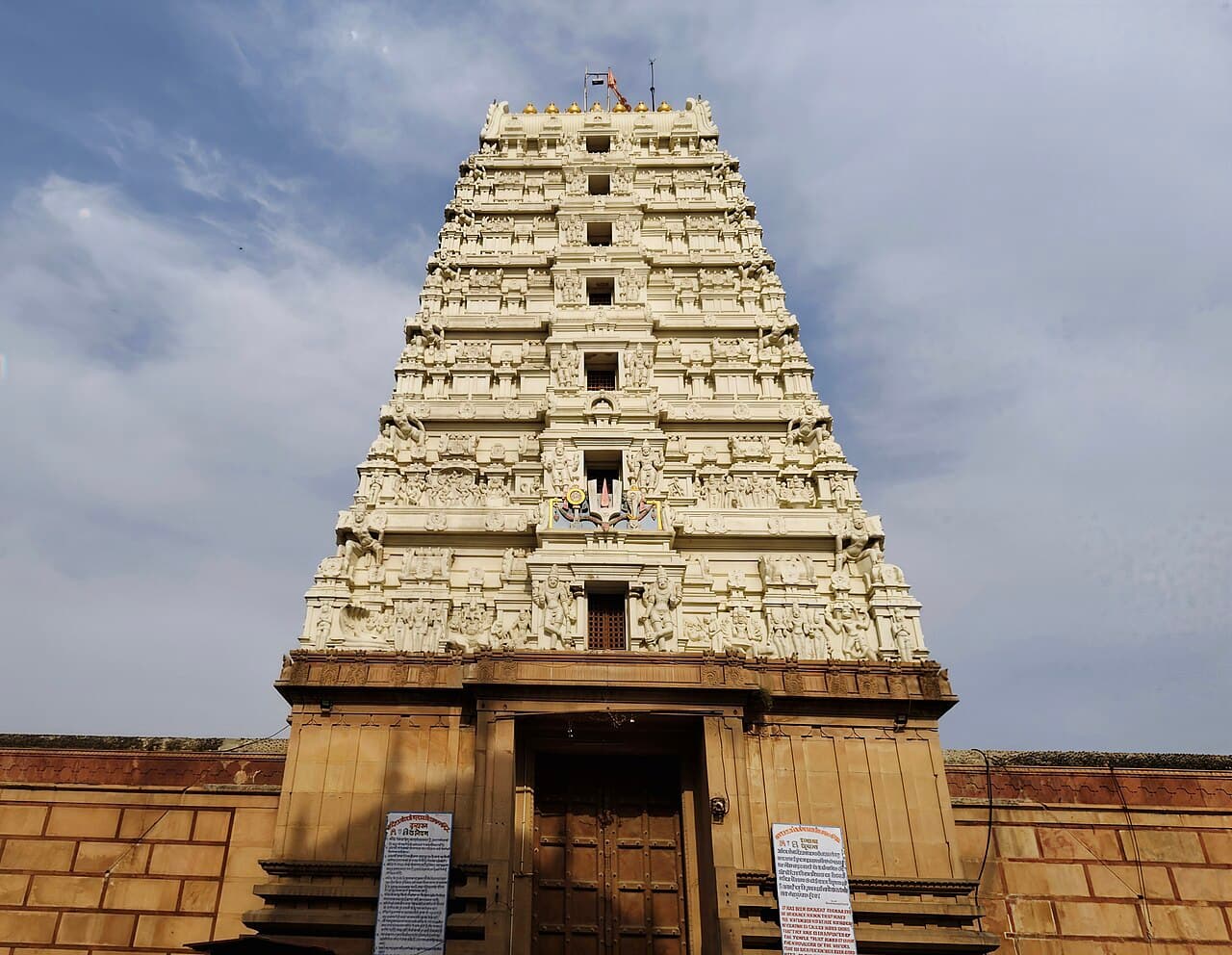
Shri Rangji (Ranganatha), Vrindavan
Vrindavan, Mathura, Uttar Pradesh
A seven-storey Dravidian gopuram and a fifty-foot gilded flagstaff in the middle of Braj — Ranganatha of the South brought north in 1851 to keep Andal's wish to live at Krishna's feet in Vrindavan.
- 5~16 km aerial distance
Shri Gokulnath Ji, Gokul
Gokul, Mathura, Uttar Pradesh
The haveli of Gokulnath Ji in the lanes of Gokul — principal shrine of the town Krishna was carried to the night he was born, seat of the fourth house of Vallabhacharya's Pushtimarg, hearth of the infancy leelas.
Frequently Asked Questions
How many days does the Braj yatra take?
Two days cover the core circuit comfortably; three make it unhurried. The five temples sit in a tight cluster — Vrindavan is only about 11–15 km from Mathura and Gokul about 10–15 km on the far bank — so one day can hold Mathura's Krishna Janmabhoomi and Dwarkadhish, Vishram Ghat and the evening Yamuna aarti, with Gokul added in the afternoon, while a second day belongs entirely to Vrindavan: Banke Bihari, Nidhivan, Rangji, Prem Mandir and the ghats. Add a third day for the Govardhan parikrama, or for Barsana and Nandgaon, or both.
What is the best season for Braj, and what about Janmashtami and Holi?
October to March is the comfortable window, with October and November the sweet spot — pleasant weather and manageable queues. Avoid May and June, when the Yamuna plain crosses 40°C and can approach 45°C. Janmashtami (the eighth night of the dark fortnight of Bhadrapada, usually August–September) brings the year's greatest gathering to Krishna Janmabhoomi for the midnight abhishek, and the Holi week — Lathmar Holi at Barsana and Nandgaon, then Phoolon-wali Holi at Banke Bihari on Rangbhari Ekadashi — fills every town in Braj. Both are extraordinary and both mean immense crowds, restricted vehicle access and rooms booked out months ahead. Go for the festival or go for a quiet darshan; the two rarely combine.
What should I know about the Govardhan parikrama?
It is a 21 km (seven-kos) circumambulation of Govardhan hill, walked clockwise and usually begun and ended at Danghati or Mansi Ganga in Govardhan town, about 21–22 km from Mathura. On foot it takes roughly five to six hours; a shorter inner circuit of about 9 km suits elders and families, and e-rickshaws and cars complete the round in about two to three hours. The custom is to walk barefoot, keep the hill always on your right and never climb it — Giriraj is worshipped as Krishna himself, so even its stones are not stepped on. Start before sunrise in warm months and carry water. Govardhan Puja and Annakut (the day after Diwali), Purnima and Ekadashi, Guru Purnima and the Purushottam adhik-maas draw the largest walking crowds.
How do Gokul, Barsana and Govardhan fit around Mathura and Vrindavan?
Gokul is the easy one — about 10–15 km from Mathura across the Yamuna, so it pairs naturally with the Mathura day, and Mahavan, Brahmand Ghat and Raman Reti are all there, with Baldeo (Dauji) a little further out. Govardhan is roughly 21–22 km west of Mathura and about 25 km from Vrindavan; give it half a day, or a full day if you walk the parikrama. Barsana is about 45 km from Mathura with Nandgaon only 8–11 km beyond it, so Radha's town and Krishna's are always taken together as one western loop, usually combined with Govardhan on the way. The pilgrimage that threads all of them into a single unbroken circuit is the 84-kos Braj parikrama.