
Two of the eleven are Maharashtra's own — Ambabai of Kolhapur, whom the state counts among its sade-tin seats, and Saptashringi on her gad above Vani — so Mumbai's plan opens with a journey that never leaves the state: the overnight Mahalaxmi Express covers the 518 km to Kolhapur in about eleven hours, and the gad stands 60 km beyond Nashik. Everything else is a flight or a long night on rails.
Which eleven — and by which reckoning?
The seats of the Devi are not counted by one list alone, and this planner keeps each shrine's own reckoning rather than flattening them. Kamakhya, Kalighat, Jwala Ji and Naina Devi are named in the widely followed fifty-one — some traditions count fifty-two, and tantric lists run to a hundred and eight. Jogulamba at Alampur, Kamakshi at Kanchipuram and Chamundeshwari above Mysuru are seats of the Ashtadasha Maha Shakti Peetha stotram, the eighteen. Mahalaxmi of Kolhapur and Saptashringi of Vani belong to Maharashtra's own sade-tin, the three and a half, and both are also carried in pan-India lists of the fifty-one. Tara Tarini is honoured in Odia tradition as one of the four Adi Shakti Peethas of the east, and Vindhyavasini is revered as a Siddha Peetha as often as a Shakti Peetha. Where a seat carries more than one of these, the page names them all — the guide sets out the reckonings in full.
Planning the darshan? See the route guide →How will you complete the eleven?
Five regional trips of 2–8 days each — complete the eleven at your own pace, as most pilgrims do.
The eleven seats grouped into five trips — tap a marker for the temple.
The Western Pair
~4–5 daysBoth western seats stand in one state, but 440 km apart, so the trip is a four-day arc up the Deccan. Pune is the gateway: Kolhapur is 230 km south on NH48, four and a half to five and a half hours, and a rail arrival can skip Pune altogether — the overnight Mahalaxmi Express runs 518 km from Mumbai CSMT into Kolhapur's own terminus in about 11 hours. Give Ambabai a full morning. Then turn north: Kolhapur to Nashik is about 440 km and close to seven hours, and Saptashringi's gad stands 60 km beyond Nashik in Kalwan taluka. A fifth day makes the climb, the darshan and the drive back unhurried rather than counted.
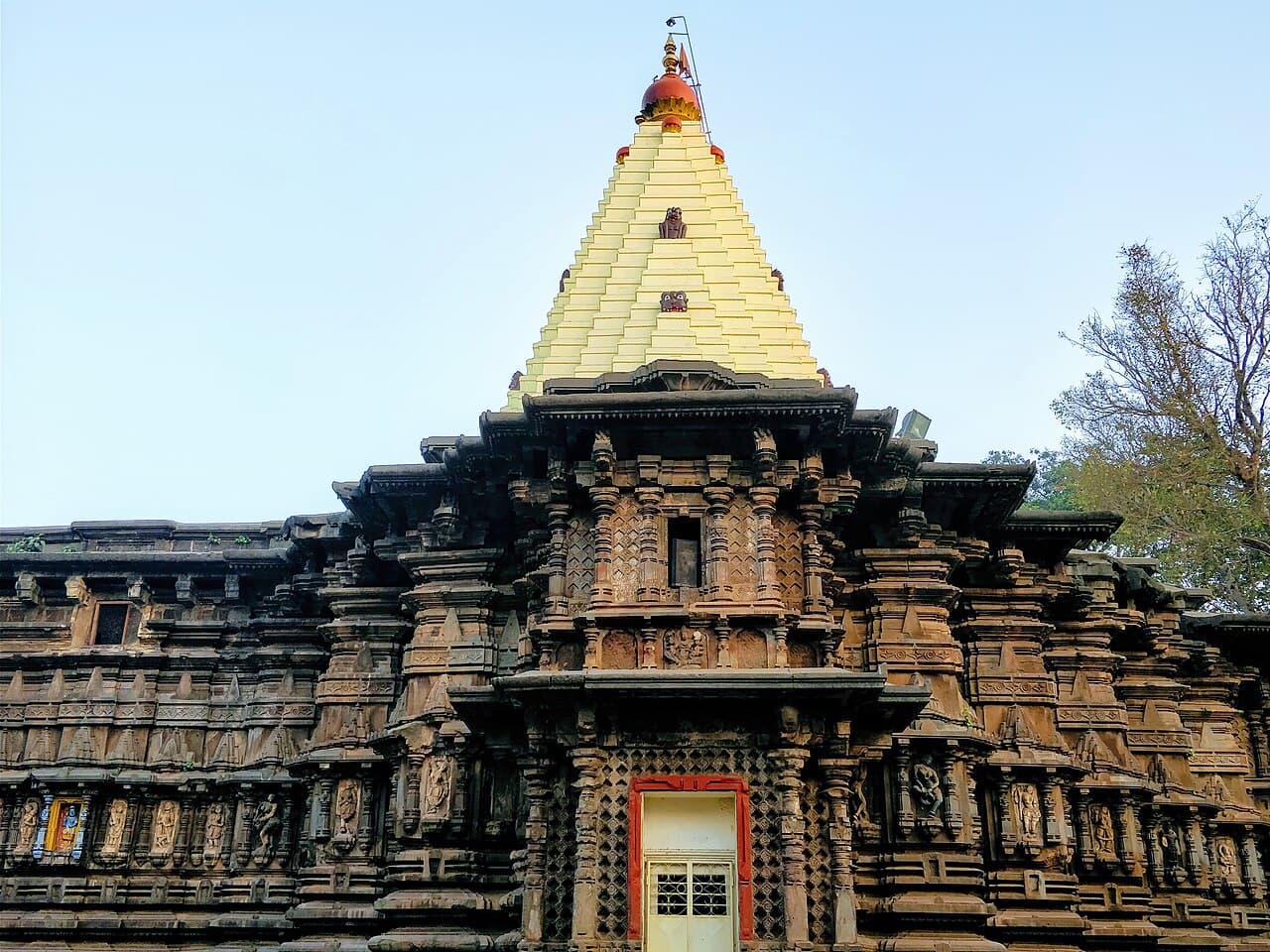
Ambabai of Kolhapur is the Mother of Karvir, and Maharashtra counts her among its sade-tin — the three and a half seats matched to the syllables of AUM — while some pan-India lists also place her among the fifty-one, where Sati's eyes are said to have fallen. The image is black stone about three feet tall, crowned by a five-headed cobra with her lion behind her. Ask about the Kiranotsav: twice a year, for three days, the setting sun enters the western door and moves up the goddess from her feet to her face. The temple keeps about 5 am to 10 pm, from the Kakad aarti to the Shej aarti at night.

Saptashringi dwells on the gad above Vani, in a cleft of a sheer rock face — a swayambhu svarup about eight feet tall, red with sindoor, eighteen arms bearing the weapons the gods gave her. The received reckoning, which the district administration records, names this gad the ardha of Maharashtra's sade-tin, the half-measure that closes the sacred sound; the trust's own telling gives it another weight, as the mula sthana of Adi Shakti. Pan-India lists count the gad among the fifty-one, where Sati's right arm is said to have fallen. A stone stair of about 500 steps, first cut in 1710, climbs to her — or the funicular, which does it in some three minutes.
This is Mumbai's home trip and it needs no gateway at all: the Mahalaxmi Express leaves CSMT at night and runs the 518 km straight into Kolhapur's own terminus in about 11 hours. For the gad, the Panchvati Express reaches Nashik Road in about 4 hours 43 minutes over 258 km, and Vani is 60 km beyond.
Kolhapur is the first and steadier base: the temple stands in the old town, the rooms are many and modest, and the Shahu Maharaj terminus brings the Mumbai overnight straight in. The second half belongs to Nashik, 60 km below the gad, which has the wider choice for a late arrival and puts the funicular within an early morning.
- 1cTrimbakeshwar
Nashik is the base for the gad and also for a Jyotirlinga: Trimbakeshwar stands 28 km the other way, at the source of the Godavari under Brahmagiri hill. Pilgrims who have come this far almost always take both, and our Jyotirlinga planner covers the Maharashtra trio in full.
The Deccan and the South
~6–7 daysThree seats across three states, and the whole trip runs on one long southward line. Day one leaves Hyderabad for Alampur, 216 km down NH44 and the Kurnool road — about four hours — for Jogulamba and the Navabrahma temples, with the night at Kurnool 26 km away. Then south: Kurnool to Bengaluru is 359 km, and the Bengaluru–Mysuru expressway's 118 km takes about ninety minutes more, so Chamundi Hill can have the following morning. From Mysuru the Shatabdi covers the 500 km to Chennai in about 7 hours 25 minutes, and Kanchipuram is 74 km on with a station of its own — an hour or so by road, and Kamakshi's darshan closes the journey. Six days is the working shape; seven if Kanchi's thousand temples are to be more than a glance.

Jogulamba is the fifth seat named in the Ashtadasha Maha Shakti Peetha stotram, and she is worshipped in her fierce Yogini form, seated upon a corpse, with Bala Brahmeshwara as her Bhairava; tradition holds Sati's upper teeth fell here. Her shrine stands among the Navabrahma temples, nine Chalukya Shiva shrines of the seventh and eighth centuries, on the Tungabhadra near its confluence with the Krishna. The image was hidden when the shrine fell about 1390 and was reinstalled only in 2005 — a worship broken for six centuries and restored. Darshan runs roughly 7 am to 1 pm and 2 pm to 8:30 pm.
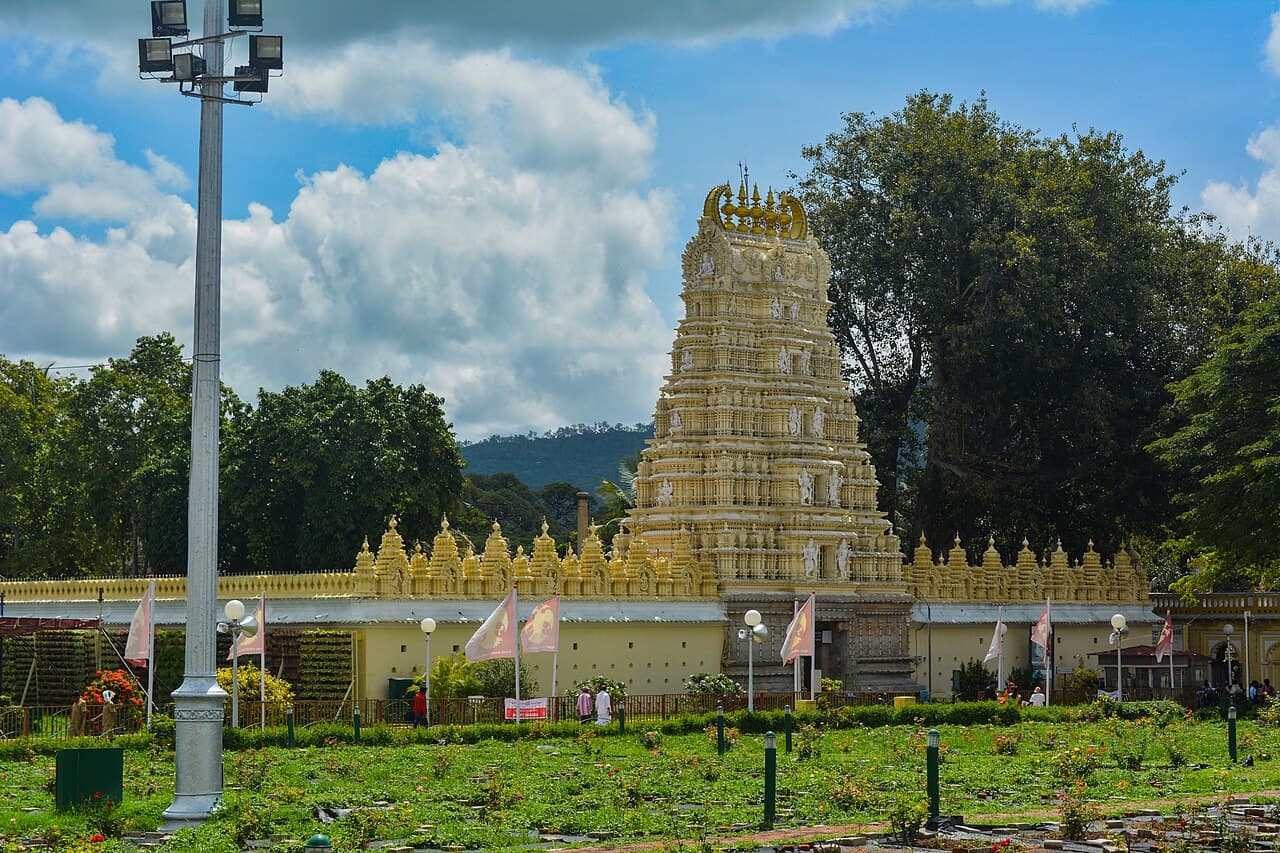
Chamundeshwari is Mahishasuramardini on her hill above Mysuru, kuladevi of the Wodeyars and presiding deity of the city — the Ashtadasha stotram names her in its opening verses as Chamundi of Krauncha Pattana, and tradition holds that Sati's hair came to rest here. The climb is 1,008 stone steps cut in the seventeenth century, with the great monolithic Nandi midway; the road up runs about 13 km from the city. Darshan is given roughly 7:30 am to 2 pm, 3:30 to 6 pm and 7:30 to 9 pm, and free dasoha is served on the hill three times a day.
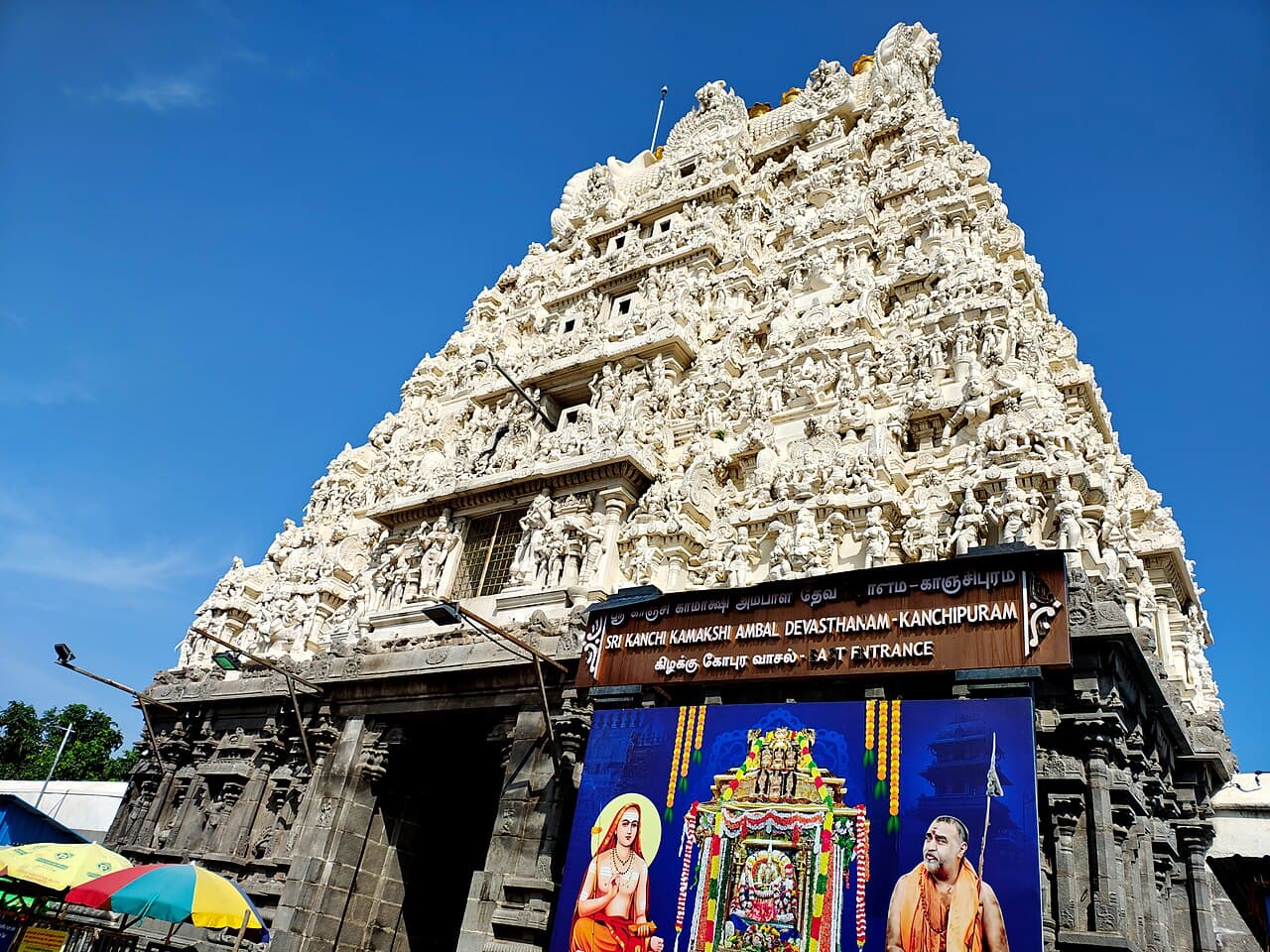
Kamakshi is the only Devi temple in Kanchipuram, and that is the whole point of her: the city's great Shiva temples keep no separate Amman shrine, because tradition holds that all the Shakti of Kanchi is gathered here, in her alone. The Ashtadasa Shakti Peetha stotra names her in its opening breath — Kamakshi of Kanchi — and the Devasthanam reckons the city among the fifty-one as the Nabhi Peetham, where Sati's navel is said to have fallen. She sits in padmasana in the Gayatri Mandapam, and tradition holds Adi Shankara set the Sri Chakra before her and drew her fierce form into its serene one. Darshan runs about 5:30 am to 12:30 pm and 4 to 8:30 pm.
Hyderabad is an easy overnight: a direct train covers the 790 km in about 14 hours 15 minutes, and a nonstop flight turns it into an hour and a half. Alampur then lies 216 km south on NH44 and the Kurnool road, so the first darshan can be the day after you leave home.
Mysuru is the middle base and the kindest: the hill is 13 km above the city, the choice of rooms is wide, and the Shatabdi to Chennai leaves from Mysuru Junction. The first night falls at Kurnool, a short run from Alampur, and the last at Kanchipuram itself or in Chennai, whichever your return flight prefers.
- 2dMallikarjuna, Srisailam
Alampur is called the western gateway of Srisailam, and the hill it opens on carries both a Jyotirlinga and a Shakti Peetha in one complex — Bhramaramba Devi beside Mallikarjuna. Pilgrims on this road often add the day; our Jyotirlinga planner covers Srisailam in full.
The Himachal Pair
~3–4 daysThe two Himachal seats sit on one hill road and make an easy three-day journey, four if you take the Kangra shrines around Jwala Ji as well. Chandigarh is the gateway: Naina Devi is 104 km out, about two and a quarter hours by road, and the temple's own page reckons it at roughly 100 km with Anandpur Sahib the nearest railhead some 25 km below. Sleep near the hill, then run the roughly 155 km north-west to Jwalamukhi — about two and three-quarter hours through Una, which is itself 85 km from the flames — and give the second evening to the aarti. A rail arrival can skip the road entirely: Delhi's Amb Andaura Vande Bharat calls at Anandpur Sahib and again at Una.
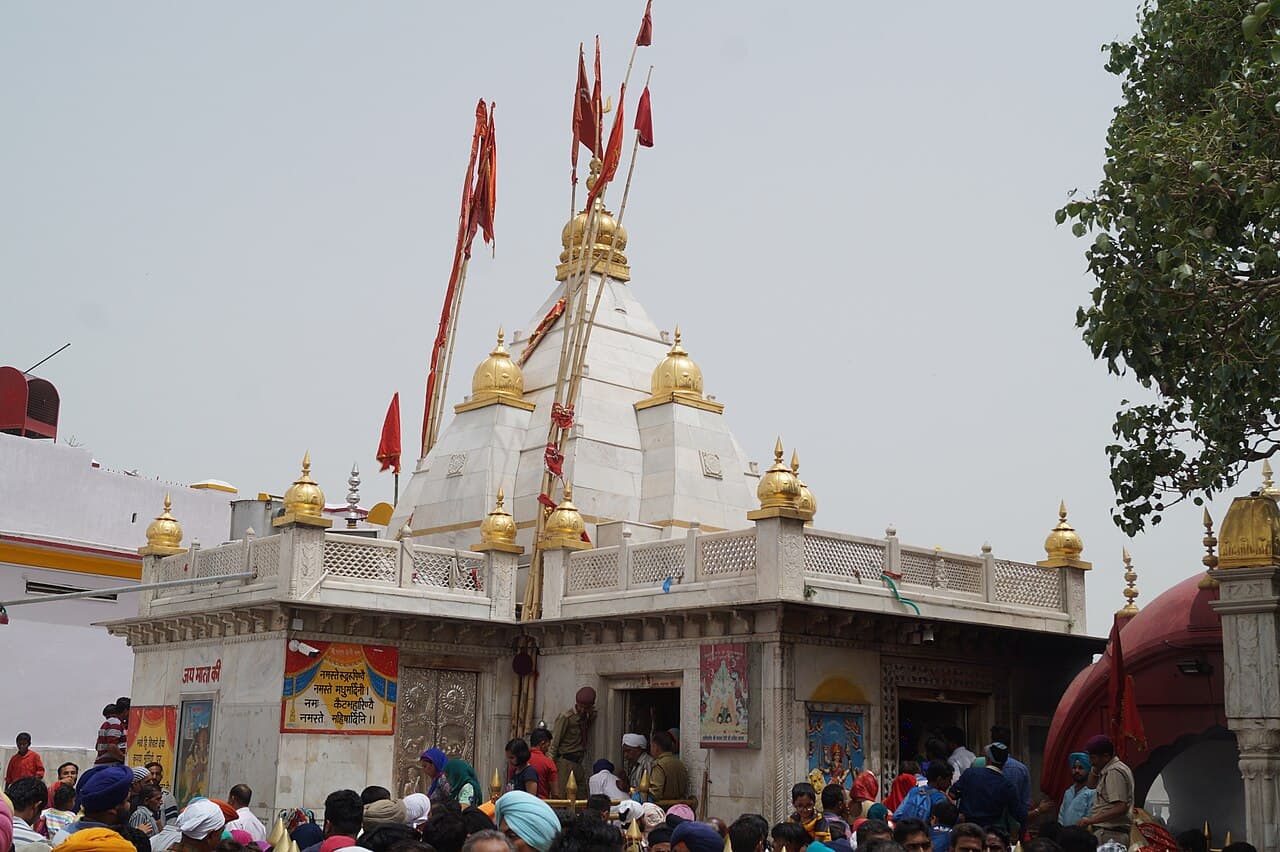
Naina Devi keeps a Shivalik peak about 1,200 m above the Gobind Sagar, and the climb is itself the darshan — the long stepped path, or the cable car that lifts you over the last of the hill. Within the sanctum stand three images, Kali to the left, Naina Devi at the centre and Ganesha to the right, and the Mother is venerated in the form of eyes, for tradition holds that Sati's eyes fell here; she is counted among the fifty-one. The temple's own notice gives 4 am to 10 pm on ordinary days and 2 am through the Navaratras.
 3bJwala Ji
At Jwala Ji there is no image at all. Nine flames burn from the rock of the Kalidhar hillside, each named for a goddess, and the whole worship is of a fire that no one lit and no one feeds. Tradition places Sati's tongue here and the shrine is counted among the fifty-one; the gilded roof is remembered as Maharaja Ranjit Singh's offering. Rot bread is the customary prasad, the aartis are sung several times a day, and the temple keeps roughly 6 am to 10 pm in summer.
For the Himachal hills Mumbai flies: a nonstop of about 2 hours 10 minutes covers the 1,345 km to Chandigarh, from where Naina Devi is 104 km of hill road. By rail it is two nights, which is why this is the one trip from Mumbai that almost nobody makes on the ground.
Jwalamukhi town sits at the temple's own gate and holds the second night, so the morning aarti needs no drive at all. The first night usually falls below Naina Devi — at Anandpur Sahib by the railhead, or in Bilaspur — and Una, 85 km short of the flames, is the wider choice of rooms if you want one base for both.
The hill roads here are at their worst in the July–August monsoon, when landslides slow the Kiratpur–Bilaspur and Una–Jwalamukhi stretches at short notice. The shrines themselves keep their fullest hours at the Shravan Ashtami mela and through both Navaratras, when tens of thousands climb Naina Devi's hill and the temple opens from 2 am — magnificent, and not the week for a quick darshan.
- 3cChintpurni
Chintpurni stands about 977 m up in Una district, 35 km from Jwalamukhi and directly on the road between the two seats — the Devi worshipped here as Chhinnamastika, and the shrine held among the Shakta peethas of the western hills. Almost every pilgrim on this road stops here, and it costs no extra day.
Vindhyavasini on the Ganga
~2–3 daysThis is the shortest of the five trips and the easiest to fold into another journey. Varanasi is the gateway: Vindhyachal is 65 km down NH19 through Mirzapur, an hour and a half to two hours by road, and by rail it is about 83 km with several expresses halting at Vindhyachal station, which stands barely a kilometre from the temple. One full day holds the darshan and the Trikona Parikrama; a second gives Kashi its due — the ghats, the evening Ganga aarti and Vishwanath before dawn. Three days if you want the parikrama walked slowly rather than driven.
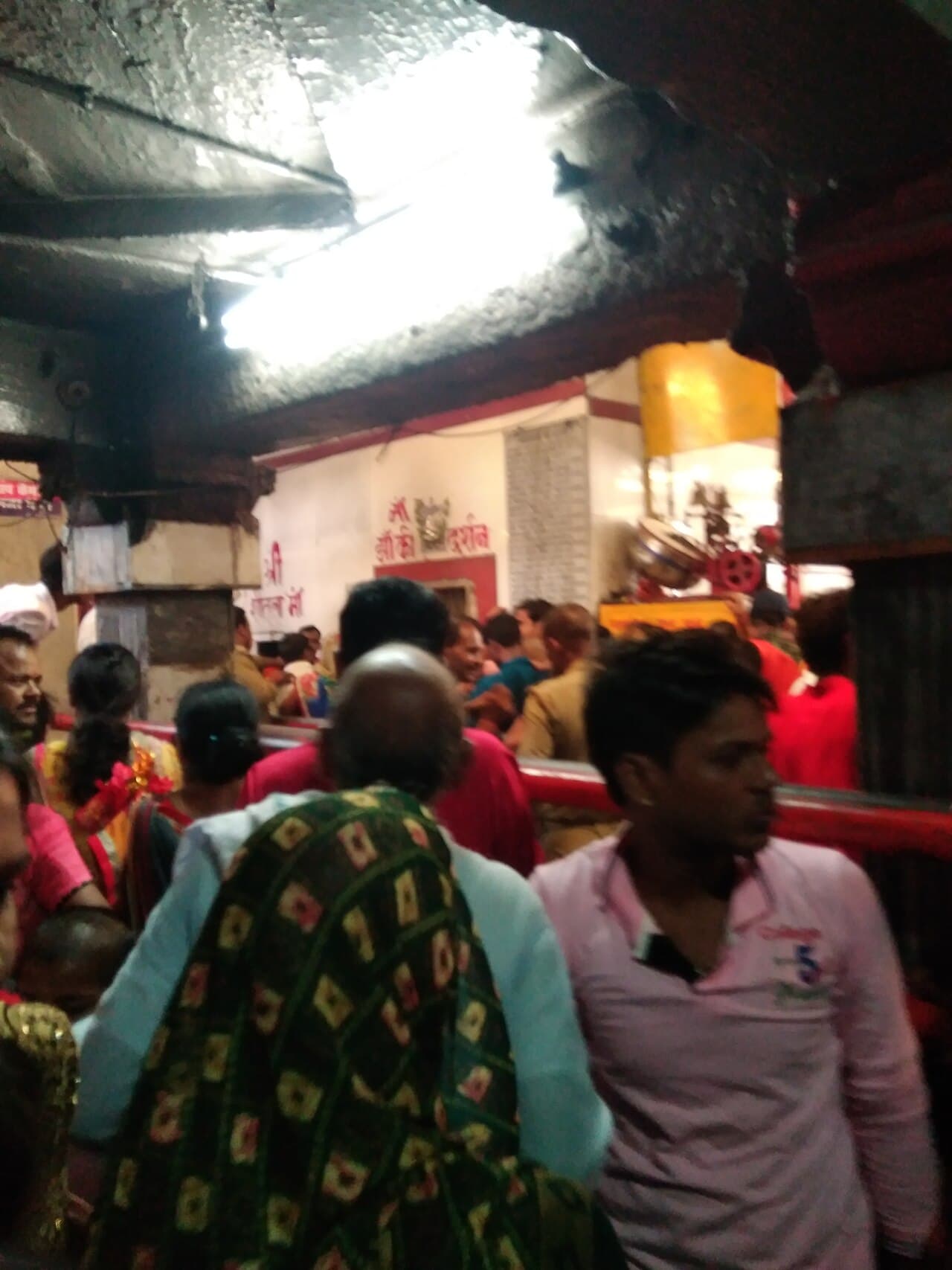
Vindhyavasini is she who dwells in the Vindhyas, and her temple stands where the old hills come down to the Ganga at Vindhyachal. The image is held to be swayambhu, and the shrine is revered as a Siddha Peetha as often as a Shakti Peetha. Do not stop at the sanctum: the Trikona Parikrama joins her to Kali Khoh, the cave of Maha Kali about 6 km off, and to eight-armed Ashtabhuja on a hill 8 km away — to walk the triangle is to honour the Mother in all three of her great aspects. Hours run from about 5 am and lengthen greatly through the Navaratras.
Varanasi is a long rail leg from Mumbai — the Mahanagari Express covers about 1,508 km in some 28 hours 30 minutes — so budget a day and a night each way, or fly and keep those days for the ghats. Vindhyachal is 65 km on from the gateway, an hour and a half by road.
Varanasi is the base: rooms of every kind near the ghats, the widest rail and air connections in the east, and Vindhyachal an easy morning away. Pilgrims who want the goddess first thing instead keep a night at Vindhyachal itself, where the station is a kilometre from the temple and dharamshalas stand around it — the sensible choice through the Navaratras, when the road from Kashi is slow.
- 4aKashi Vishwanath
The gateway city holds a Jyotirlinga of its own, now opened to the river by the Vishwanath Dham corridor, and practically nobody comes to Vindhyachal without giving Kashi a morning. The temple opens about 2:30 am; our Jyotirlinga planner covers this shrine and its cluster in full.
The Eastern Three
~6–8 daysThe eastern trip is the longest of the five and the most rewarding, because it moves through three quite different worlds of Devi worship. Begin in Kolkata itself — Kalighat needs no travel at all, only an early hour. Then go south down the Howrah–Chennai main line to Brahmapur, 602 km, which the faster trains cover in under eight hours and the slower ones in about nine; Tara Tarini is 28 to 35 km further, above the Rushikulya. Come back up and turn north-east for Guwahati: the daily Saraighat runs 1,002 km in about 16 hours 40 minutes and halts at Kamakhya on the way, or a nonstop flight of an hour and twenty-five minutes does the same jump. Six days is brisk; eight lets Kamakhya's hill and the Umananda crossing be unhurried.
 5aKalighat
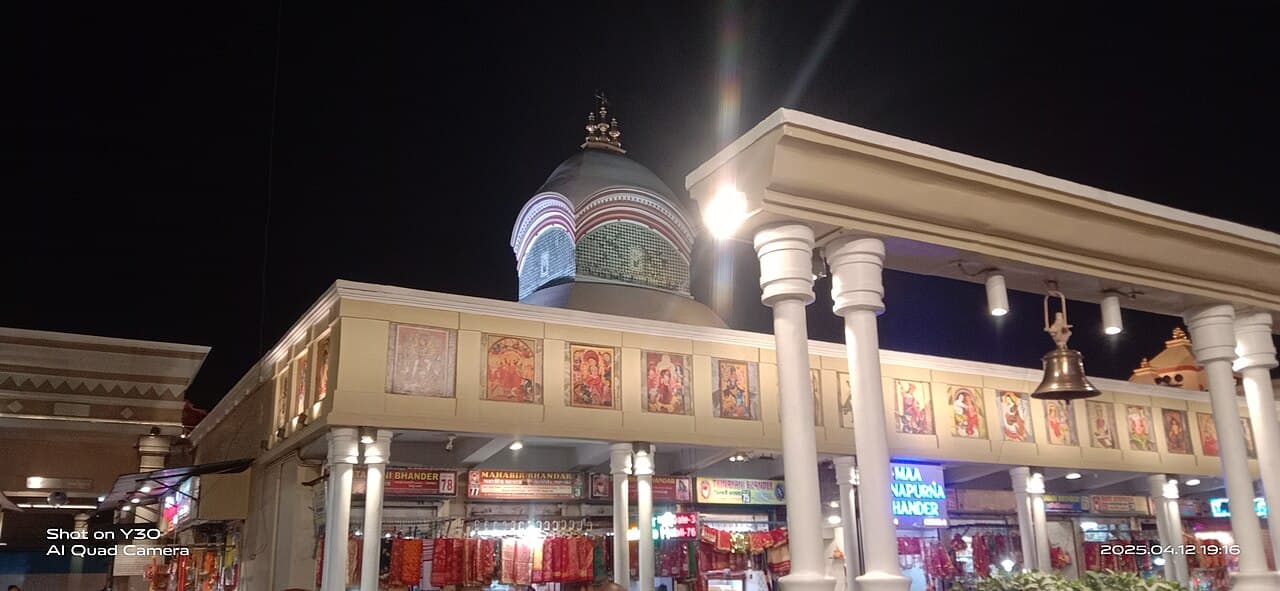
Kalighat is Kali's own city shrine, and the city is widely held to take its name from it. Tradition places the toes of Sati's right foot here and counts the seat among the fifty-one; in the sanctum the Mother is black touchstone, three-eyed, with a long golden tongue and silver-sheathed arms — a form quite unlike the painted clay Kalis of the festival pandals. The temple keeps roughly 5 am to 2 pm and 5 pm to 10:30 pm, and a Metro station stands at its door off Rashbehari Avenue.
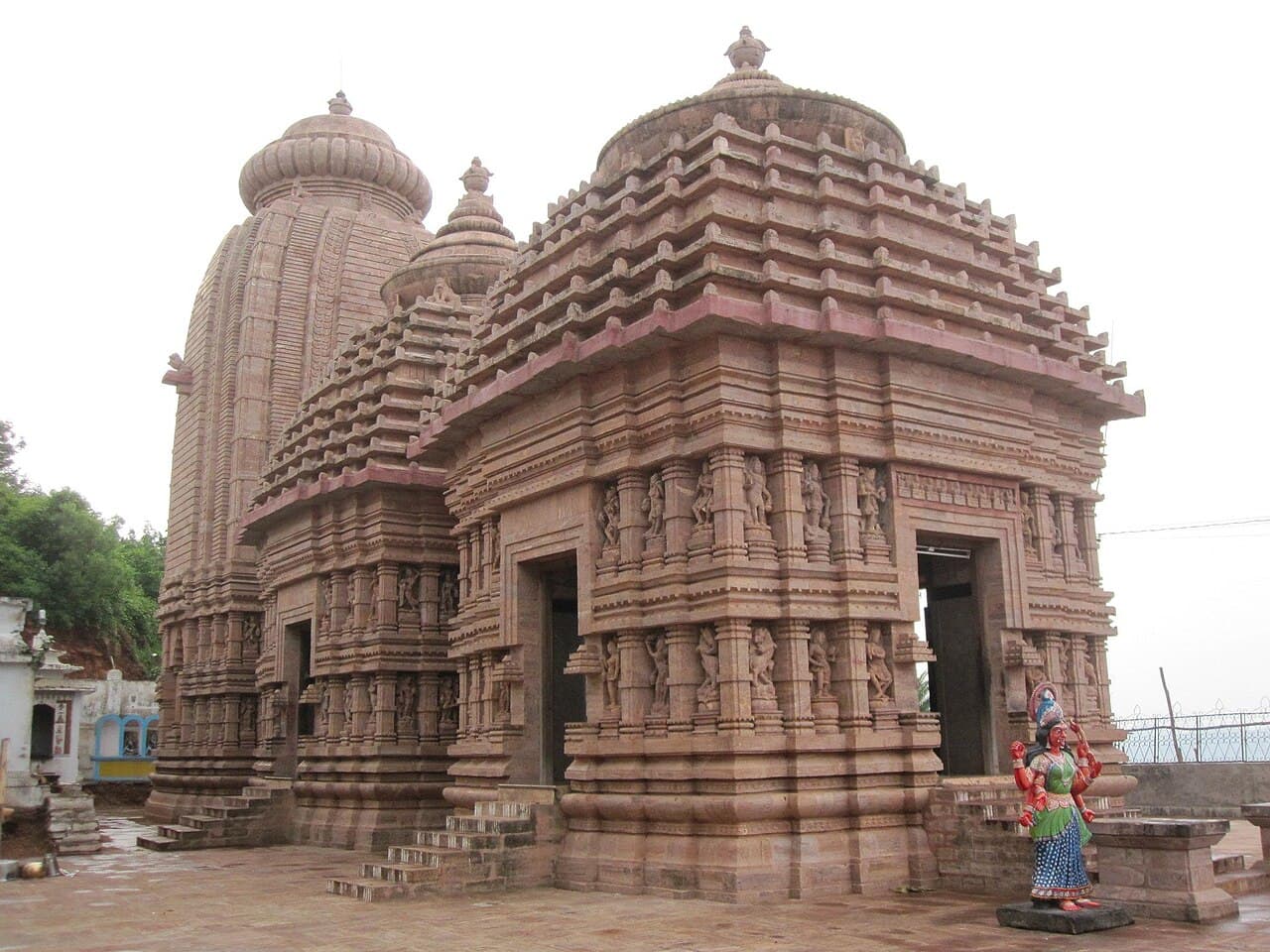
Tara Tarini are twin goddesses on the Kumari hill above the Rushikulya, honoured in Odia tradition as one of the four Adi Shakti Peethas of the east and as a Stana Peetha, where tradition holds Sati's breasts fell. Within the sanctum are two stone heads given silver eyes, worshipped beside brass processional images — Tara who liberates and Tarini who saves. You reach them by 999 steps, by the ghat road, or by the ropeway, which climbs 149 m over a 333 m run in about five minutes.
 5cKamakhya
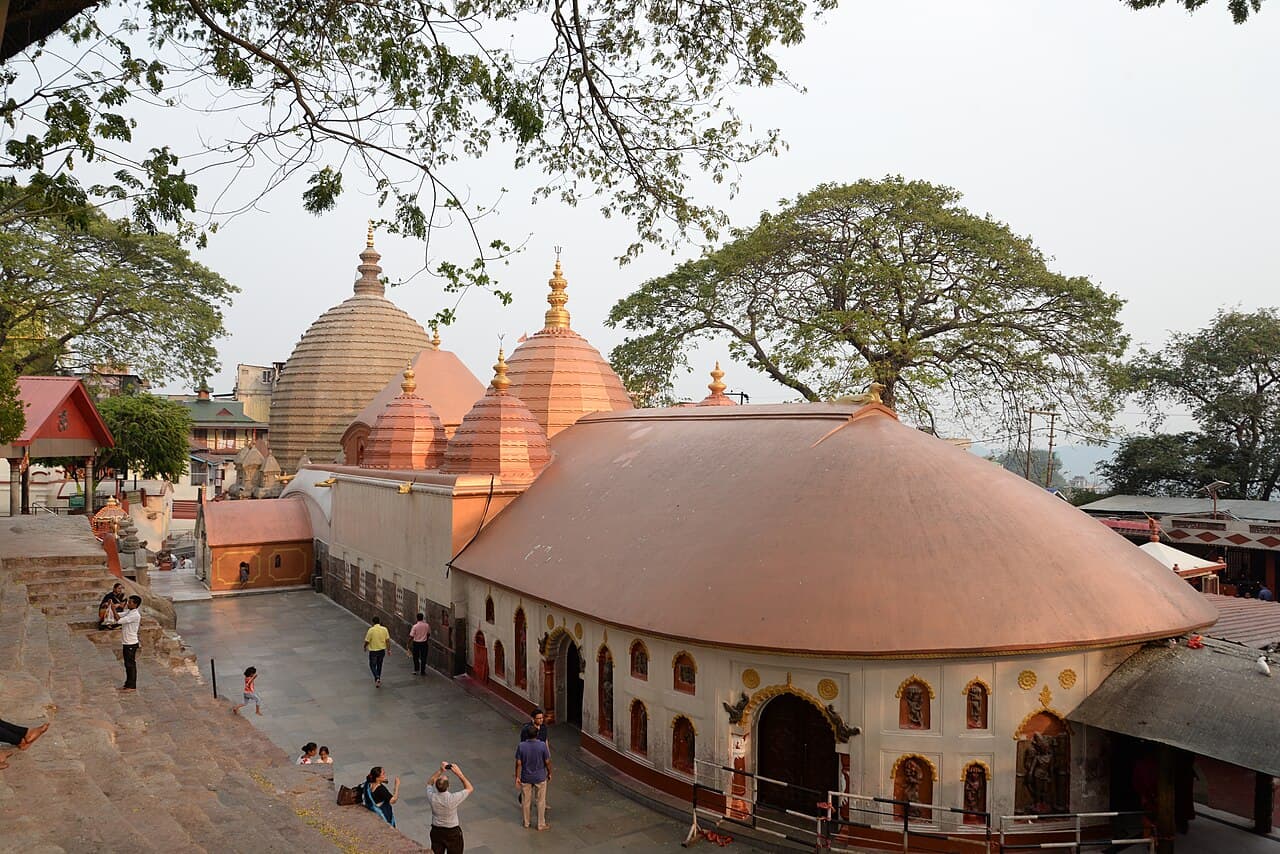
Kamakhya sits on Nilachal hill above the Brahmaputra, and among the peethas she is widely held the foremost — tradition places Sati's yoni here, and there is no image at all: a yoni-shaped stone kept moist by a natural spring is what is worshipped. The ten Mahavidya shrines stand around her on the hill. The Devalaya's own notice opens the doors at 8 am, closes them at midday, reopens at 2:30 pm and shuts at 5:15 pm; special darshan is booked online. The temple is 3 km above Kamakhya Junction and about 8 km from Guwahati station.
Kolkata is the far corner from the western coast: the AC Duronto covers the 1,968 km from Mumbai CSMT to Howrah in about 26 hours 35 minutes, four days a week. It is a night, a day and another night; flights compress it to under three hours, and Kalighat is inside the arrival city.
Guwahati holds the last and longest halt: the hill is a short climb above the city, the Devalaya's darshan slots suit a two-night stay, and the Brahmaputra ghats are minutes away. Earlier in the trip the nights fall in Kolkata near the Kalighat lanes, and one at Brahmapur or on the Gopalpur coast for Tara Tarini.
Kamakhya governs the calendar of this trip. Each June the sanctum closes for three days for the Ambubachi, when the Mother is believed to be in her annual course: for 2026 the Devalaya's notification set Pravritti at 9:26 pm on 22 June, kept the doors shut from 23 to 25 June, and reopened on the morning of the 26th, when the raktavastra and the Mother's prasad are given. The reopening is one of the largest gatherings in eastern Bharat. Check the Devalaya's own notice before booking any June travel. Odisha's Chaitra Parba fills the four Tuesdays of Chaitra at Tara Tarini, and Bengal gives its greatest crowds to Kalighat at Durga Puja and Kali Puja.
- 5dUmananda, Peacock Island
A pilgrimage to Kamakhya is held incomplete without darshan of her Bhairava, Umananda, on the little Peacock Island in the Brahmaputra below — the smallest inhabited river island there is, reached by the wooden ferry boats that wait on the bank. Half a morning, and the crossing itself is the point.
~22–27 days in one continuous journey across nine states, mixing rail and flights.
The eleven seats in this journey's visiting order — tap a marker for the temple.
Mumbai's wheel opens on its own doorstep with Ambabai at Kolhapur and the Saptashringi gad above Vani, then flies north to the Shivaliks for Naina Devi and Jwala Ji. From the Kangra hills the rails carry you down through Delhi to Varanasi and Vindhyavasini, on to Kalighat, the Ganjam coast and the Brahmaputra, and finally south-west into the Deccan, where Alampur, Mysuru and Kanchipuram close the journey — Chennai to Mumbai is under two hours home. Twenty-two to twenty-six days, and the first cluster alone puts two of the eleven behind you before the first week is out.
The Western Pair
~4–5 daysBoth western seats stand in one state, but 440 km apart, so the trip is a four-day arc up the Deccan. Pune is the gateway: Kolhapur is 230 km south on NH48, four and a half to five and a half hours, and a rail arrival can skip Pune altogether — the overnight Mahalaxmi Express runs 518 km from Mumbai CSMT into Kolhapur's own terminus in about 11 hours. Give Ambabai a full morning. Then turn north: Kolhapur to Nashik is about 440 km and close to seven hours, and Saptashringi's gad stands 60 km beyond Nashik in Kalwan taluka. A fifth day makes the climb, the darshan and the drive back unhurried rather than counted.
From the Sahyadri to the Shivaliks: come the 258 km down from Nashik Road to Mumbai in about 4 hours 43 minutes, then a nonstop of roughly 2 hours 10 minutes covers the 1,345 km to Chandigarh, where the hill road to Naina Devi begins 104 km on. By rail the same jump is two nights, which is why almost everyone flies this one.
The Himachal Pair
~3–4 daysThe two Himachal seats sit on one hill road and make an easy three-day journey, four if you take the Kangra shrines around Jwala Ji as well. Chandigarh is the gateway: Naina Devi is 104 km out, about two and a quarter hours by road, and the temple's own page reckons it at roughly 100 km with Anandpur Sahib the nearest railhead some 25 km below. Sleep near the hill, then run the roughly 155 km north-west to Jwalamukhi — about two and three-quarter hours through Una, which is itself 85 km from the flames — and give the second evening to the aarti. A rail arrival can skip the road entirely: Delhi's Amb Andaura Vande Bharat calls at Anandpur Sahib and again at Una.
Down from the Kangra hills to the Ganga, in two Vande Bharat runs with a night in the capital between them: Una or Anandpur Sahib to New Delhi is 412 km in about 5 hours 15 minutes, and New Delhi to Varanasi another 755 km in about 8 hours 5 minutes. Both are daylight trains, so this hop costs a day and a night rather than two travelling days.
Vindhyavasini on the Ganga
~2–3 daysThis is the shortest of the five trips and the easiest to fold into another journey. Varanasi is the gateway: Vindhyachal is 65 km down NH19 through Mirzapur, an hour and a half to two hours by road, and by rail it is about 83 km with several expresses halting at Vindhyachal station, which stands barely a kilometre from the temple. One full day holds the darshan and the Trikona Parikrama; a second gives Kashi its due — the ghats, the evening Ganga aarti and Vishwanath before dawn. Three days if you want the parikrama walked slowly rather than driven.
Straight down the Ganga's own line: the Vande Bharat covers the roughly 760 km from Varanasi to Howrah in under ten hours by way of Patna, and the older expresses take about twelve over the 704 km route. Either way you leave the Vindhyas after breakfast and reach Kalighat's city the same night.
The Eastern Three
~6–8 daysThe eastern trip is the longest of the five and the most rewarding, because it moves through three quite different worlds of Devi worship. Begin in Kolkata itself — Kalighat needs no travel at all, only an early hour. Then go south down the Howrah–Chennai main line to Brahmapur, 602 km, which the faster trains cover in under eight hours and the slower ones in about nine; Tara Tarini is 28 to 35 km further, above the Rushikulya. Come back up and turn north-east for Guwahati: the daily Saraighat runs 1,002 km in about 16 hours 40 minutes and halts at Kamakhya on the way, or a nonstop flight of an hour and twenty-five minutes does the same jump. Six days is brisk; eight lets Kamakhya's hill and the Umananda crossing be unhurried.
The long diagonal off the Brahmaputra, and the one leg almost everyone flies: Guwahati to Hyderabad is 1,677 km with a nonstop of about 2 hours 45 minutes, after which Alampur is 216 km of road, some four hours south. Counting the run down from Nilachal hill and the drive to the Tungabhadra, give this hop a full day rather than an afternoon.
The Deccan and the South
~6–7 daysThree seats across three states, and the whole trip runs on one long southward line. Day one leaves Hyderabad for Alampur, 216 km down NH44 and the Kurnool road — about four hours — for Jogulamba and the Navabrahma temples, with the night at Kurnool 26 km away. Then south: Kurnool to Bengaluru is 359 km, and the Bengaluru–Mysuru expressway's 118 km takes about ninety minutes more, so Chamundi Hill can have the following morning. From Mysuru the Shatabdi covers the 500 km to Chennai in about 7 hours 25 minutes, and Kanchipuram is 74 km on with a station of its own — an hour or so by road, and Kamakshi's darshan closes the journey. Six days is the working shape; seven if Kanchi's thousand temples are to be more than a glance.
Official tour options
- IRCTC Bharat Gaurav tourist trains — the state-run pilgrim-train portal, whose eastern temple circuits from Delhi Safdarjung take in Kalighat along with Varanasi, Gaya and the Odisha coast.IRCTC (Indian Railway Catering & Tourism Corporation)
- IRCTC Tourism — the Bharat Darshan and rail-based Devi circuits, including Shakti Peetha specials that run Kolkata, Kamakhya and Varanasi in one journey from southern and northern boarding points.IRCTC (Indian Railway Catering & Tourism Corporation)
- HRTC — the Himachal state buses that serve Naina Devi, Jwalamukhi and Chintpurni from Delhi, Chandigarh and Dharamshala, including the religious-circuit service launched for the Kangra shrines. Online booking opens sixty days ahead.HRTC (Himachal Road Transport Corporation, Govt. of Himachal Pradesh)
- MSRTC — the Maharashtra state buses and package tours that reach Kolhapur and the Saptashringi gad from Pune, Mumbai and Nashik, the two western seats being the state's own.MSRTC (Maharashtra State Road Transport Corporation)
Season & festivals
Best window: October to March. The plains, the Deccan and the coasts are all at their kindest then, and the Himachal hill roads are clear. April to June is hot everywhere below the hills, and the June–September monsoon slows two stretches in particular — the Kiratpur–Bilaspur and Una–Jwalamukhi hill roads, and the Brahmaputra valley. One date is fixed rather than seasonal: Kamakhya's sanctum closes for three days each June for the Ambubachi, so check the Devalaya's notice before planning any June travel to Guwahati.
Navaratri is when every one of the eleven is at its fullest — both the Chaitra Navaratri of spring and the Sharad Navaratri of autumn, which in 2026 runs from Ghatasthapana on Sunday 11 October to Vijayadashami on Tuesday 20 October. Queues begin before dawn, special alankaras and homas run through the night, and Naina Devi opens from 2 am. Bengal keeps the last five nights as Durga Puja, and Mysuru keeps the tenth as the Jamboo Savari that closes Dasara at Chamundeshwari's own hill. Travel then for the darshan of a lifetime, not for a quick one — and book rooms and trains weeks ahead.
Four of the eleven are climbs, and none of them is optional: 999 steps at Tara Tarini, 1,008 at Chamundeshwari, about 500 at Saptashringi, and the long stepped path at Naina Devi. Each has a mechanical alternative — a ropeway at Tara Tarini and Naina Devi, a funicular at the gad, a motor road up Chamundi Hill — but all of them queue heavily at festivals and some close in bad weather. Plan the climbs for the first hours of the day, and carry water.
Yatri checklist
- Wear footwear that slips off easily — it comes off at every temple — and shoes you can actually climb in: this circuit asks for 999 steps at Tara Tarini, 1,008 at Chamundeshwari, about 500 at Saptashringi and the stepped path at Naina Devi.
- Check Kamakhya's Ambubachi dates on the Devalaya's own site before booking any June travel — the sanctum closes for three days and reopens to one of the largest gatherings in the east.
- If you are travelling in either Navaratri, book rooms and trains weeks ahead and expect pre-dawn queues; if you want an unhurried darshan instead, choose weekdays from October to March outside the festival fortnights.
- Pack for three climates in one journey: warm layers for the Shivalik hills, light cotton and sun protection for the Deccan and both coasts, and something that dries fast for the Ganga, the Rushikulya and the Brahmaputra.
- Carry a government photo ID and your confirmed train, flight and stay bookings — special-darshan tickets, temple-trust rooms and the online passes several of these shrines now issue are all held against the same ID.
- Keep buffer days, especially if you are attempting all eleven in one run: a single missed connection on a two-day rail leg, or one closed hill road in the monsoon, moves everything after it.
Planning FAQs
How many Shakti Peethas are near Mumbai, and how long do they take?+
Two stand in Maharashtra itself, and the state counts both among its sade-tin — Ambabai at Kolhapur and Saptashringi on her gad above Vani. The Mahalaxmi Express leaves CSMT at night and runs the 518 km straight into Kolhapur's own terminus in about 11 hours; the gad is 60 km beyond Nashik, which the Panchvati Express reaches in about 4 hours 43 minutes over 258 km. Four days hold both comfortably, five without hurry. The next nearest is the Deccan: Hyderabad is an overnight of about 14 hours 15 minutes over 790 km, and Alampur 216 km beyond it.
How many Shakti Peethas are there, and which eleven does this planner cover?+
There is no single count, and that is not a defect of the tradition — it is the tradition. The most widely followed reckoning names fifty-one seats where parts of Sati's body fell; some traditions count fifty-two, tantric lists run to a hundred and eight, the Ashtadasha stotram names eighteen great ones, Maharashtra keeps its own sade-tin, and Odisha honours four Adi Peethas of the east. This planner covers the eleven seats MereMandir holds: Naina Devi and Jwala Ji in Himachal; Vindhyavasini at Vindhyachal; Kalighat, Tara Tarini and Kamakhya in the east; Jogulamba at Alampur, Chamundeshwari above Mysuru and Kamakshi at Kanchipuram in the Deccan and the south; and Mahalaxmi of Kolhapur with Saptashringi of Vani in the west.
Can the Shakti Peethas be done in one trip?+
Not comfortably. Even these eleven stand in nine states, from the Shivaliks to the Brahmaputra to the Kaveri delta's edge, and there is no road circuit the way there is for the Ashtavinayaka. Done as one continuous journey it runs to three or four weeks of mixed rail and flights. Almost everyone travels the other way instead, in the five regional trips this planner is built around — the Himachal pair in three days, Vindhyavasini in two, the eastern three in six to eight, the Deccan and the south in six or seven, and the western pair in four — completing the eleven over several years.
When is the best time for Shakti Peetha darshan?+
October to March is the most comfortable window across the plains, the Deccan and both coasts, with clear roads in the Himachal hills. The most charged time of all is Navaratri — both the Chaitra Navaratri of spring and the Sharad Navaratri of autumn, 11 to 20 October in 2026 — when every seat sees the greatest darshan of its year: queues from before dawn, special alankaras and night-long worship. It is the most auspicious window and the most crowded; book lodging and travel well ahead, and treat published darshan hours as a starting point.
When is Kamakhya closed, and what is the Ambubachi?+
Each June the Kamakhya sanctum closes for three days, because the Mother is believed to be in her annual course — the Ambubachi. For 2026 the Devalaya's own notification set Pravritti at 9:26 pm on 22 June, kept the doors shut from 23 to 25 June, and reopened on the morning of the 26th, when the raktavastra and the Mother's prasad are given and the hill fills with one of the largest gatherings in eastern Bharat. The dates move with the panchang each year, so check the Devalaya's notice before booking June travel. Every other seat on this circuit is open all year.
Which Shakti Peetha is the foremost?+
Kamakhya on Nilachal hill above the Brahmaputra is widely regarded as the foremost, and she is the supreme seat of Tantric worship, with no image at all in her sanctum. But each region holds its own seat supreme — Kalighat in Bengal, Vindhyavasini on the Ganga, Jwala Ji's eternal flames in Himachal, Ambabai in Karvir, Kamakshi in Kanchi — and the tradition itself treats darshan at any peetha as darshan of the same Mother. The order in which you take them carries no merit or demerit.
Can the Shakti Peethas be done by train?+
Almost entirely, yes, and the rail map is unusually kind here. Vindhyachal has a station a kilometre from the temple, Kalighat has a Metro station at its door, the Saraighat halts at Kamakhya, Brahmapur sits on the Howrah–Chennai main line for Tara Tarini, Kolhapur has the Mumbai overnight into its own terminus, Kanchipuram has its own station, and Delhi's Amb Andaura Vande Bharat calls at Anandpur Sahib and Una for the Himachal pair. Only the last stretches are by road — the hill climb to Naina Devi, the 60 km to the Saptashringi gad, Alampur from Kurnool, and Chamundi Hill above Mysuru — and the two long diagonals, Guwahati to the Deccan and Chennai to the west, are honestly flights.