

One of the eighteen Maha Shakti Peethas — the fierce Yogini Jogulamba at Alampur, by the Tungabhadra near its meeting with the Krishna.
- Deity
- Devi Jogulamba
- Location
- Alampur, Jogulamba Gadwal, Telangana
- Category
- Shakti Peethas
- Established
- Ancient site (Navabrahma temples, Badami Chalukya 7th–8th c.); Jogulamba shrine rebuilt 2005 after destruction c. 1390
- Setting
- On the Tungabhadra near its confluence with the Krishna, at Alampur
- Best Time to Visit
- October to February; and Navaratri (Dasara)
- One of the 18 Ashtadasha Maha Shakti Peethas (traditionally the fifth)
- Tradition: the upper teeth of Sati fell here; Bhairava is Bala Brahmeshwara
- Jogulamba is a fierce Yogini form, seated upon a corpse
- Alampur is the 'western gateway of Srisailam'
- Beside the Navabrahma temples — nine Chalukya Shiva shrines (7th–8th c.)
- Shrine destroyed c. 1390; idol hidden; rebuilt and reconsecrated in 2005
- On the Tungabhadra near its confluence with the Krishna
Significance
To stand among the eighteen Maha Shakti Peethas is to hold a place of the first rank in the sacred geography of the Goddess, and Jogulamba's is made the more striking by her fierce Yogini form and by the deep antiquity of Alampur around her.
The reinstalled image is worshipped in her terrible aspect, upon the corpse, and the pilgrimage here is bound up with the neighbouring Navabrahma temples and with Srisailam beyond, of which Alampur is the western door. For the devout, the goddess who was hidden and then restored carries a particular power — a faith that outlasts even the fall of temples.
The reconsecration of 2005 restored a worship broken for six centuries, and the goddess is once more served through the day with the fierce, Tantric rites her form demands. Set among the Navabrahma temples by the Tungabhadra, the shrine rewards a slow visit: the early Chalukya carving of Swarga Brahma, the river at the confluence, and the rare sense — among living temples — of a sacred place lost and deliberately brought back to life.
History
Alampur stands on the bank of the Tungabhadra, close to where it joins the Krishna, in Jogulamba Gadwal district of southern Telangana. Known as the western gateway of Srisailam and as Dakshina Kailasam, it is an ancient sacred town, and its goddess, Jogulamba — 'the mother of the yoginis' — presides over one of the eighteen Ashtadasha Maha Shakti Peethas, traditionally counted the fifth.
By the Shakti Peetha tradition it is here that the upper teeth of Sati fell, and the Bhairava who guards the seat is Bala Brahmeshwara, worshipped in the adjoining Bala Brahma shrine. Jogulamba is a fierce, Tantric form of the Devi, shown seated upon a corpse with a scorpion, a frog and a lizard upon her head — an aspect said to grant the accomplishments of yoga.
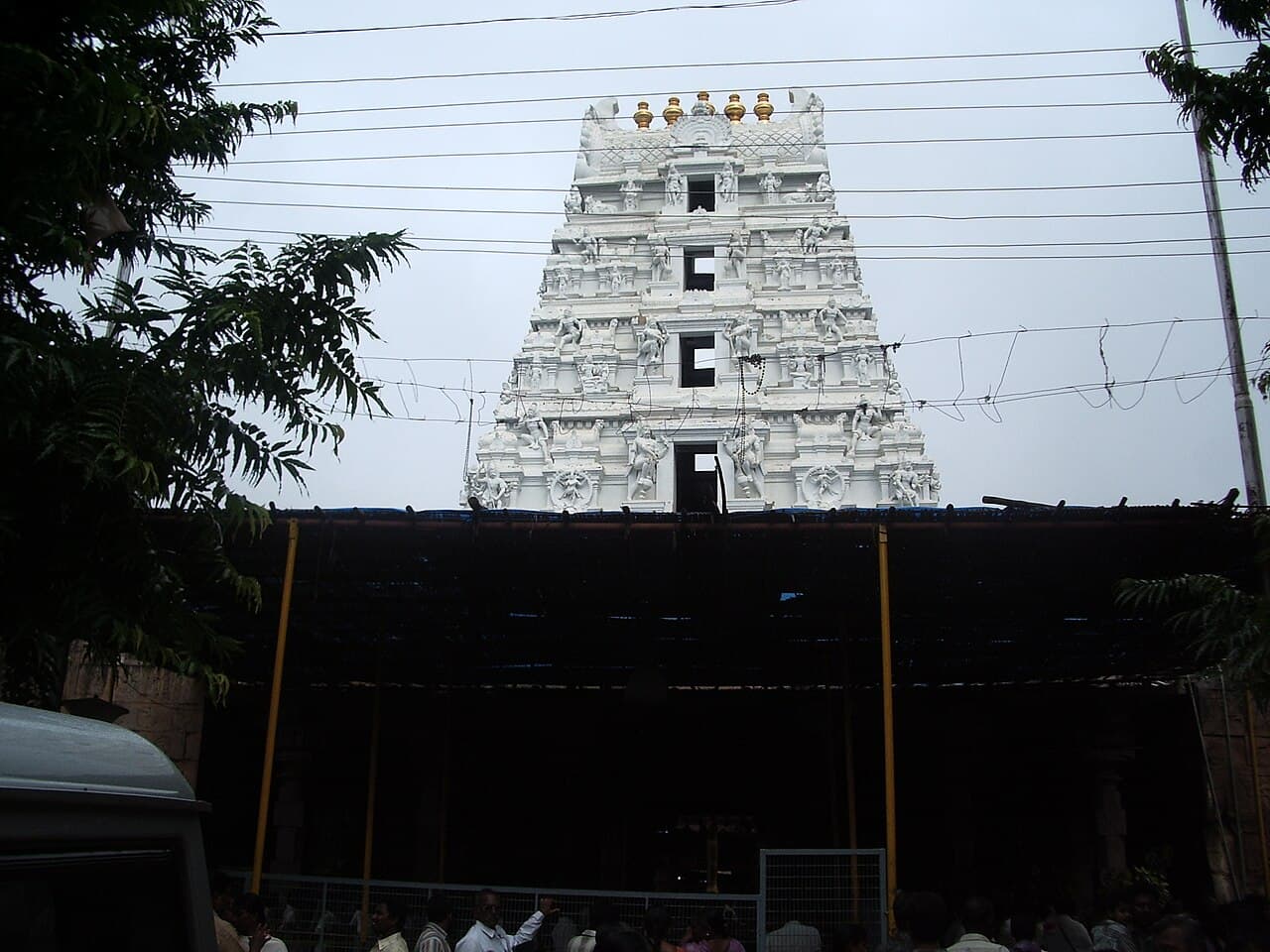
The shrine's history is one of loss and return: it was destroyed around 1390, in the wars of the age, and the goddess's image was hidden away in the Bala Brahma temple for centuries while the Vijayanagara kings fortified the complex. Only in 2005 was the Jogulamba temple rebuilt on its original site and the deity reconsecrated.
Architecture
Jogulamba's shrine sits beside one of the treasures of early South Indian architecture: the Navabrahma temples, a group of nine Shiva temples raised by the Badami Chalukyas in the 7th and 8th centuries in an early northern (Nagara) manner rare in the Deccan — among them the celebrated Swarga Brahma, with its fine sculpture and pierced stone windows.
The Jogulamba temple itself, rebuilt in 2005, is a newer structure within this historic ensemble by the river. The whole complex is protected by the Archaeological Survey of India, and parts of it were relocated to higher ground when the waters of the Srisailam reservoir rose.
Festivals
Timings
Open daily, roughly 7:00 AM to 1:00 PM and 2:00 PM to 8:30 PM; hours extend during Navaratri. Confirm current timings locally.
Alampur lies about two hundred and twenty kilometres south of Hyderabad, whose Rajiv Gandhi International Airport is the nearest; the closest railheads are Alampur Road, some nine kilometres off, and Kurnool across the river in Andhra Pradesh, about twenty-six kilometres away. The town sits just off the Hyderabad–Bengaluru corridor, and pilgrims often pair it with Srisailam and the Mallikarjuna Jyotirlinga.
Timings are indicative — please confirm with the temple trust before travelling.
Nearby Temples
Frequently Asked Questions
Where is Jogulamba, Alampur Temple located?+
Jogulamba, Alampur Temple is in Alampur, Jogulamba Gadwal, Telangana, India.
Which deity is worshipped at Jogulamba, Alampur Temple?+
Jogulamba, Alampur Temple is dedicated to Devi Jogulamba.
Which tradition does Jogulamba, Alampur belong to?+
Jogulamba, Alampur is one of the Shakti Peethas temples dedicated to Devi (Shakti).
What are the timings of Jogulamba, Alampur Temple?+
Open daily, roughly 7:00 AM to 1:00 PM and 2:00 PM to 8:30 PM; hours extend during Navaratri. Confirm current timings locally.
What is the best time to visit Jogulamba, Alampur Temple?+
October to February; and Navaratri (Dasara)
When was Jogulamba, Alampur Temple established?+
Jogulamba, Alampur Temple — Ancient site (Navabrahma temples, Badami Chalukya 7th–8th c.); Jogulamba shrine rebuilt 2005 after destruction c. 1390.
Photo: రహ్మానుద్దీన్ · CC BY-SA 3.0