
Kolkata sits nearest the eastern pair: Vaidyanath at Deoghar is about 310 km up the Grand Chord to Jasidih, the fastest trains taking a little over three hours, and Kashi Vishwanath follows on the same westward corridor. The other ten are long hauls across the country, which is why Kolkata's plan is the most rail-shaped of the four.
Which twelve?
These are the twelve of the mainstream dvadasha list: Somnath, Mallikarjuna at Srisailam, Mahakaleshwar at Ujjain, Omkareshwar, Kedarnath, Bhimashankar, Kashi Vishwanath, Trimbakeshwar, Vaidyanath at Deoghar in Jharkhand, Nageshwar near Dwarka, Rameshwaram and Grishneshwar. Two of them are counted differently by some traditions: many Maharashtra itineraries put Vaidyanath at Parli Vaijnath and Nageshwar at Aundha Nagnath, making a 'Maharashtra 5'. This planner follows the Deoghar and Dwarka identifications throughout — the guide page sets out the variance in full.
Planning the darshan? See the route guide →How will you complete the twelve?
Seven regional trips of 1–6 days each — complete the twelve at your own pace, as most pilgrims do.
The twelve shrines grouped into seven trips — tap a marker for the temple.
Kashi & Vaidyanath
~3–4 daysThe eastern pair is rail-linked and can be done in three days, four if you want Kashi properly. Varanasi is the gateway; give the first evening to the ghats and the Ganga aarti and the next dawn to Vishwanath, then take the Varanasi–Deoghar train — 456 km in about 7 hours 20 minutes, six days a week, calling at Jasidih — and do Baidyanath the following morning. Several overnight trains run the same corridor if you would rather sleep through it.
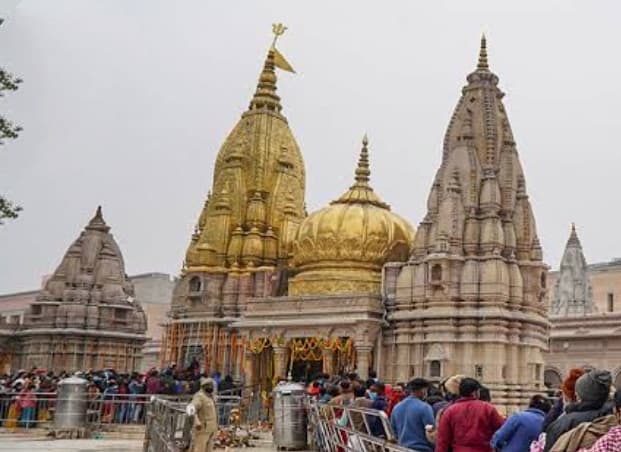
Kashi Vishwanath stands at the heart of Varanasi, now opened to the river by the Vishwanath Dham corridor that connects the temple to the Ganga ghats. The temple opens at about 2:30 am; the Mangala Aarti between 3 and 4 am is by ticket, and general darshan runs from 4 am, so the quietest hour is before the city wakes.
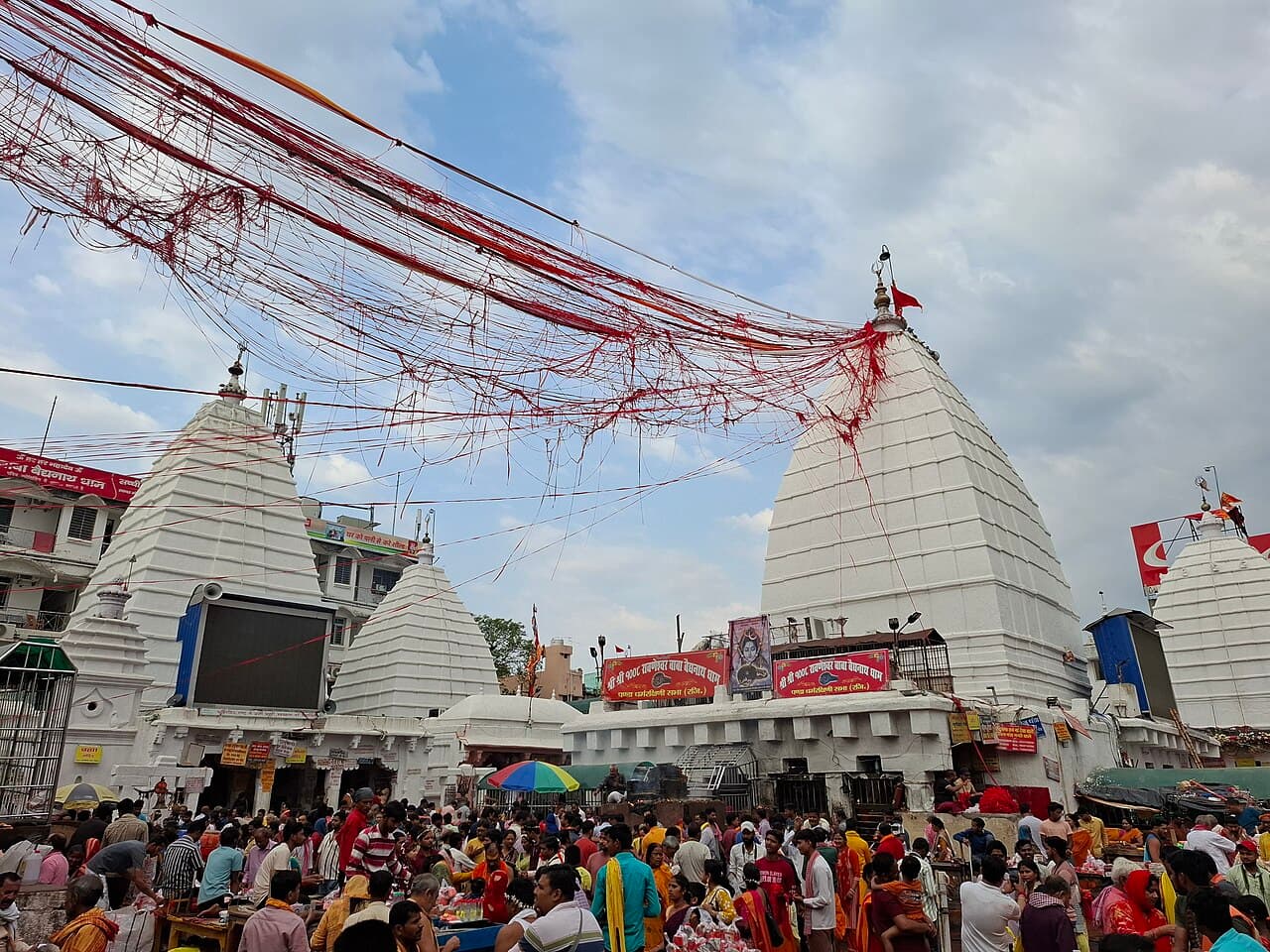
Vaidyanath at Deoghar — Baba Baidyanath Dham — lies 7 km from the Jasidih railhead, its complex holding twenty-one shrines around the main one. In Shravan the Kanwar line from Sultanganj turns the town into one of India's largest gatherings; outside the mela an early darshan is calm, and the temple opens about 4 am.
Kolkata is closer to Vaidyanath than any other metro: a Vande Bharat covers the 309 km from Howrah to Jasidih in about 3 hours 7 minutes, and Deoghar's temple is 7 km on. Kashi follows up the same westward line, so the pair falls naturally into one trip from here.
Varanasi is the base for the pair: rooms of every kind near the ghats and the Dham corridor, the widest rail and air connections in the east, and a temple that opens at 2:30 am for those who want the first darshan. At Deoghar the halt is usually a single night near the temple or by Jasidih station.
- 1cSarnath
Sarnath is 8 km north-east of Varanasi, where the Buddha gave his first sermon — the Dhamek stupa, the Ashokan remains and the site museum make an easy half-day between the two darshans.
Kedarnath
~5–6 daysKedarnath is its own trip, not a stop on anyone else's. From the Haridwar railhead the mountain road runs roughly 215–222 km to Sonprayag through Devprayag, Rudraprayag and Guptkashi — eight to nine hours, and longer in season traffic — so day one ends at or near the roadhead. Private vehicles stop at Sonprayag: a shared shuttle covers the last 5 km to Gaurikund, and the 16 km trek to the shrine begins there. Reckon five to six days in all: two on the road each way, one for the climb and darshan, and a buffer day the mountain will eventually ask for.
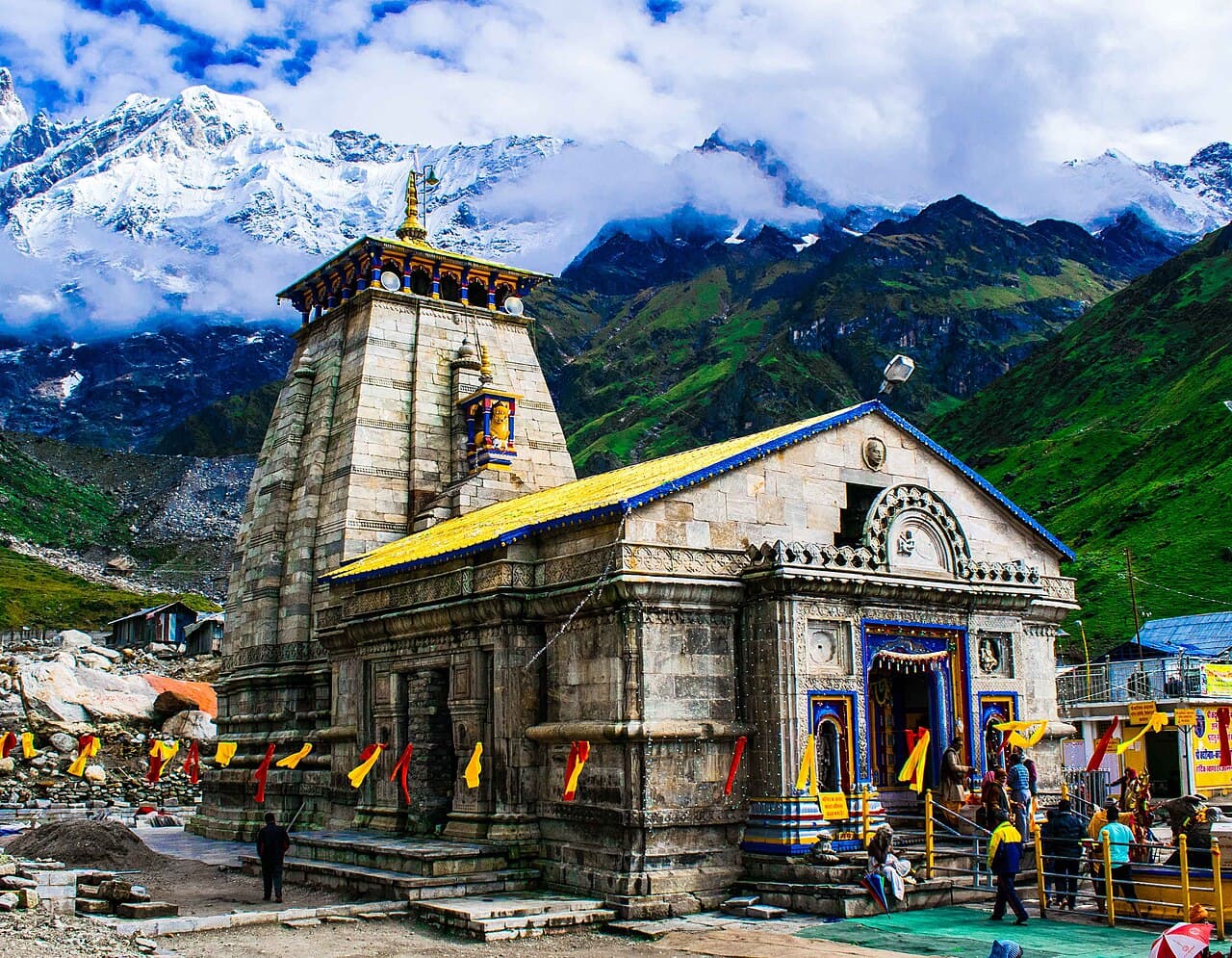
Kedarnath is the highest and hardest-won of the twelve, at about 3,580 m behind the Mandakini in a cirque of snow — a 16 km trek from Gaurikund that takes six to eight hours on foot, with pony and palki available. The shrine is open only for roughly six months; through the snowbound winter the deity is worshipped at the Omkareshwar temple in Ukhimath.
One daily train does the whole northern feeder: the Doon Express runs from Howrah about 1,557 km to the Dehradun end of the line in some 34 to 35 hours, calling at both Varanasi and Haridwar on the way. It is two nights on rails; flying to Dehradun compresses that to a morning.
Sleep at the roadhead — Sonprayag itself, or Guptkashi about 30 km back where the choice of rooms is wider — so the shuttle to Gaurikund and the climb can begin at first light. Lodging above Gaurikund is basic and weather-dependent; book ahead in May–June, and keep the Uttarakhand yatra registration handy, as it is checked on this stretch.
Kedarnath is a six-month shrine and it governs any plan to complete the twelve. For 2026 the kapat opened on 22 April at 8 am — the date announced on Maha Shivaratri by the Shri Badarinath–Kedarnath Temple Committee at the winter seat, Ukhimath — and closing is expected around 11 November (Bhai Dooj), the exact date announced on Vijayadashami. Registration on the Uttarakhand government's yatra portal is required and checked en route; keep July and August buffered for monsoon landslides on the mountain road. Helicopter services do operate in season, but book them only on the official government portal — no other website or agent is authorised.
- 2aGaurikund
Gaurikund at about 1,980 m is where the road ends and the 16 km trek begins; its hot springs, fed from below the mountain, are the traditional bath before the climb. Reach it by the shared shuttle from Sonprayag, 5 km back.
Srisailam
~1–2 daysSrisailam is the shortest of the seven trips: 213 km south of Hyderabad on NH765, four and a half to six hours through the Nallamala forest. Determined pilgrims make it a very long single day; one night at Srisailam is far kinder, leaving the morning free for the Bhramaramba shrine and the Krishna below the hill. There is no railway to Srisailam, so the road is the route.
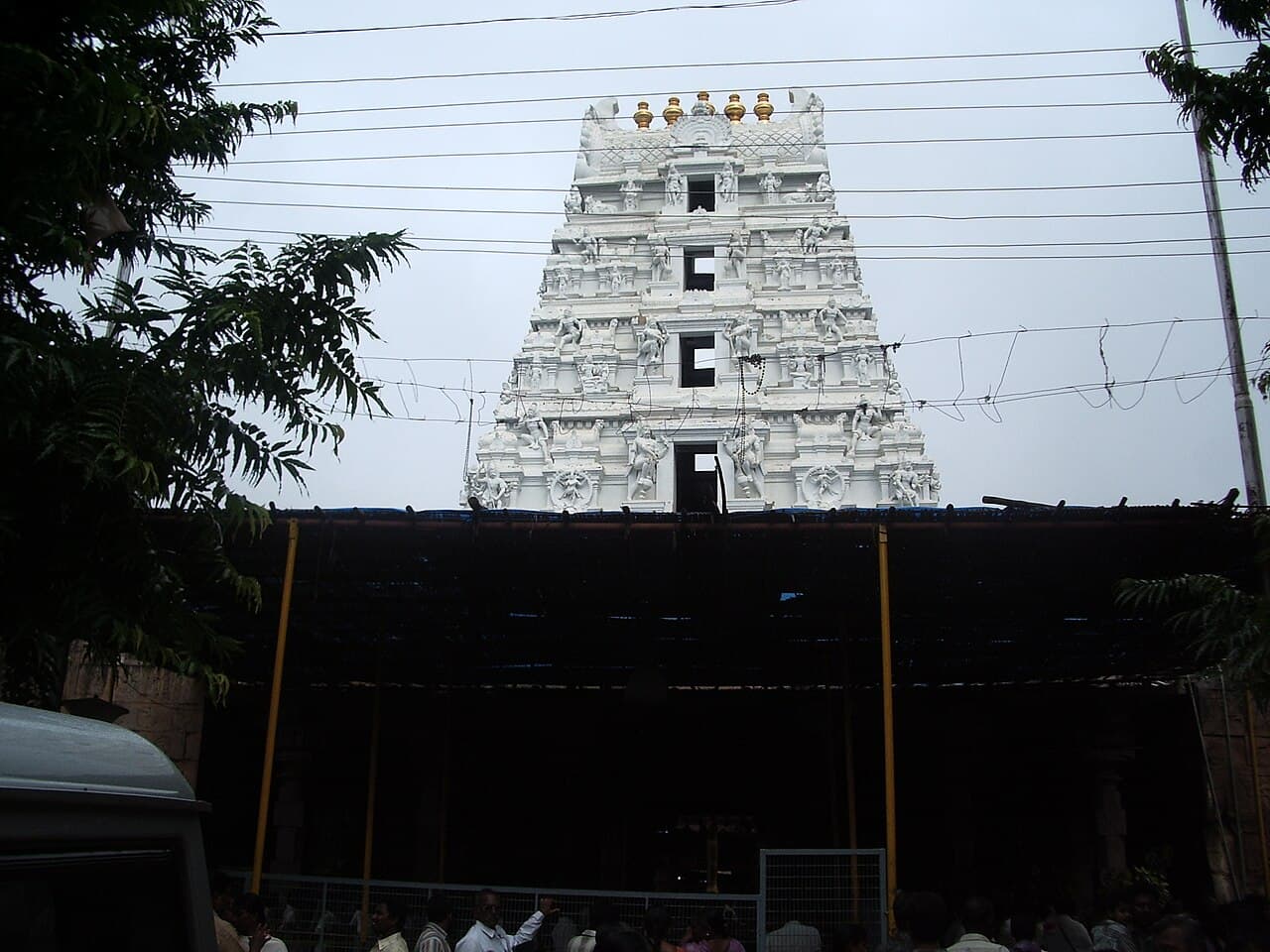
Mallikarjuna stands above the Krishna in the Nallamala hills, on a hill that carries both a Jyotirlinga and a Shakti Peetha — Bhramaramba Devi shares the same complex, which is rare among the twelve. The approach is 213 km of forest highway from Hyderabad, best driven in daylight, and the temple town is small enough that darshan is usually unhurried.
Srisailam comes through Hyderabad: the Falaknuma Express covers the 1,545 km from Howrah to Secunderabad in about 26 hours, and the 213 km forest highway to the hill follows. A direct flight makes the first leg a two-hour affair.
Stay in Srisailam town itself, a short walk from the temple — the devasthanam runs its own accommodation alongside modest lodges, and rooms and sevas are booked on the temple's official site. Beds are limited and fill fast on Shravan Mondays and at Maha Shivaratri, so reserve before you drive up.
- 3aJogulamba, Alampur
Alampur, at the meeting of the Tungabhadra and the Krishna about 190 km from Srisailam, is called the western gateway of the hill and Dakshina Kashi — its Jogulamba shrine is one of the Shakti Peethas, standing among the Navabrahma temples.
The Maharashtra Trio
~3–4 daysThree of the twelve stand within Maharashtra, and the standard trip is a two-night, three-day road loop from Pune. Day one climbs the roughly 110 km to Bhimashankar — three to four hours by the NH60 route — and comes down to sleep near Nashik; day two is Trimbakeshwar, 28 km beyond Nashik at the Godavari's source; day three runs the roughly 214 km east to Grishneshwar, with Ellora two kilometres away. A fourth day turns the caves from a stop into an afternoon.
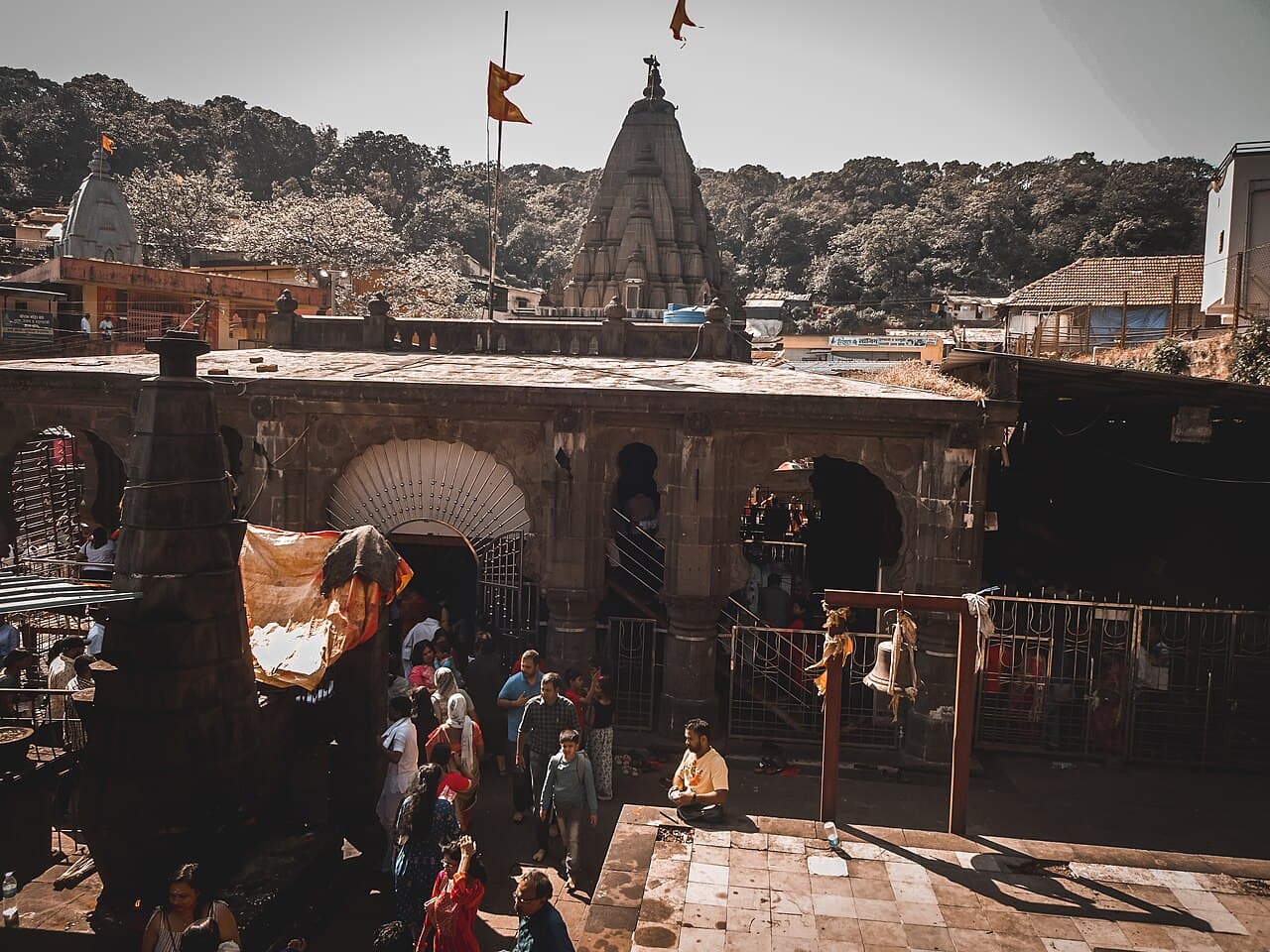
Bhimashankar sits in a Sahyadri forest above Pune, the shrine itself down a flight of steps in a wooded hollow at the source of the Bhima. Go early — the temple opens around 5 am and the ghat road is calmest before the day's buses climb it — and keep an eye out for the shy Malabar giant squirrel in the sanctuary around it.
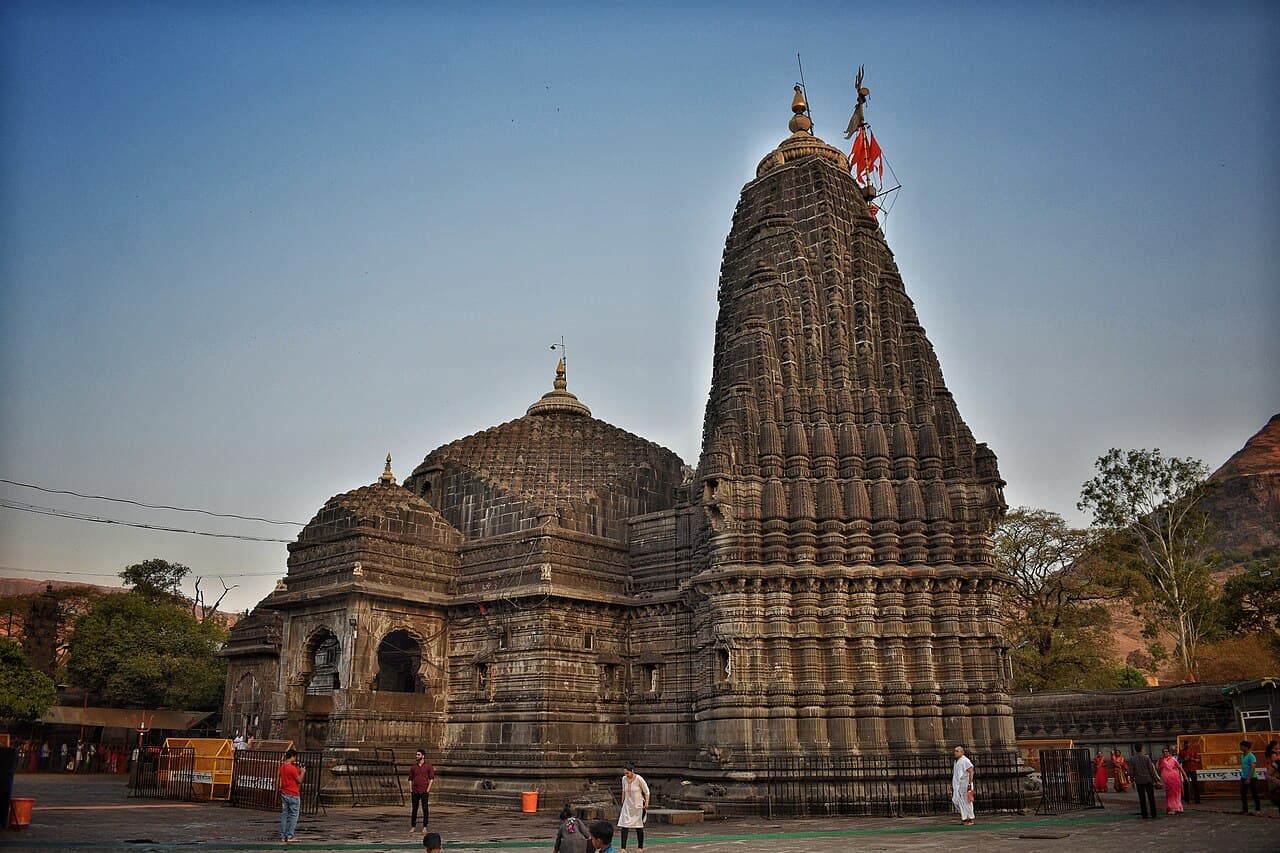
Trimbakeshwar stands at the source of the Godavari under Brahmagiri hill, and its linga is not a shaft but a hollow with three faces — Trimbaka, the three-eyed. The silver panch-mukhi crowns are shown only on certain days, and Nashik's ghats are 28 km down the road, so most pilgrims sleep there and come up at dawn.
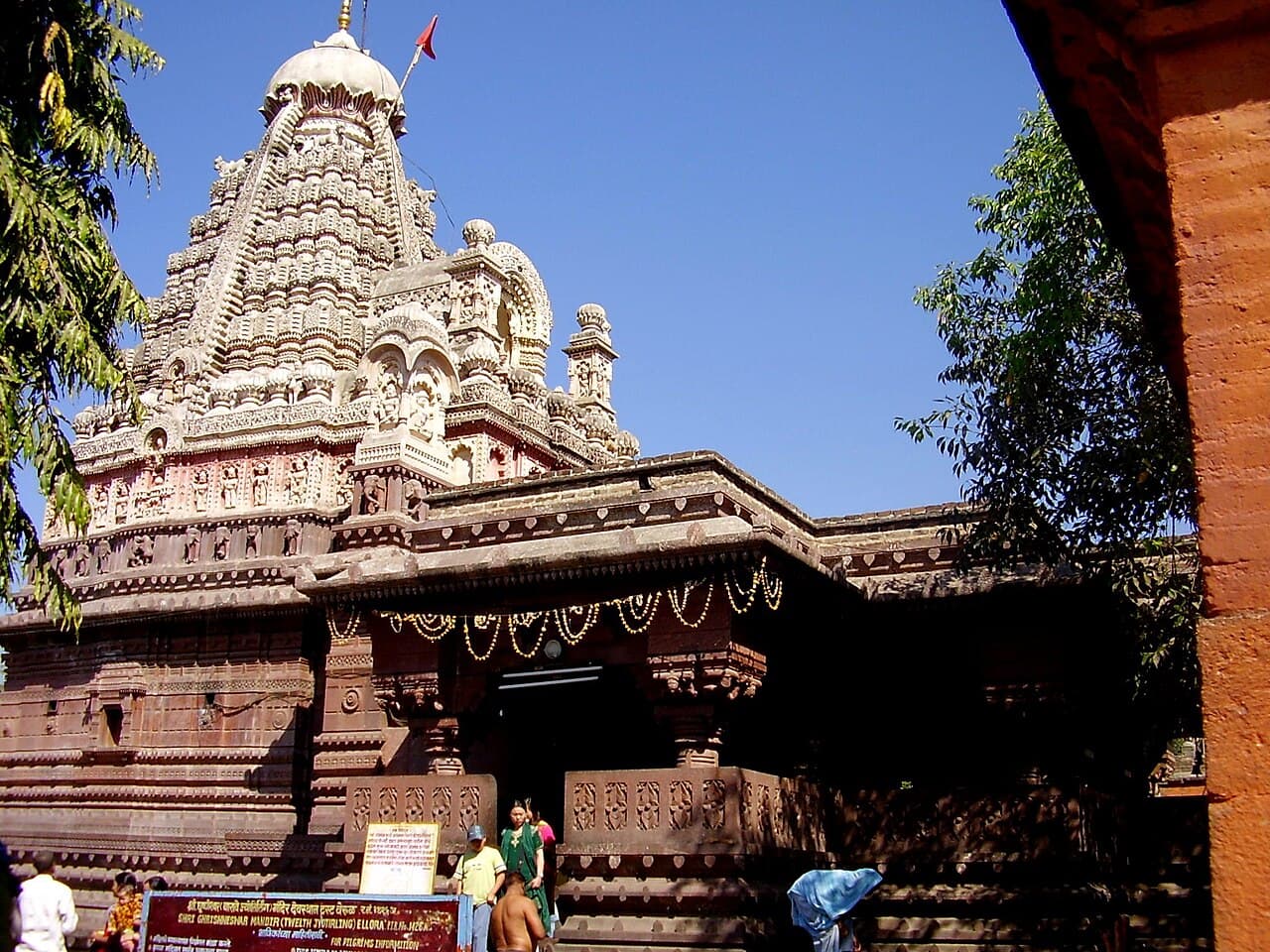
Grishneshwar, the last of the twelve to be named in the dvadasha list, stands about 2 km from the Ellora caves in a red-stone temple rebuilt in the 18th century by Ahilyabai Holkar. By custom men enter the sanctum bare-chested; give the morning to the shrine and the afternoon to the rock-cut Kailasa temple next door.
The trio's gateway is Pune, and the Duronto runs there direct — about 2,015 km in some 27 to 29 hours depending on direction. It is a full two nights, so many pilgrims from the east fly into Pune or Mumbai and keep the saved days for Ellora.
Nashik is the natural middle night of the trio: it sits 28 km below Trimbakeshwar, has the widest choice of rooms on the route, and puts you on the Godavari ghats for an evening. Pilgrims who begin from Pune often keep the first night there or near Bhimashankar, and the last at Chhatrapati Sambhajinagar for the Ellora morning.
- 4dEllora Caves
The Ellora caves are 2.3 km from Grishneshwar and 29 km from Chhatrapati Sambhajinagar — a UNESCO World Heritage Site since 1983, whose Kailasa temple was cut downward out of a single basalt cliff. Half a day is the minimum; the shrine and the caves are one outing, not two.
The Malwa Pair
~3–4 daysMalwa's pair is the easiest two-shrine trip of the seven, because Indore sits between them: Ujjain is 55 km north, an hour and a half by road or train, and Omkareshwar is 77 km south-west, about two hours. The standard shape is three nights and four days — arrive and sleep at Ujjain, take the pre-dawn Bhasma Aarti on a booked morning, give the second day to Omkareshwar and the island parikrama (140 km and three and a half to four hours from Ujjain if you go direct), and keep the fourth for the return.
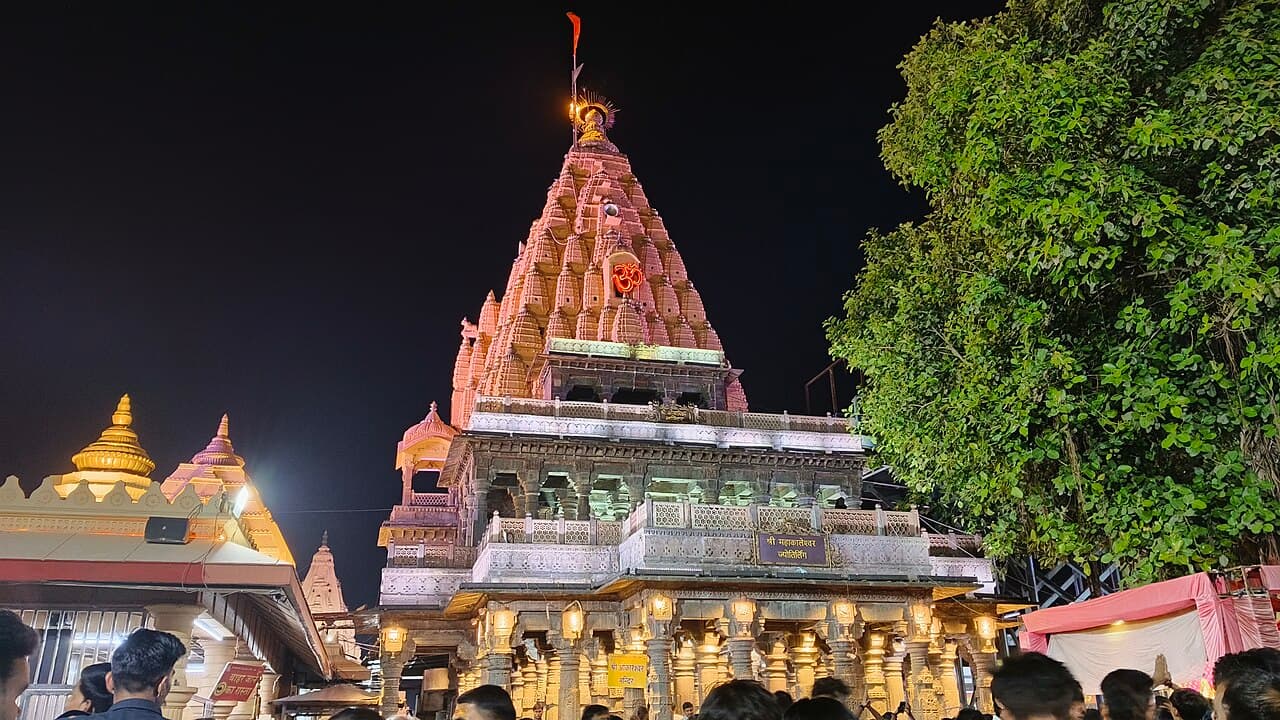
Mahakaleshwar is the dakshinamukhi — south-facing — linga at Ujjain on the Shipra, and its Bhasma Aarti before dawn is the most sought-after ritual among the twelve. That aarti needs an advance booking made only on the temple's own official portal, with ID, and reporting well before 4 am; without it the shrine still gives you a long day, open from about 4 am to 11 pm.
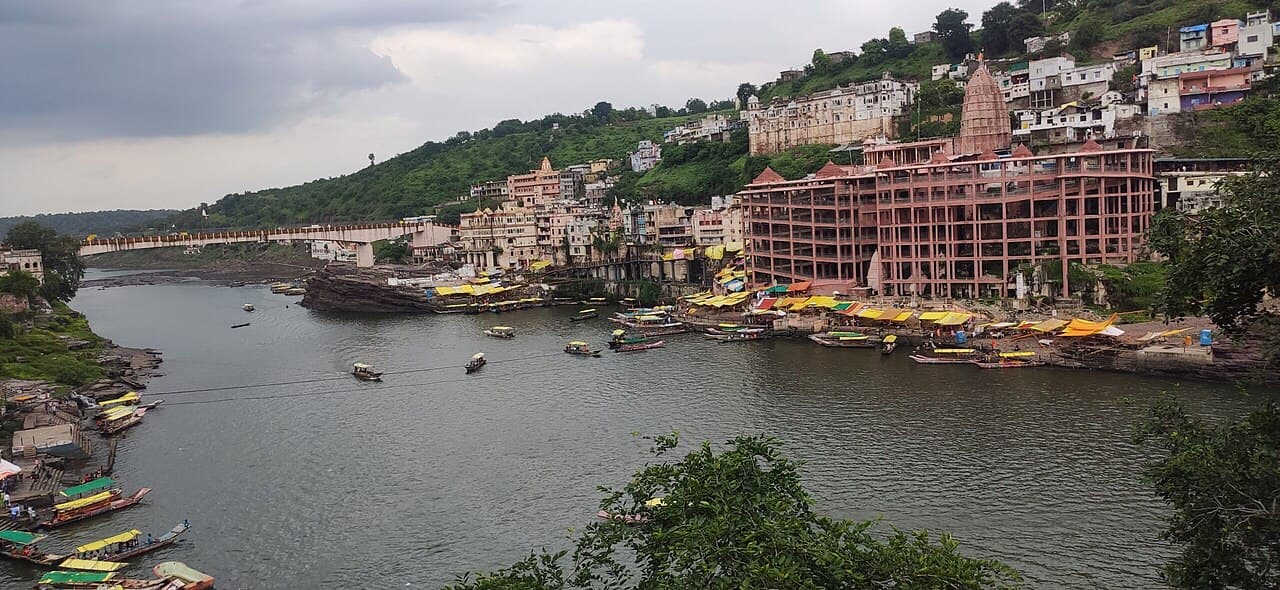
Omkareshwar sits on Mandhata island in the Narmada, an island whose shape is read as the syllable Om, reached by footbridge or boat. Pilgrims walk the island parikrama along the river and cross to Mamleshwar on the south bank, which many traditions count as the same jyotirlinga's other half.
A direct train links Howrah with Indore — roughly 1,734 km in about 30 hours 30 minutes — putting you 55 km from Ujjain and 77 km from Omkareshwar on arrival. Book the Bhasma Aarti for the morning after you land, not the morning you land.
Sleep in Ujjain rather than Indore if the Bhasma Aarti is booked — the temple asks you to report between about 3 and 3:30 am, which is unpleasant from 55 km away. The town has dharamshalas, temple-trust rooms and ordinary hotels, and it fills hardest in Shravan and at Nag Panchami.
Rameshwaram
~2–3 daysMadurai is the gateway airport and junction, and Rameshwaram is about 173 km on — roughly three hours by road, the last stretch running out over the sea beside the new vertical-lift rail bridge opened in April 2025. Two days hold the theertham baths and the temple corridors comfortably; a third adds Dhanushkodi at the island's tip. Rameshwaram has its own island station, so pilgrims arriving by train step off within reach of the temple.

Rameshwaram's Ramanathaswamy temple is both a Jyotirlinga and one of the four all-India Char Dham seats, and its third corridor is the longest of any temple in India. The twenty-two theertham baths come first — well water poured over you in turn — and only then the linga that, by the Ramayana, Sita made of sand for Rama's worship before the crossing to Lanka.
There is no nonstop from Kolkata to Madurai, so plan on one change at a southern hub and about five to five and a half hours in all, then the 173 km road to the island. Long east-coast trains also reach Rameshwaram, but they run to two full days.
Stay on the island itself, a short walk from the Ramanathaswamy temple and the bathing ghats — pilgrim lodges, state tourism rooms and small guesthouses. An early start beats both the queues at the theerthams and the fierce coastal sun by mid-morning.
- 6aDhanushkodi
About 18 km down the sandspit at the south-eastern tip of Pamban island lies Dhanushkodi, the town swept away by the 1964 cyclone, where the Bay of Bengal meets the Indian Ocean and, by tradition, Rama's bridge began. It is a haunting half-day out from Rameshwaram.
The Saurashtra Pair
~4–5 daysSaurashtra's two jyotirlingas sit at opposite ends of the same coast, so the trip is a three-night, four-day arc. Rajkot is the junction and airport most pilgrims arrive at; from there it is a coastal run to Somnath, then the roughly 233 km up the NH51 shore to Dwarka — four and a half to six hours through Porbandar and Veraval — where Nageshwar is a short drive out on the Bet Dwarka road. Dwarka has its own railway station, so a rail arrival can skip Rajkot entirely.
 7aSomnath
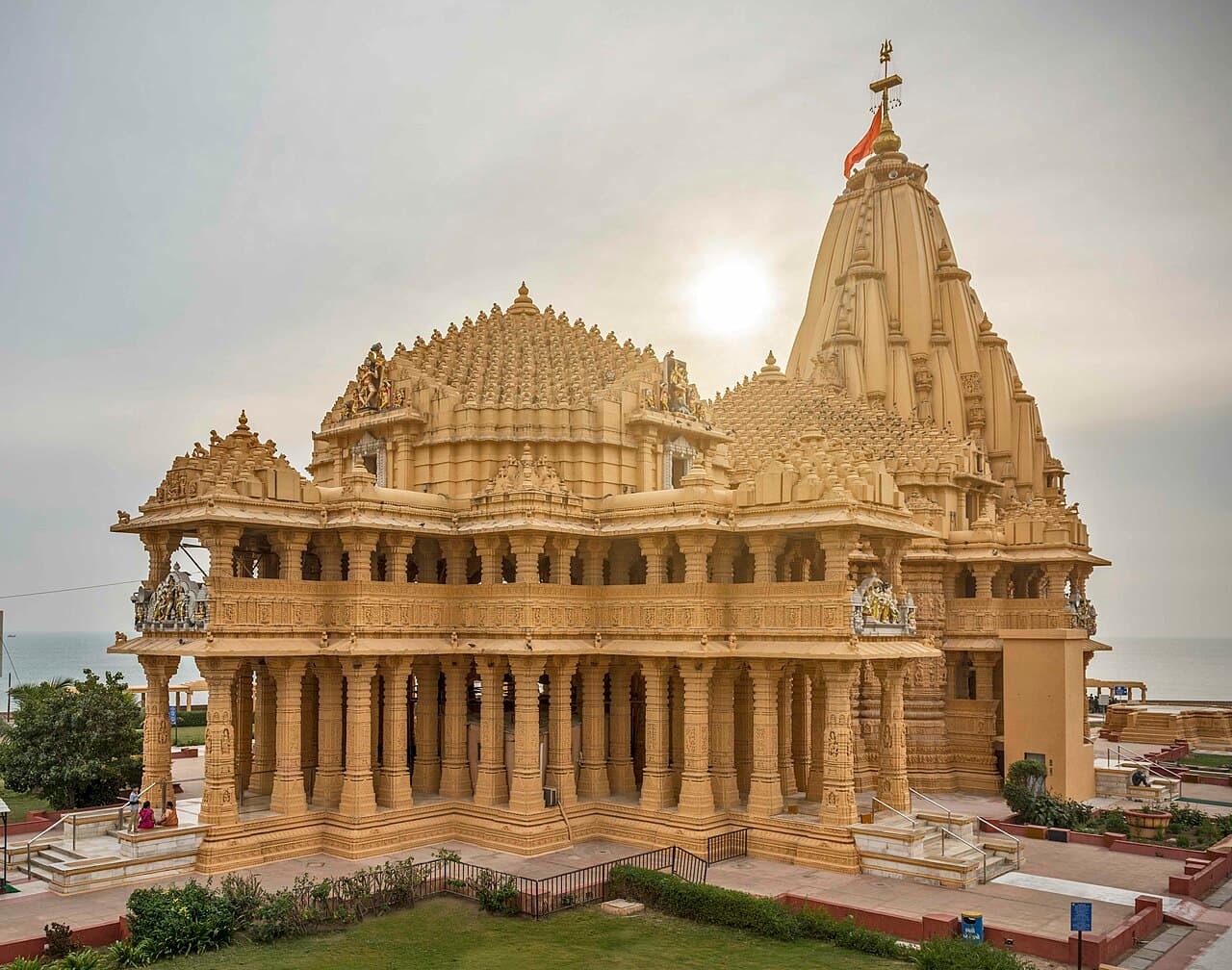
Somnath is the first of the twelve, on the Arabian Sea shore at Prabhas Patan, rebuilt in Chalukyan style after Independence on the site's own long history of destruction and rebuilding. Keep an evening for the sea-facing aarti and the sound-and-light show; the arrow pillar behind the temple marks an unobstructed line of ocean southward.
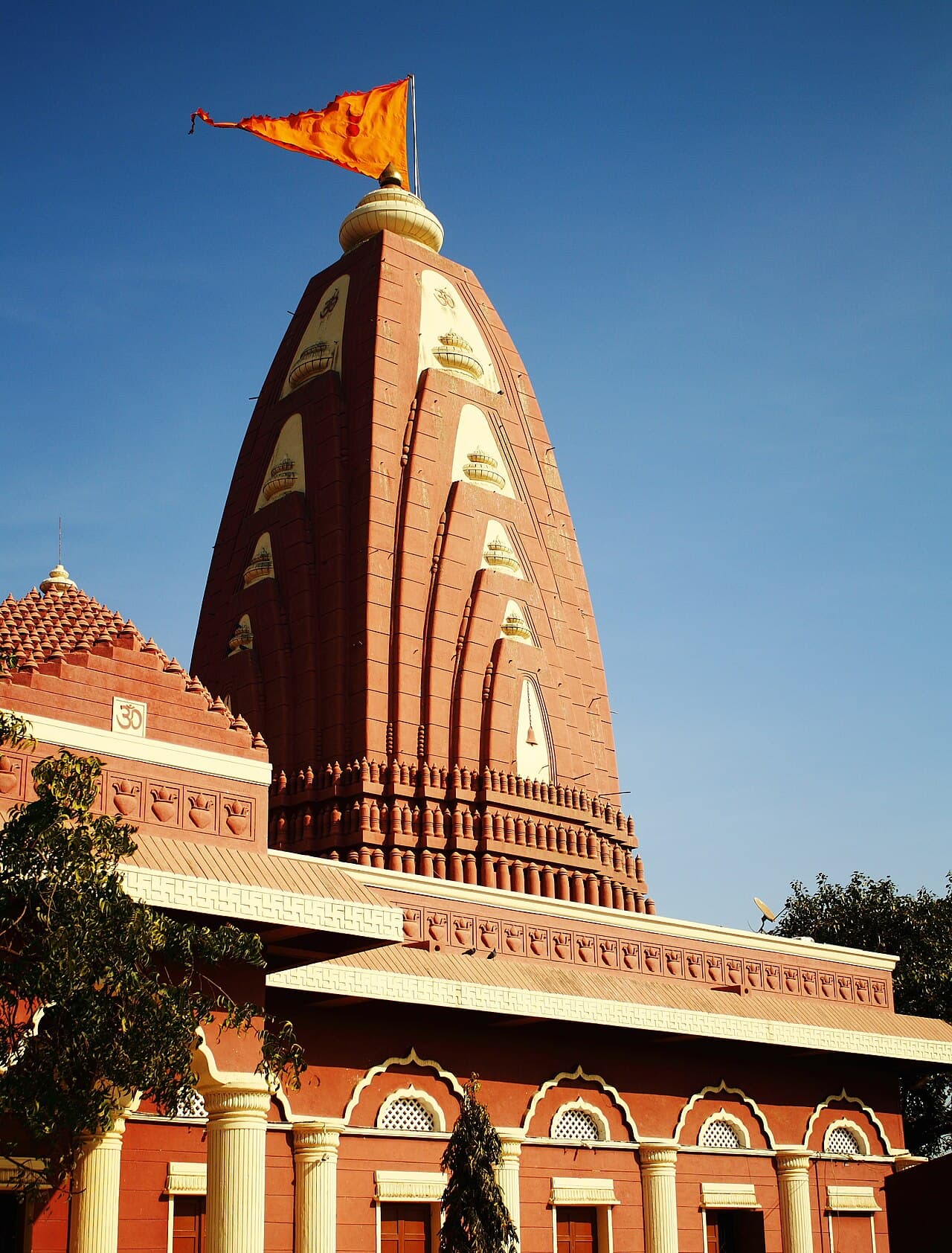
Nageshwar stands about 16 km from Dwarka on the Bet Dwarka road, under a seated Shiva you see long before the gate. The shrine itself is small and below ground — steps lead down to the linga — so the queue moves slowly at peak hours, and it is almost always paired with the Dwarkadhish darshan the same day.
Saurashtra is the far corner from Bengal: a weekly superfast covers the roughly 2,554 km from Howrah to Dwarka in about 42 hours, and Ahmedabad is 2,118 km out at some 33 to 36 hours. Most pilgrims fly to Rajkot or Ahmedabad and give the saved days to Somnath.
Dwarka holds the second half of the trip: Nageshwar is 16 km out, the Jagat Mandir and the Gomti ghat are in town, and the temple town has dharamshalas, state tourism rooms and modest hotels. The first night usually falls at Somnath or Veraval, five to six hours down the coast, so the pair is comfortably two bases rather than one.
- 7cDwarkadhish Temple (Jagat Mandir)
Dwarka's five-storey Jagat Mandir is one of the four all-India Char Dham seats, and it is in the same town as Nageshwar — practically nobody visits one without the other. The flag atop the spire is changed several times a day, and our Char Dham planner covers the dham itself in full.
~18–21 days in one continuous journey — the stamina route, season-bound by Kedarnath.
The twelve shrines in this journey's visiting order — tap a marker for the temple.
Kolkata's wheel opens next door, with Vaidyanath at Deoghar three hours up the Grand Chord and Kashi Vishwanath on the same westward line. From Varanasi the long flight south reaches Rameshwaram, then the arc turns up through Srisailam, the Maharashtra trio, Saurashtra and Malwa, and ends in the Himalaya at Kedarnath — from where Dehradun or Delhi brings you home. Nineteen to twenty-one days. Because Kedarnath comes last here, start the whole journey no later than the middle of October; earlier is safer, and a monsoon start means buffer days on the final leg.
Kashi & Vaidyanath
~3–4 daysThe eastern pair is rail-linked and can be done in three days, four if you want Kashi properly. Varanasi is the gateway; give the first evening to the ghats and the Ganga aarti and the next dawn to Vishwanath, then take the Varanasi–Deoghar train — 456 km in about 7 hours 20 minutes, six days a week, calling at Jasidih — and do Baidyanath the following morning. Several overnight trains run the same corridor if you would rather sleep through it.
The longest diagonal of the wheel, and the one leg almost everyone flies: Varanasi to Madurai is about 1,807 km in a straight line with no nonstop service, so plan on one change at a southern hub and roughly five hours airport to airport, then the three-hour road run to the island. By rail it is honest but heavy — a weekly direct train covers some 2,790 km in about 49 hours.
Rameshwaram
~2–3 daysMadurai is the gateway airport and junction, and Rameshwaram is about 173 km on — roughly three hours by road, the last stretch running out over the sea beside the new vertical-lift rail bridge opened in April 2025. Two days hold the theertham baths and the temple corridors comfortably; a third adds Dhanushkodi at the island's tip. Rameshwaram has its own island station, so pilgrims arriving by train step off within reach of the temple.
Back up the peninsula: from Madurai a nonstop flight of about 1 hour 35 minutes reaches Hyderabad, and Srisailam is 213 km of forest highway on from there — four and a half to six hours. Counting the road out to Madurai and the drive up the hill, give the hop a full day rather than an afternoon.
Srisailam
~1–2 daysSrisailam is the shortest of the seven trips: 213 km south of Hyderabad on NH765, four and a half to six hours through the Nallamala forest. Determined pilgrims make it a very long single day; one night at Srisailam is far kinder, leaving the morning free for the Bhramaramba shrine and the Krishna below the hill. There is no railway to Srisailam, so the road is the route.
West into Maharashtra: come down the 213 km from Srisailam to Hyderabad, then the Shatabdi covers the 597 km to Pune in about 8 hours 30 minutes, running daily except Tuesdays. Pune is where the Maharashtra trio begins, so this bridge lands you exactly at the trio's gateway.
The Maharashtra Trio
~3–4 daysThree of the twelve stand within Maharashtra, and the standard trip is a two-night, three-day road loop from Pune. Day one climbs the roughly 110 km to Bhimashankar — three to four hours by the NH60 route — and comes down to sleep near Nashik; day two is Trimbakeshwar, 28 km beyond Nashik at the Godavari's source; day three runs the roughly 214 km east to Grishneshwar, with Ellora two kilometres away. A fourth day turns the caves from a stop into an afternoon.
From the Ellora end of the trio to the Gujarat coast: Chhatrapati Sambhajinagar to Ahmedabad is about 803 km and roughly 14 hours by rail, and Ahmedabad to Dwarka another 470 km in some 8 to 9 hours — about 1,273 km and the better part of a day and a night in all. Break it at Ahmedabad if the through connection is awkward.
The Saurashtra Pair
~4–5 daysSaurashtra's two jyotirlingas sit at opposite ends of the same coast, so the trip is a three-night, four-day arc. Rajkot is the junction and airport most pilgrims arrive at; from there it is a coastal run to Somnath, then the roughly 233 km up the NH51 shore to Dwarka — four and a half to six hours through Porbandar and Veraval — where Nageshwar is a short drive out on the Bet Dwarka road. Dwarka has its own railway station, so a rail arrival can skip Rajkot entirely.
East off the coast into Malwa: a weekly direct train links Veraval, the railhead for Somnath, with Indore — about 938 km in some 18 hours — and other services run the same corridor with a change at Ahmedabad. Indore then puts Ujjain 55 km north and Omkareshwar 77 km south-west.
The Malwa Pair
~3–4 daysMalwa's pair is the easiest two-shrine trip of the seven, because Indore sits between them: Ujjain is 55 km north, an hour and a half by road or train, and Omkareshwar is 77 km south-west, about two hours. The standard shape is three nights and four days — arrive and sleep at Ujjain, take the pre-dawn Bhasma Aarti on a booked morning, give the second day to Omkareshwar and the island parikrama (140 km and three and a half to four hours from Ujjain if you go direct), and keep the fourth for the return.
North to the mountains: the daily Indore–Dehradun express runs via Ujjain, Gwalior and the Delhi region to Haridwar, roughly 1,160 km in about 27 hours, setting pilgrims down at the railhead where the Kedarnath road begins. Only start this leg inside the shrine's open season — the mountain, not the timetable, is the constraint.
Kedarnath
~5–6 daysKedarnath is its own trip, not a stop on anyone else's. From the Haridwar railhead the mountain road runs roughly 215–222 km to Sonprayag through Devprayag, Rudraprayag and Guptkashi — eight to nine hours, and longer in season traffic — so day one ends at or near the roadhead. Private vehicles stop at Sonprayag: a shared shuttle covers the last 5 km to Gaurikund, and the 16 km trek to the shrine begins there. Reckon five to six days in all: two on the road each way, one for the climb and darshan, and a buffer day the mountain will eventually ask for.
Official tour options
- IRCTC Bharat Gaurav Deluxe AC tourist train — the 18-day '3 Dham & 11 Jyotirlinga' yatra from Delhi Safdarjung (2026 departure 3 September), covering eleven of the twelve; only Kedarnath, which no train reaches, is left out.IRCTC (Indian Railway Catering & Tourism Corporation)
- IRCTC Bharat Gaurav Jyotirlinga Yatra tourist trains — the shorter state-run circuits, including a seven-Jyotirlinga run from Delhi Safdarjung and a Shravan special from Solapur covering the western and central shrines.IRCTC (Indian Railway Catering & Tourism Corporation)
- GMVN — the Uttarakhand state tourism corporation's fixed-departure Kedarnath tours from Delhi, Haridwar and Rishikesh, and its tourist rest houses along the Rudraprayag–Guptkashi–Sonprayag road.GMVN (Garhwal Mandal Vikas Nigam, Govt. of Uttarakhand)
Season & festivals
Best window: late April to early November. Eleven of the twelve are open all year, but Kedarnath is a six-month shrine and it governs any plan to complete the set — in 2026 its kapat opened on 22 April and closing is expected around 11 November, the exact date announced on Vijayadashami. Inside that window the coastal and Deccan shrines are hot from March to June and wettest in the June–September monsoon, so the kindest months for a long parikrama are late September to early November, and April to early June.
July and August are the monsoon's heaviest weeks on two of the seven trips. The Rishikesh–Rudraprayag–Sonprayag road to Kedarnath closes for landslides at short notice, and the ghat road up to Bhimashankar is slick and slow in the Sahyadri rains. If you must travel then, keep buffer days on both trips, and treat any published trek or drive time as a floor rather than a promise.
Shravan is the Shiva month, and every one of the twelve is at its fullest through it — in 2026 it runs 30 July to 28 August by the north Indian Purnimanta reckoning, and 13 August to 11 September in the Amanta states of the west and south. Deoghar in particular receives the Kanwar procession from Sultanganj and becomes one of the largest gatherings in the country; Mondays are the peak everywhere. Travel then for the atmosphere, not for a quick darshan, and book rooms and any ticketed aarti weeks ahead.
Yatri checklist
- Fix your dates around Kedarnath first — it is open only from about late April to early November, and every other shrine will fit around it. In 2026 the kapat opened on 22 April; closing is expected around 11 November and is announced on Vijayadashami.
- Register for the Kedarnath yatra on the Uttarakhand government's official portal before you travel and carry the pass — it is checked on the road above Sonprayag — and train for the 16 km climb from Gaurikund, six to eight hours on foot.
- Book the Ujjain Bhasma Aarti in advance on the temple's own official portal, with photo ID, and plan to reach the gate between about 3 and 3:30 am — walk-ins are not admitted to that aarti.
- Wear footwear that slips off easily — it comes off at every temple — and remember Girijatmaj at Lenyadri means about 280 steps on foot.
- Pack for three climates in one trip: warm layers and a windproof for the Kedarnath approach, light cotton and sun protection for the Saurashtra and Rameshwaram coasts, and something that dries fast for the Godavari, Shipra, Narmada and Ganga baths.
- Keep buffer days, especially if you are attempting all twelve in one run: a single missed connection on a two-day rail leg, or one closed mountain road, moves everything after it.
- Carry a government photo ID and your confirmed train, flight and stay bookings — the aarti tickets, the yatra registration and most temple-trust rooms are all issued against the same ID.
Planning FAQs
Kolkata is close to Baidyanath — how quickly can it be done?+
Very quickly: a Vande Bharat covers the 309 km from Howrah to Jasidih in about 3 hours 7 minutes, and Deoghar's temple is 7 km from the station, so Baba Baidyanath is a weekend from Kolkata outside the Shravan mela. Kashi Vishwanath sits on the same westward corridor — the Varanasi–Deoghar train links the two in about 7 hours 20 minutes — so the pair is the natural first trip from Bengal, three to four days for both.
How many days does it take to visit all 12 Jyotirlingas?+
In one continuous journey, reckon on about 18 to 21 days from a metro — the state-run IRCTC Bharat Gaurav tourist train is the benchmark at 18 days from Delhi, and it covers eleven of the twelve. Most people do not travel that way. Taken as seven regional trips, the twelve add up to roughly 20 to 27 travelling days spread over years: the Maharashtra trio is three to four days, Saurashtra four to five, Malwa three to four, Kashi with Vaidyanath three to four, Kedarnath five to six, Srisailam one to two and Rameshwaram two to three, plus the journey from your city each time.
Can the 12 Jyotirlingas be done by train?+
Eleven of them, yes. The state-run IRCTC Bharat Gaurav Deluxe train covers Kashi Vishwanath, Baidyanath, Mallikarjuna, Bhimashankar, Grishneshwar, Trimbakeshwar, Nageshwar, Somnath, Mahakaleshwar, Rameshwaram and Omkareshwar in an 18-day run from Delhi, and shorter Jyotirlinga specials cover the western and central shrines. The twelfth, Kedarnath, has no railway at all: the line ends far below, the road ends at Sonprayag, and the last 16 km from Gaurikund are a trek. Self-planned rail travel works well for every cluster except that one.
What is the correct order for the 12 Jyotirlingas?+
Scripture gives an order and practice gives another. The dvadasha jyotirlinga stotra recites them as Somnath, Mallikarjuna, Mahakaleshwar, Omkareshwar, Kedarnath, Bhimashankar, Kashi Vishwanath, Trimbakeshwar, Vaidyanath, Nageshwar, Rameshwaram and Grishneshwar — a devotional sequence, not a route: it crosses the country several times over. Pilgrims travel by geography instead, in the seven regional clusters this planner uses, and no tradition holds that visiting them out of the stotra's order lessens the darshan.
When is Kedarnath open, and what if I go in winter?+
Kedarnath opens for roughly six months a year. In 2026 the kapat opened on 22 April at 8 am — announced on Maha Shivaratri by the Shri Badarinath–Kedarnath Temple Committee — and closing is expected around 11 November, with the exact date declared on Vijayadashami. Through the snowbound winter the deity is worshipped at the Omkareshwar temple in Ukhimath, which pilgrims may visit instead. The other eleven shrines are open all year, so a winter trip can cover any of the remaining six clusters.
Are there five Jyotirlingas in Maharashtra?+
By some reckonings, yes — and this is the best-known variance in the list. Many Maharashtra itineraries identify Vaidyanath with Parli Vaijnath in Beed district and Nageshwar with Aundha Nagnath in Hingoli, which together with Bhimashankar, Trimbakeshwar and Grishneshwar makes a 'Maharashtra 5'. The mainstream dvadasha list, which this planner follows, places Vaidyanath at Deoghar in Jharkhand and Nageshwar near Dwarka in Gujarat. Both traditions are old and neither is a mistake; we simply state which one our routes assume.
Can I visit one cluster at a time instead of all twelve?+
That is how almost everyone does it, and it is the way this planner is built. Each of the seven trips is a complete pilgrimage in itself — a weekend for Srisailam, three days for the Maharashtra trio, four for Saurashtra or Malwa, five or six for Kedarnath — and the cards above are ordered nearest-first from your city, so the natural first trip is at the top. Completing the twelve over several years is a normal, unhurried way to keep the sankalpa.