
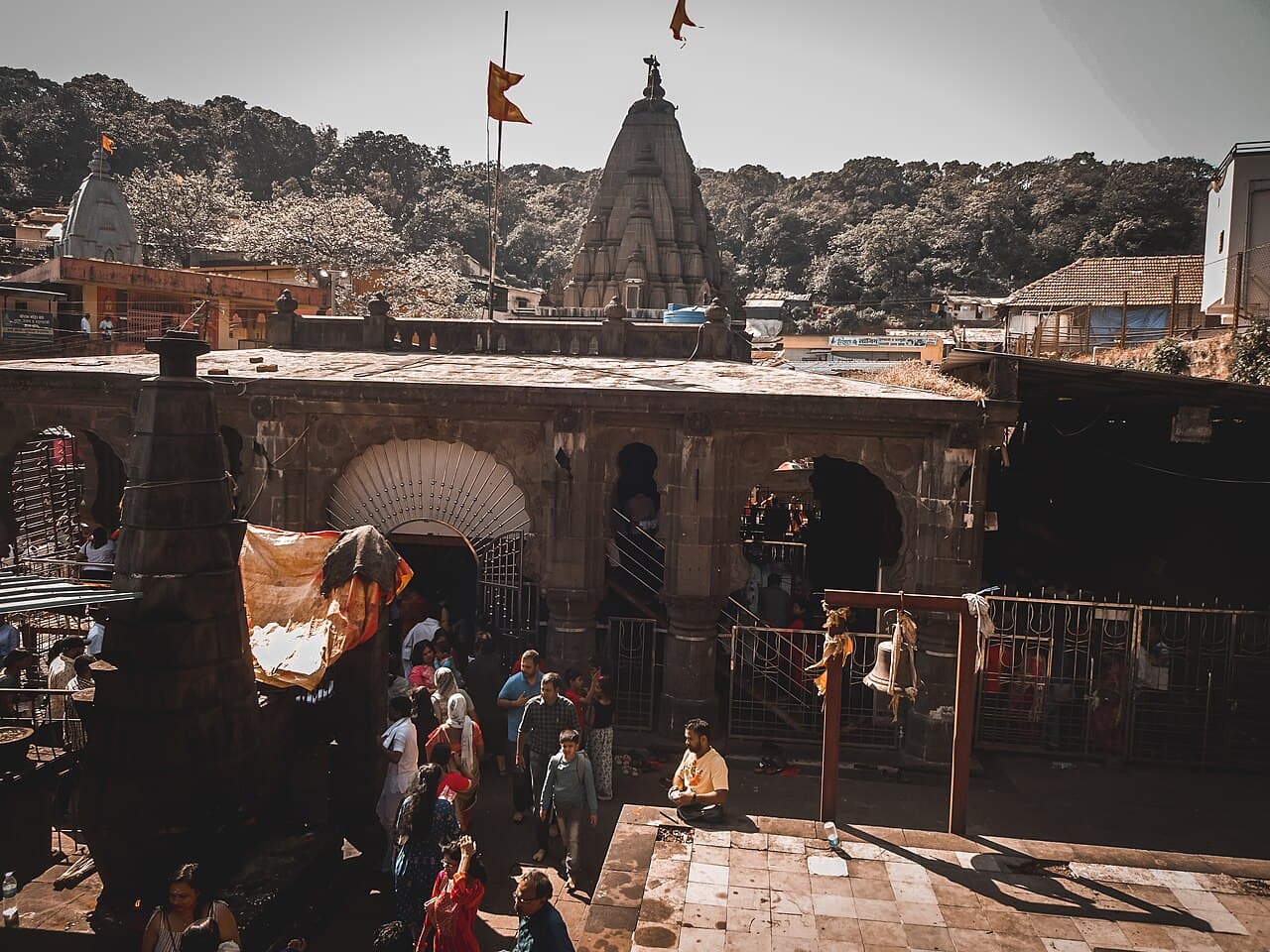
A forest Jyotirlinga in the Sahyadris — source of the Bhima river and home of the rare Indian giant squirrel.
- Deity
- Shiva
- Location
- Pune district, Maharashtra
- Category
- Jyotirlinga
- Established
- Core shrine ~13th c.; sabhamandapa and shikhara 18th c. (Nana Phadnavis)
- Setting
- Sahyadri hills (~934 m), Bhimashankar Wildlife Sanctuary
- Best Time to Visit
- August to February (lush after the monsoon)
- One of Maharashtra's three Jyotirlingas, in the Sahyadri hills
- Traditional source of the Bhima river
- Shiva as Bhima Shankara, who slew the demon Tripurasura
- Core shrine ~13th c.; hall and spire added by Nana Phadnavis (18th c.)
- Portuguese-war bell gifted by Chimaji Appa (1739)
- Within a sanctuary famed for the Shekru (Indian giant squirrel)
- An Assam site also claims the name; the Pune shrine is widely accepted
Significance
Bhimashankar's power lies partly in its remoteness: unlike the great city-shrines, it is a Jyotirlinga of the forest, sought by pilgrims who climb through the Ghats to reach it. It draws especially heavy crowds through the month of Shravan and at Maha Shivaratri, when the wooded approach fills with devotees.
The temple stands within the Bhimashankar Wildlife Sanctuary — land held sacred and so long protected, a biodiversity hotspot of the Western Ghats set aside above all for the Indian giant squirrel, the Shekru, which is the state animal of Maharashtra; leopard, sambar and langur move through the same forests. A tradition in Assam claims a Bhimashankar of its own as the true sixth Jyotirlinga; the identification is debated, but the Pune-district shrine is the one long and widely accepted as such.
The climb to the shrine is part of its draw: the forest paths, the birdcalls and the chance sight of a Shekru high in the canopy make the pilgrimage as much a walk into wilderness as an act of worship. Sacred pools and lesser shrines lie scattered through the woods around the temple, and from the ridges above, the Sahyadri falls away in folds of green toward the distant Konkan.
History
Bhimashankar lies deep in the Sahyadri ranges of the Western Ghats, in Pune district, at about 934 metres, wrapped in dense forest that is the traditional source of the Bhima river. It is one of Maharashtra's three Jyotirlingas, reached by a climb through the trees, and as much a place of wild nature as of worship.
By legend the demon Tripurasura did fierce penance in these hills, and Shiva took the towering form of Bhima Shankara to destroy him; the sweat of that battle, the story goes, flowed down to become the Bhimarathi, or Bhima, river that rises here. The lingam is worshipped as the Jyotirlinga at the heart of the shrine.
The core temple is old, its black-stone sanctum ascribed to around the 13th century; the carved sabhamandapa and the shikhara above it were added in the 18th century under the Maratha statesman Nana Phadnavis, and Chhatrapati Shivaji is remembered among its patrons. Before the temple hangs a great bell, brought by Chimaji Appa from his 1739 victory over the Portuguese at Vasai.
Architecture
The temple blends the Nagara form with the Hemadpanti stonework typical of the Deccan — black basalt, mortarless in the old manner, with a finely carved assembly hall. The shikhara is the 18th-century addition of Nana Phadnavis's time; the Portuguese-cast bell at the entrance, tall as a man, is rung by pilgrims as they climb the last steps.
Around and below the temple the forest closes in, and the Mokshakund and other sacred pools lie a short walk off among the trees. A flight of well over a hundred steps leads down to the shrine through the woods.
Festivals
Timings
Open daily ~5:00 AM – 9:30 PM, with the abhisheka through the morning; reached by a flight of steps through the forest.
Bhimashankar lies about a hundred and ten to a hundred and twenty-five kilometres from Pune, which is the nearest airport and the most convenient railhead; from the city the road runs north-west through Manchar and up into the Ghats, the last stretch winding through forest to the temple. State buses run in season, and the final approach is on foot down a flight of steps. The green months after the monsoon, when the hills run with mist and water, are the loveliest time to come.
Timings are indicative — please confirm with the temple trust before travelling.
Nearby Temples
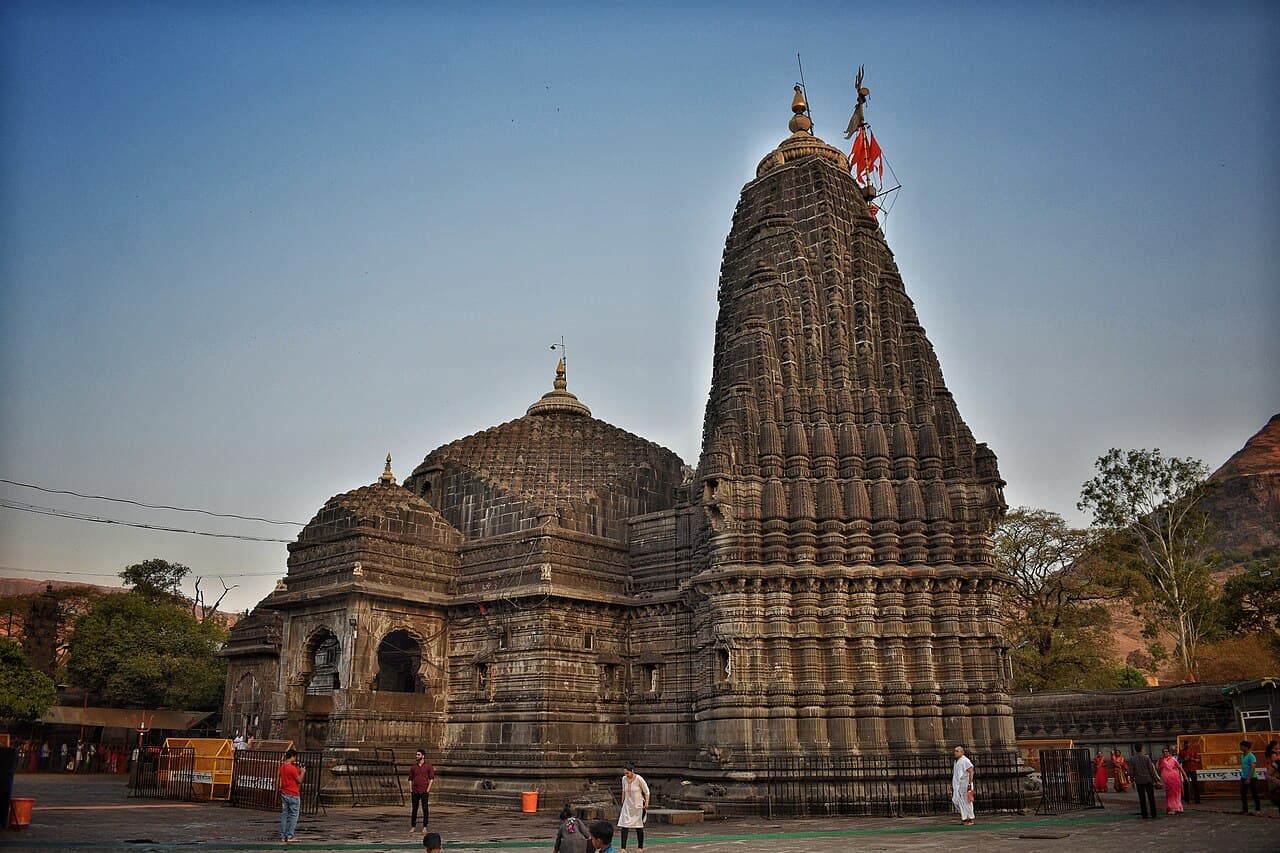
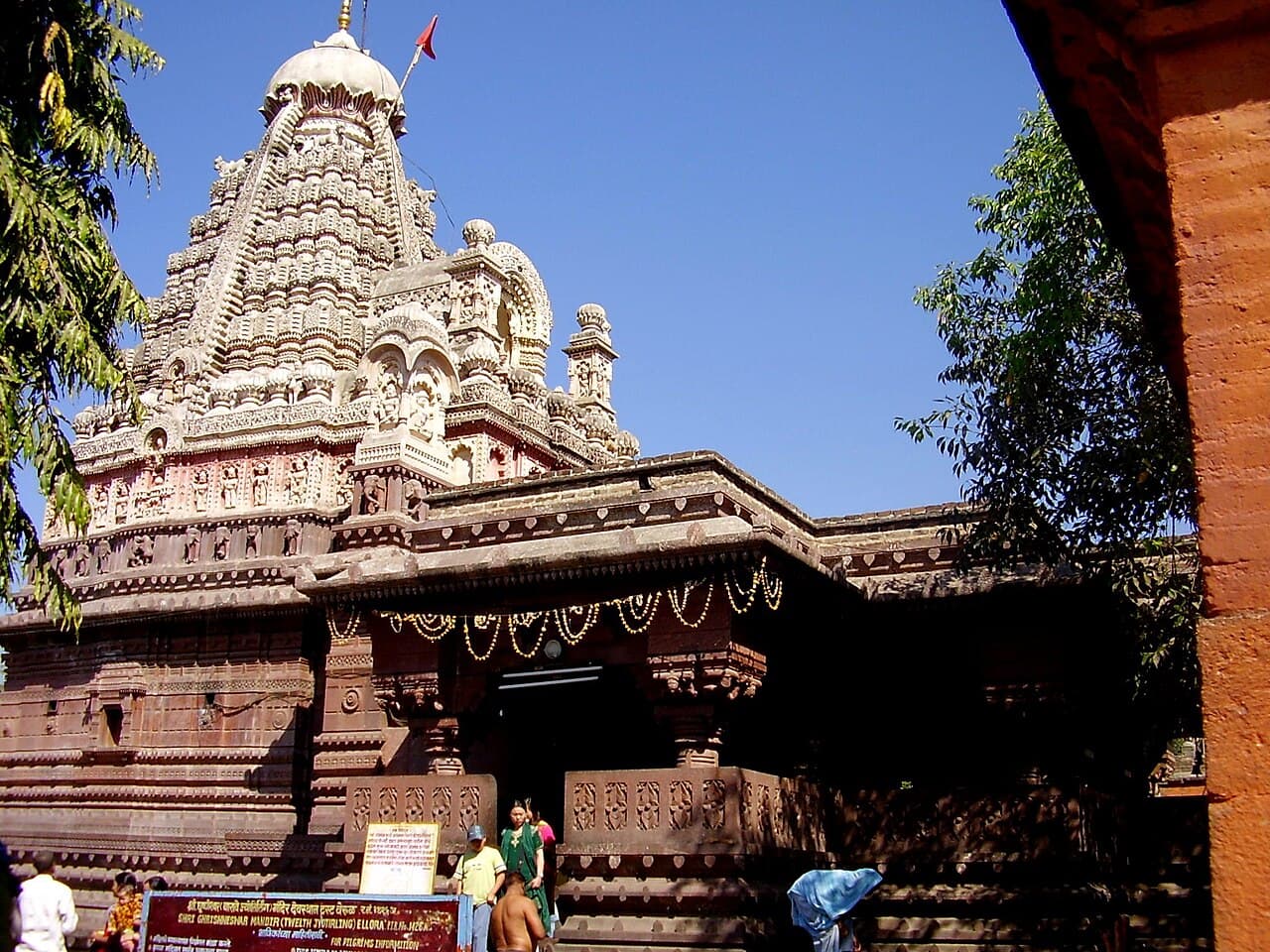
Frequently Asked Questions
Where is Bhimashankar Temple located?+
Bhimashankar Temple is in Pune district, Maharashtra, India.
Which deity is worshipped at Bhimashankar Temple?+
Bhimashankar Temple is dedicated to Shiva.
Which tradition does Bhimashankar belong to?+
Bhimashankar is one of the Jyotirlinga temples dedicated to Shiva.
What are the timings of Bhimashankar Temple?+
Open daily ~5:00 AM – 9:30 PM, with the abhisheka through the morning; reached by a flight of steps through the forest.
What is the best time to visit Bhimashankar Temple?+
August to February (lush after the monsoon)
When was Bhimashankar Temple established?+
Bhimashankar Temple — Core shrine ~13th c.; sabhamandapa and shikhara 18th c. (Nana Phadnavis).
Photo: Mechatron00 · CC BY-SA 4.0