
Day 1 · The eastern shrines — Morgaon, Siddhatek, Theur & Ranjangaon
~254 kmInteractive map — drag and zoom; tap a marker for the temple.
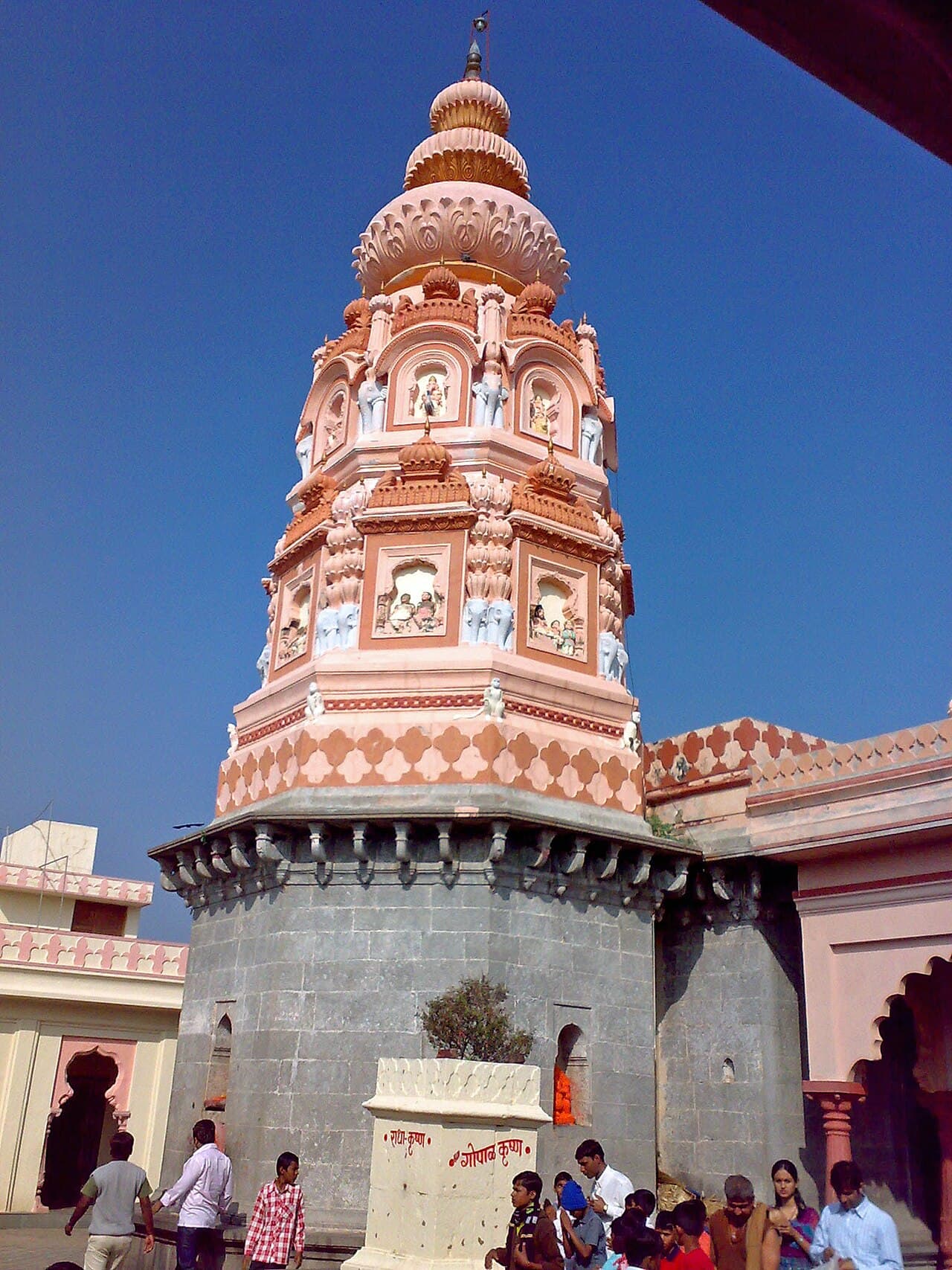 1Pune → 65 km · ~100 min driveMayureshwar, Morgaon
Morgaon's Mayureshwar is the adya (foremost) seat of the eight — by tradition the yatra opens here, so this plan makes it the very first darshan. Reach it soon after dawn for the serenest aarti on the circuit; many pilgrims also keep a second, closing darshan at Morgaon for the end of the journey.
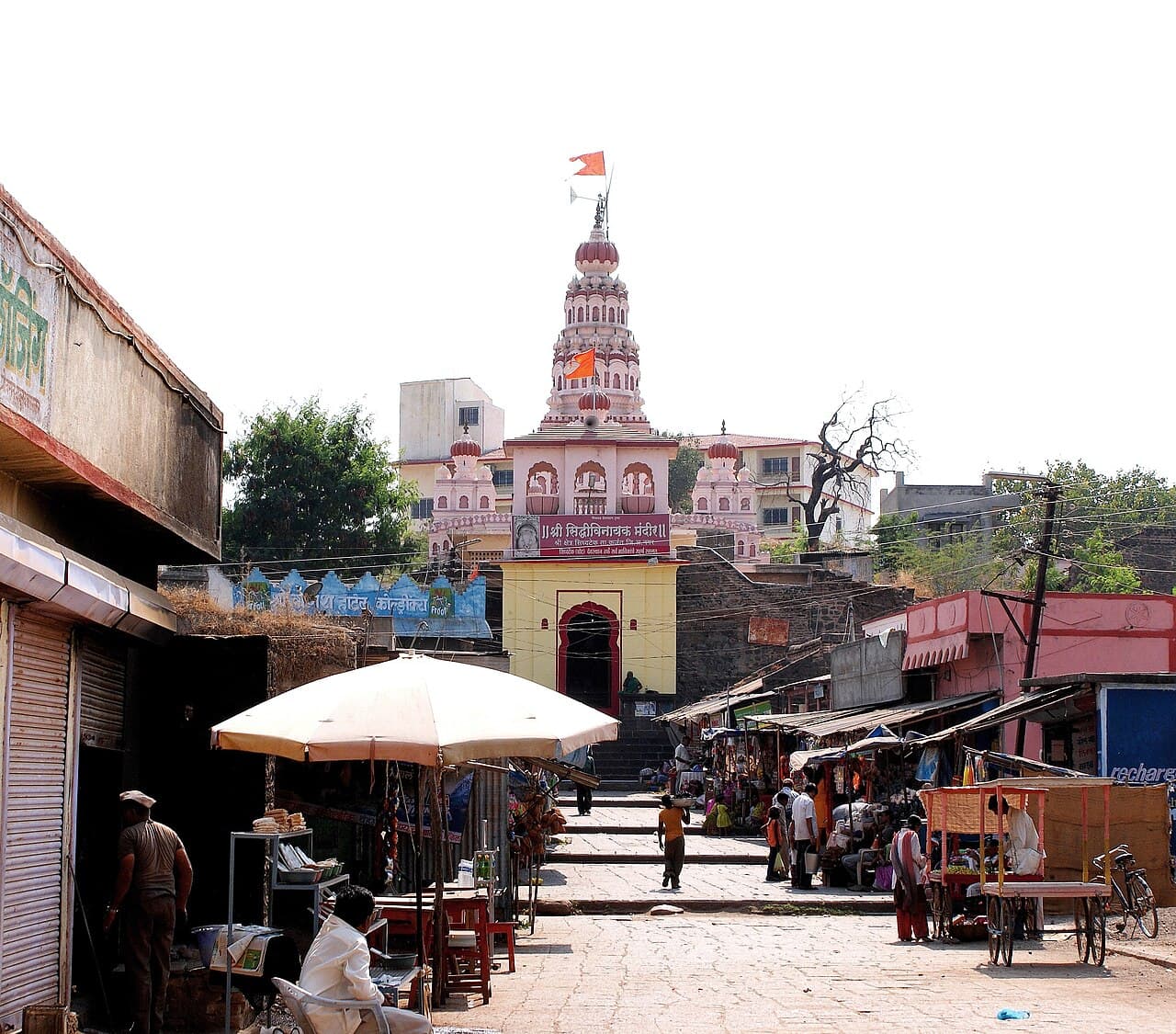 265 km · ~100 min driveSiddhivinayak, Siddhatek
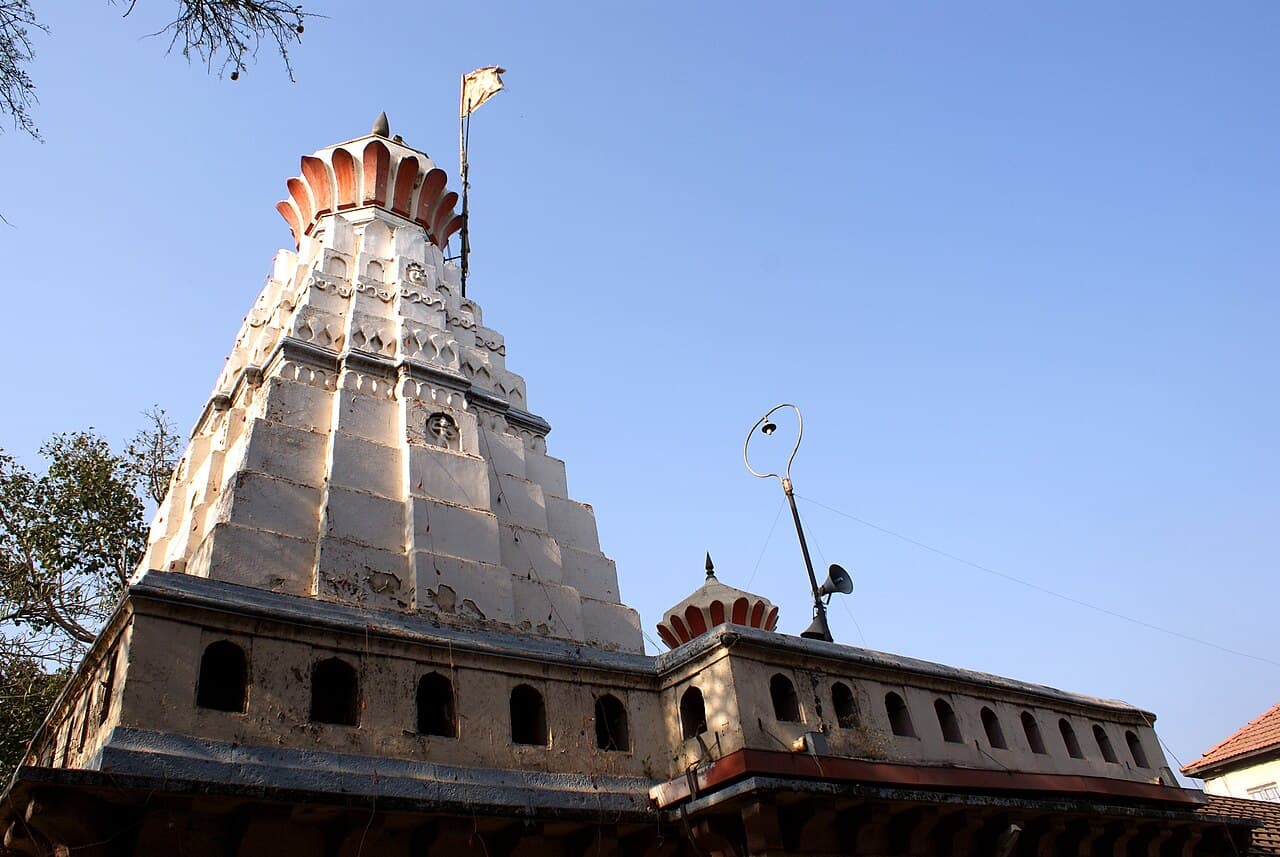 382 km · ~120 min driveChintamani, Theur
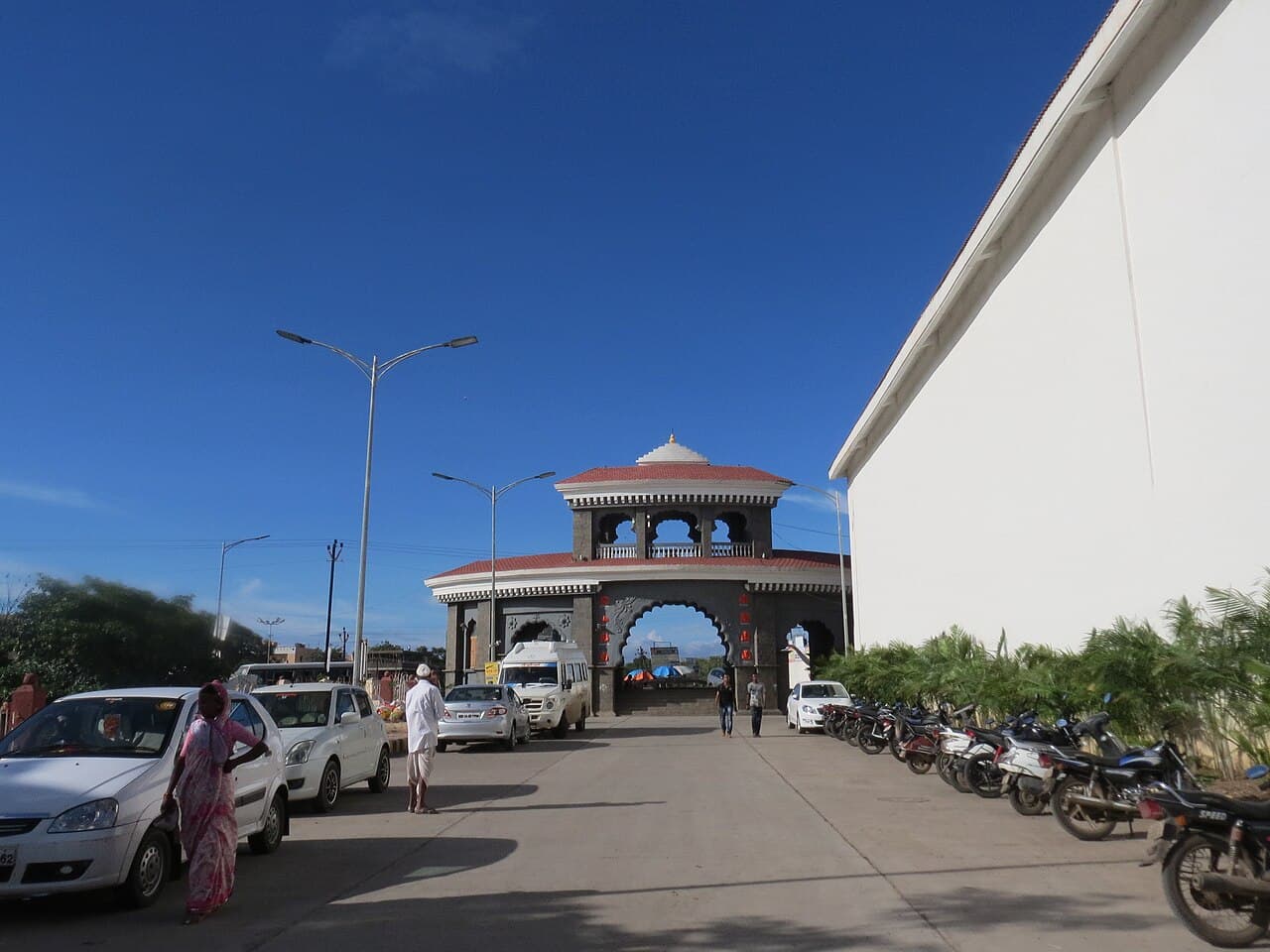 442 km · ~75 min driveMahaganapati, Ranjangaon
From Ranjangaon run the roughly 50 km north to Ozar for the night — the halt the state-run MSRTC tour itself uses, at the Ozar/Lenyadri Bhakta Niwas in the Junnar temple cluster. Sleeping here, rather than backtracking to Pune, puts you at the foot of the Lenyadri climb for an early start on Day 2.
Day 2 · The Junnar cave shrines & the Raigad pair — Lenyadri, Ozar, Pali & Mahad
~229 kmInteractive map — drag and zoom; tap a marker for the temple.
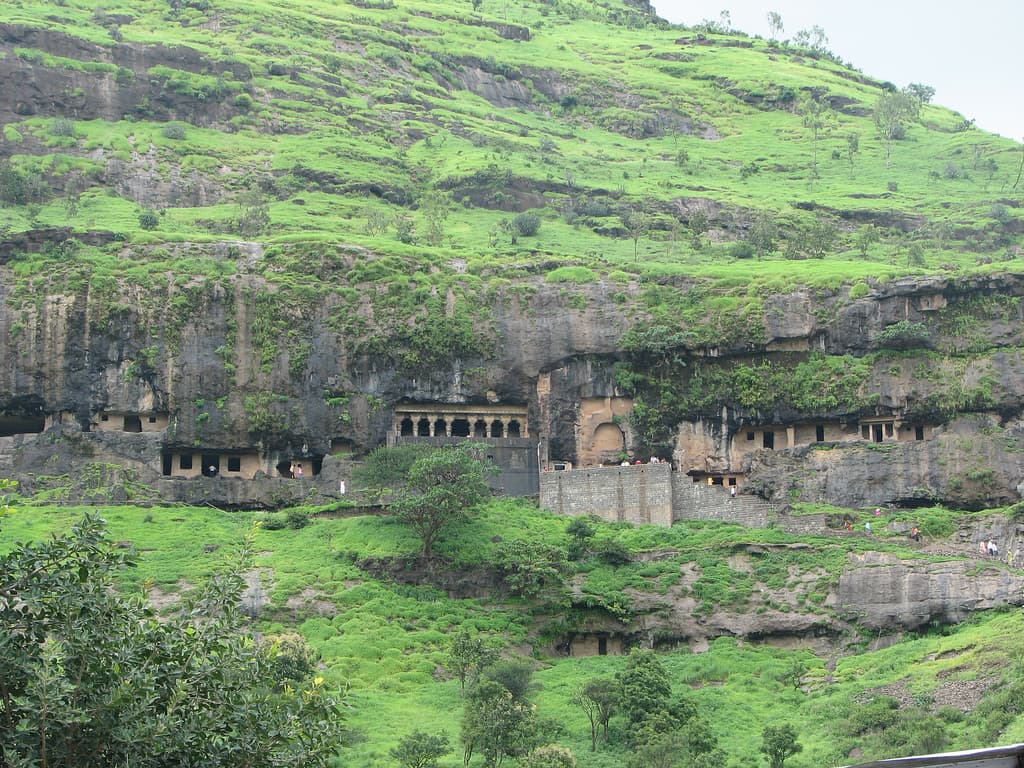 512 km · ~25 min driveGirijatmaj, Lenyadri
Girijatmaj at Lenyadri is a cave shrine cut into the hillside — the only climb on the circuit, about 280 stone steps up. Go early, before the heat; a palanquin (doli) service helps those who need it.
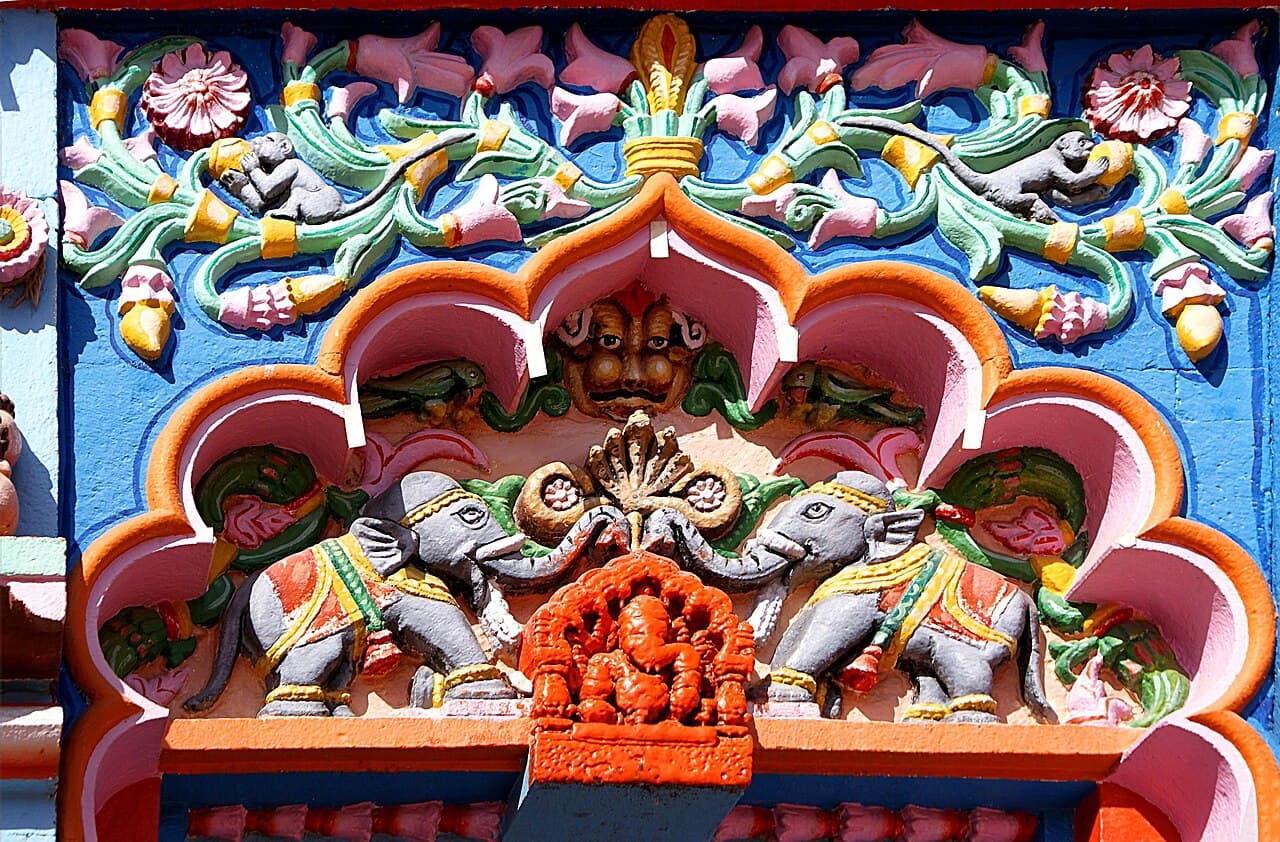 612 km · ~25 min driveVighnahar, Ozar
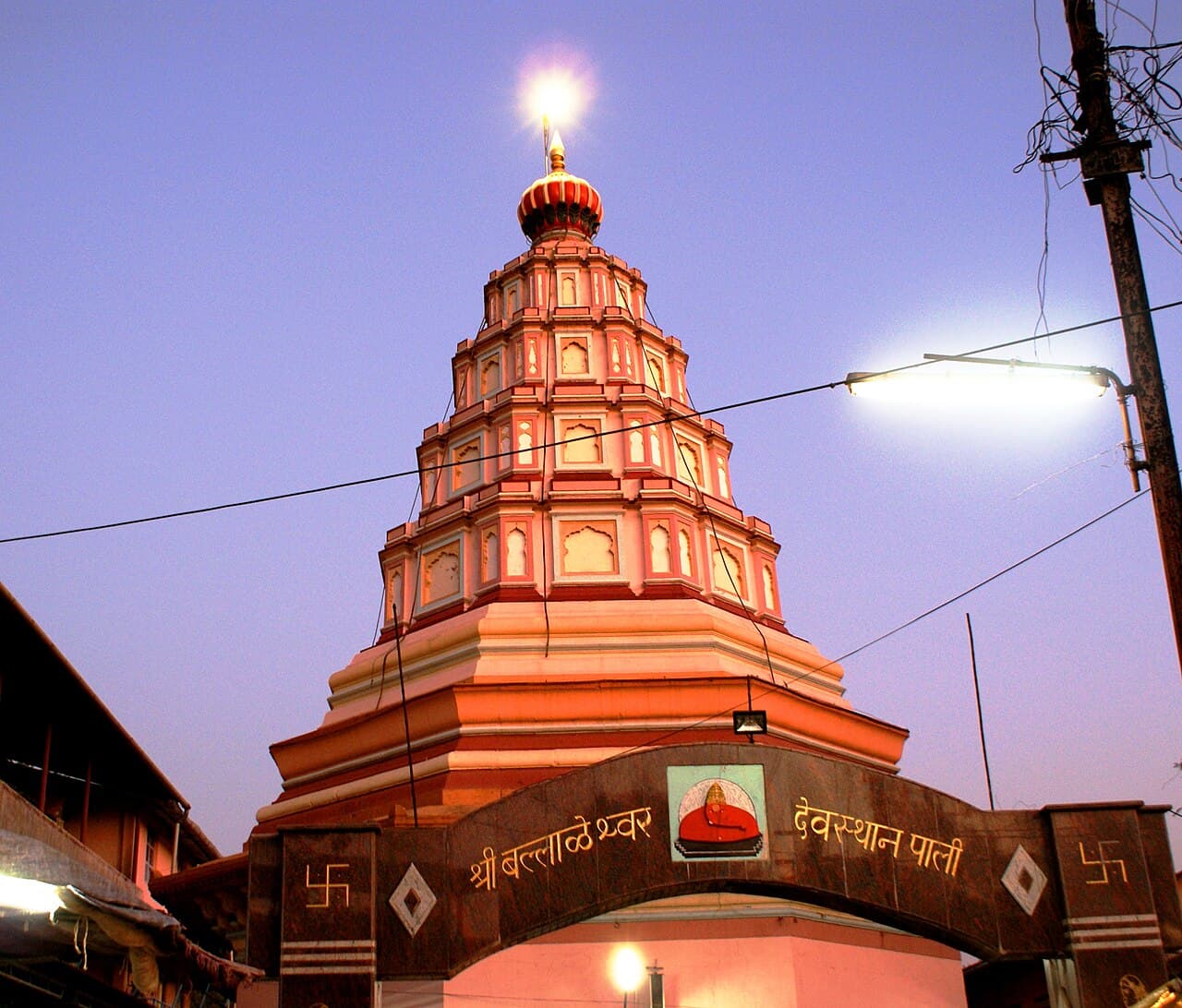 7165 km · ~240 min driveBallaleshwar, Pali
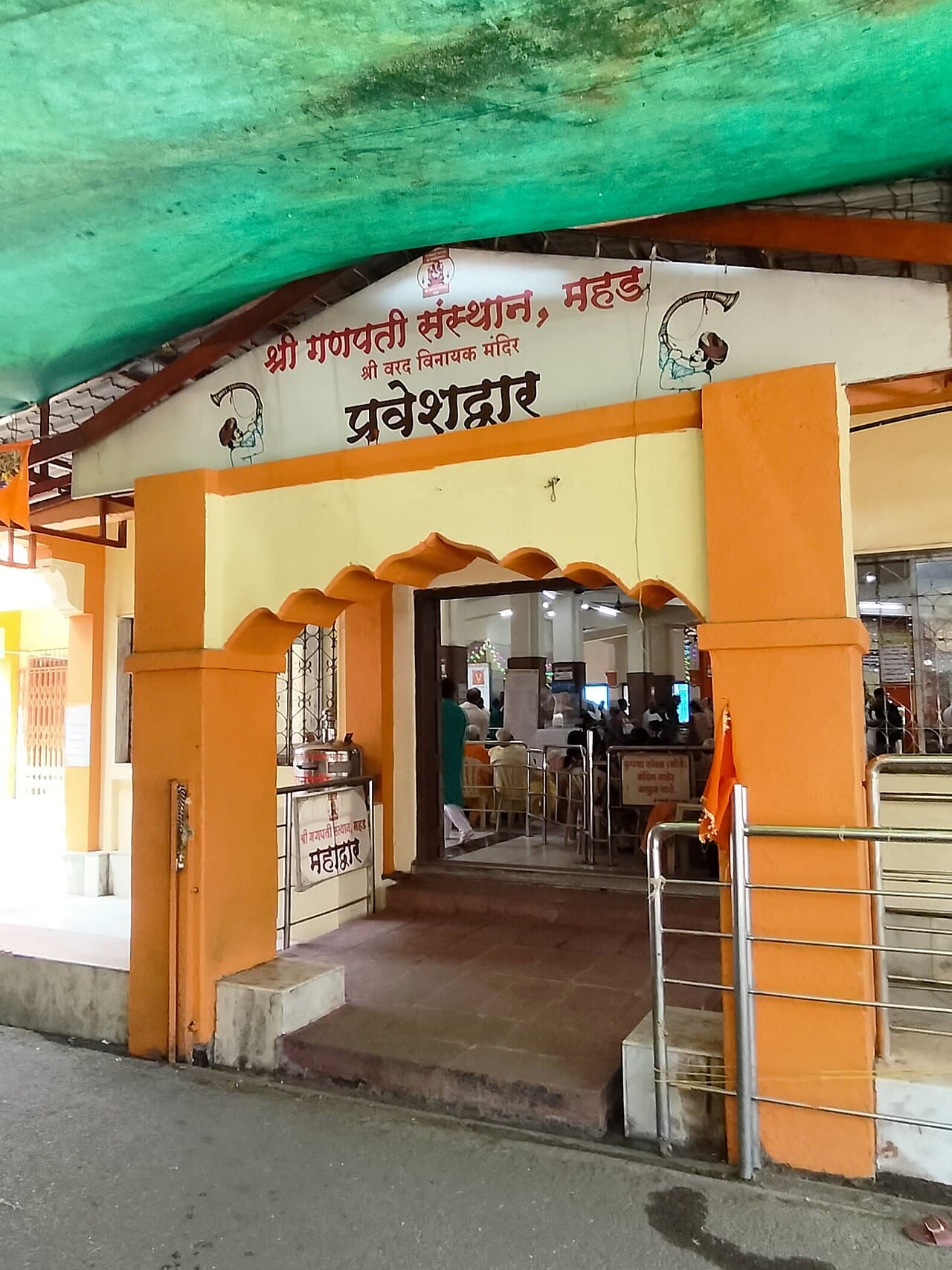 840 km · ~60 min driveVaradvinayak, Mahad
Climb Lenyadri at first light and take Ozar's darshan, then make the long ~165 km western transfer to the Raigad pair — Pali and Mahad — before closing the two-day circuit with the roughly 85 km run from Mahad (Khopoli) back to Pune. It is a long second day; start it early and keep buffer for the Junnar-to-Raigad haul.
Day 1 · The eastern shrines — Morgaon, Siddhatek, Theur & Ranjangaon
~254 kmInteractive map — drag and zoom; tap a marker for the temple.
- 1Pune → 65 km · ~100 min driveMayureshwar, Morgaon
Morgaon's Mayureshwar is the adya (foremost) seat of the eight — by tradition the yatra opens here, so this plan makes it the very first darshan. Reach it soon after dawn for the serenest aarti on the circuit; many pilgrims also keep a second, closing darshan at Morgaon for the end of the journey.
- 265 km · ~100 min driveSiddhivinayak, Siddhatek
- 382 km · ~120 min driveChintamani, Theur
- 442 km · ~75 min driveMahaganapati, Ranjangaon
From Ranjangaon run the roughly 50 km north to Ozar for the night — the halt the state-run MSRTC tour itself uses, at the Ozar/Lenyadri Bhakta Niwas in the Junnar temple cluster. Sleeping here, rather than backtracking to Pune, puts you at the foot of the Lenyadri climb for an early start on Day 2.
Day 2 · The Junnar cave shrines, then west over the ghats — Lenyadri & Ozar
~24 kmInteractive map — drag and zoom; tap a marker for the temple.
- 512 km · ~25 min driveGirijatmaj, Lenyadri
Girijatmaj at Lenyadri is a cave shrine cut into the hillside — the only climb on the circuit, about 280 stone steps up. Go early, before the heat; a palanquin (doli) service helps those who need it.
- 612 km · ~25 min driveVighnahar, Ozar
With the Junnar shrines done by mid-morning, make the roughly 120 km transfer west to the Lonavala–Khopoli hill belt on the Mumbai–Pune Expressway. It splits the long Junnar-to-Raigad haul into two easy halves — leaving Pali and Mahad about 55 km away for a fresh morning — and offers cool-weather lodging, including state (MTDC) resorts nearby.
Day 3 · The Raigad shrines & home — Pali & Mahad
~95 kmInteractive map — drag and zoom; tap a marker for the temple.
- 755 km · ~80 min driveBallaleshwar, Pali
- 840 km · ~60 min driveVaradvinayak, Mahad
Pali and Mahad sit about 40 km apart in Raigad; from Mahad (Varadvinayak), by Khopoli, it is roughly 85 km back to Pune on the expressway, closing the three-day plan. If you wish to keep the tradition, add a closing darshan at Morgaon along the way — Mayureshwar's is the seat where the yatra began and, by custom, must end.
This plan opens at Morgaon, the adya seat where tradition has the yatra begin — so your first darshan already honours the custom. To keep the full open-and-close, add a second darshan of Mayureshwar at the end: the circuit closes in the west at Mahad, from where the drive home to Pune does not pass Morgaon, so most pilgrims keep a short separate morning for it — Morgaon lies about 55 km south-east of Pune, and its dawn aarti is the serenest on the whole circuit.
Traditional (shastrokta) darshan order+
This is the shastrokta (scripturally prescribed) sequence — it opens at Mayureshwar in Morgaon and, once all eight have been seen, closes there again. It is a darshan order, not a driving route: most pilgrims and tour operators regroup the temples by geography to cut the driving, and tradition accepts that freely. What matters is that all eight receive darshan.
- Mayureshwar, Morgaon
- Siddhivinayak, Siddhatek
- Ballaleshwar, Pali
- Varadvinayak, Mahad
- Chintamani, Theur
- Girijatmaj, Lenyadri
- Vighnahar, Ozar
- Mahaganapati, Ranjangaon
Getting there
The eight temples are connected by road — train and air get you to your base city, then the circuit is by road.
Pune Junction is one of Maharashtra's principal stations, linked by fast trains — the Deccan Queen, Shatabdi, Vande Bharat and Duronto services — to Mumbai, Delhi, Bengaluru, Hyderabad, Chennai, Goa and Nagpur. From the station the Ashtavinayaka temples and other Deccan shrines are an easy taxi or MSRTC bus ride away.
Pune Airport (PNQ) at Lohegaon, about 11 km north-east of the city, is a busy domestic hub with frequent non-stop flights to Delhi, Mumbai, Bengaluru, Hyderabad, Ahmedabad, Kolkata, Chennai, Goa and more. A prepaid taxi or app-cab reaches the city centre in roughly 30–60 minutes depending on traffic.
For overseas or long-haul pilgrims the cheapest approach is often via Mumbai: land at Chhatrapati Shivaji Maharaj International Airport (BOM), then take the Mumbai–Pune Expressway by cab or bus (about 95 km, 2.5–3 hours) or a fast intercity train (about 3–3.5 hours) down to Pune.
Official tour options
- MSRTC Ashtavinayak Darshan — the state road-transport corporation's own two-day bus package from Pune.MSRTC (Maharashtra State Road Transport Corporation)
- Maharashtra Tourism — the official state guide to all eight Ashtavinayak temples, with travel information for each.Maharashtra Tourism (Directorate of Tourism, Govt. of Maharashtra)
Season & festivals
Best window: August to February. Post-monsoon greenery on the Bhima plains and the Raigad ghats gives way to cool, comfortable winter — kind to long darshan queues and the Lenyadri climb. Summer is workable but hot on the plains, and in the deep monsoon the ghat roads to Pali and Mahad can be slow.
Around Ganesh Chaturthi (late August–September) all eight temples are at their most festive and auspicious — and their most crowded. Expect very long darshan lines, heavy road traffic and full lodging; add generous buffer time, or choose weekdays outside the festival for an unhurried circuit.
Yatri checklist
- Start each day at dawn — reaching the first temple by opening time beats both the heat and the darshan queues.
- Wear footwear that slips off easily — it comes off at every temple — and remember Girijatmaj at Lenyadri means about 280 steps on foot.
- Carry water and light snacks; several stretches between temples are rural, with few places to stop.
- Keep a government photo ID and small cash for parking, prasad and the Lenyadri palanquin (doli) if you need it.
- Confirm each temple's darshan and aarti timings before you set out, and keep buffer time for the long Junnar-to-Raigad transfer on the second day.
Planning FAQs
How much driving does the Ashtavinayak circuit from Pune involve?+
Reckon on roughly 620–660 km in all. Following the state-run MSRTC tour structure, this plan takes the four eastern shrines on Day 1 — opening at Morgaon, then Siddhatek, Theur and Ranjangaon — and the Junnar cave shrines with the western Raigad pair on Day 2 (Lenyadri, Ozar, then Pali and Mahad). The single longest stretch is the roughly 165 km transfer from the Junnar temples down to the Raigad pair, which is why the three-day plan splits that leg with an overnight in the hills.
Where should I stay overnight on the Ashtavinayak circuit from Pune?+
On the two-day plan, halt after the eastern day at Ozar in the Junnar cluster — the same Bhakta Niwas the MSRTC bus tour uses — so you wake at the foot of the Lenyadri climb rather than backtracking to Pune. On the three-day plan, keep that first night at Ozar, then break the second night in the Lonavala–Khopoli hill belt on the Mumbai–Pune Expressway, about 55 km from Pali, before finishing the Raigad pair and closing back at Pune the next day.
Which Ashtavinayak temple has a climb, and how should I prepare?+
Girijatmaj at Lenyadri is the only one — a cave shrine carved into the hillside, reached by about 280 stone steps. Climb early, before the heat, in footwear that comes off easily; a palanquin (doli) service is available for elderly pilgrims or anyone who needs it. The other seven temples are at or near road level.
What else is worth adding near the route from Pune?+
Several places sit naturally on the way. Jejuri, with its famous Khandoba temple, lies on the Morgaon road and is a common halt. At Junnar, beside Lenyadri and Ozar, stands the hill-fort of Shivneri, birthplace of Chhatrapati Shivaji Maharaj. The Lonavala–Khandala hill stations are close to Pali and Mahad, and pilgrims with an extra day sometimes add Bhimashankar Jyotirlinga in the Sahyadris to the north-west.