

Kartikeya as Subrahmanya, lord of serpents — the great Karnataka shrine on the Kumaradhara, where Vasuki took refuge under the Lord and the sarpa-dosha rites are kept to this day.
- Deity
- Subrahmanya (Kartikeya), with Vasuki
- Location
- Subrahmanya, Dakshina Kannada district, Karnataka
- Category
- Murugan
- Established
- Ancient — no century attested; praised as Kukkelinga in the Shankara Vijayam and named in a ninth-century inscription; sanctum renewed in 2005
- Setting
- On the bank of the Kumaradhara at the foot of Kumara Parvata, in the Western Ghats
- Best Time to Visit
- October to March; Champa Shashthi (November–December) is the greatest festival
- Karnataka's great Kartikeya shrine — not one of the six Arupadai Veedu of the Tamil south
- Vasuki took refuge under the Lord here from Garuda; the Lord abides within him in one portion
- Counted among the seven kshetras of Parashurama's making; also called Gupta Kshetra
- The moola prasada is mrittike — the earth of the anthill
- Sarpa Samskara is a two-day rite, begun with a bath in the Kumaradhara and darshan
- Ashlesha Bali and Nagapratishtha are day-long sevas, kept on all days but Ekadashi and fast days
- Champa Shashthi — Margashirsha Shukla Shashthi — is the great day, when the brahmaratha is drawn
- Adi Subrahmanya, a quarter kilometre off, is named by the temple as the Lord's original abode
- Shirt and vest are removed before darshan, as the temple requires
Significance
Here the Lord is worshipped as the serpent. The epics tell that Vasuki and the other nagas took shelter under him in these caves while Garuda hunted them; the cave called Biladwara, on the path down to the river, is shown as the serpent king's refuge. A quarter of a kilometre beyond the main gate stands Adi Subrahmanya, which the temple names the Lord's original abode. The moola prasada given here is mrittike, the earth of the anthill, and devotees come for children, marriage, relief from long skin ailments and the clearing of naga-dosha.
The sarpa-dosha rites are settled pastoral practice, ordered and published by the temple. Sarpa Samskara runs two days: the devotee bathes in the Kumaradhara, takes darshan and reports at Adi Subrahmanya at half past eight in the morning, keeps the purohita's instructions, and on the second morning joins the Nagapratishtha in the outer court after the midday puja. One who has had upanayana and performed pitru-karma may act for himself; for others the temple appoints a kriya-karta. It is offered on all days but Dashami, Ekadashi, Gokulashtami, Shivaratri, eclipse days and the annual festival's fortnight. Ashlesha Bali and Nagapratishtha are single-day sevas, kept on all days save Ekadashi and fast days, Ashlesha Bali in three turns from half past six in the morning to five in the evening; Prarthana follows each mahapuja at the sannidhi.
Champa Shashthi is the great day — Margashirsha Shukla Shashthi, the tithi of the marriage remembered on this bank — crowning the annual festival in which the brahmaratha is drawn. On the Ekadashi before the kopparige is raised, the chief archakas come from the sanctum at dawn and give out the mrittike. Turmeric and sandal for the Naga, puffed rice, jaggery and plantain, abhisheka of tender coconut and milk — the old usages hold. A bath in the Kumaradhara before darshan is the custom of the place, and its water is held to heal the skin.
History
Kukke Subrahmanya stands in Subrahmanya village of Kadaba taluk, in Karnataka's Dakshina Kannada district, on the bank of the Kumaradhara in the Western Ghats; Kumara Parvata rises behind the shrine and the Darpana Tirtha runs close by. The temple's own account tells that Kumaraswamy, born to subdue the asuras, overcame Taraka and his host and came with his brother Ganapati to Kumara Parvata, and that Indra there gave him his daughter Devasena in marriage on the bank of the Kumaradhara, on the Shashthi of the bright fortnight of Margashirsha. Vasuki, king of the nagas, was at his tapas nearby; honouring his prayer, the Lord blessed him that he would dwell for ever within him, with Devasena, in this place.
No century can be fixed for the shrine. Its own record points to the Skanda Purana, to the line Bhaje Kukkelingam that praises the Lord of Kukke in the Shankara Vijayam, and to a ninth-century inscription in which the place-name Kukke already stands. The kshetra is counted among the seven of Parashurama's making and is called Gupta Kshetra, the hidden shrine; its images are held to be self-arisen or established by rishis. Karnataka's endowments department administers it, the sanctum was renewed in 2005, and the archakas are of this coast's Shivalli Madhva line.
Architecture
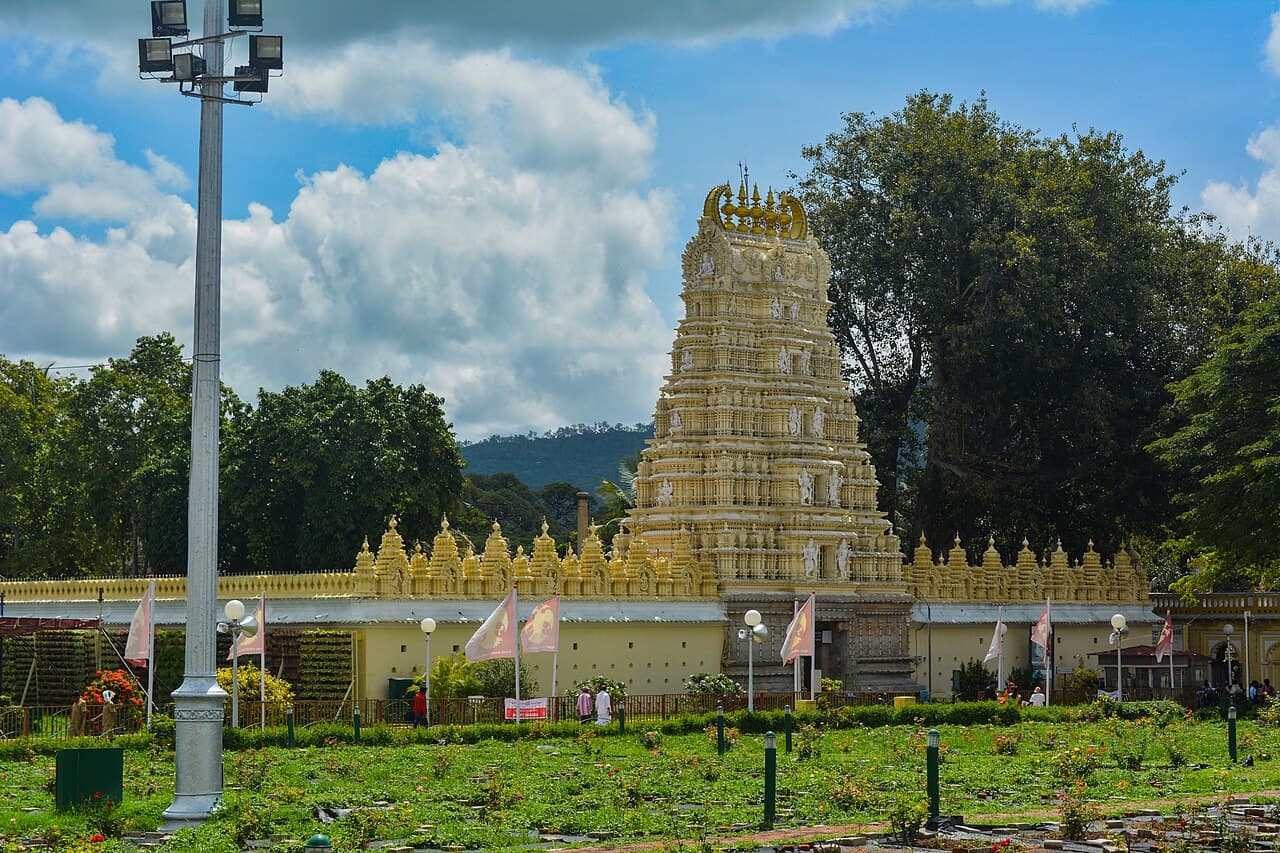
The temple faces east and is entered from behind the sanctum, through two halls, the inner leading to the garbhagriha; on the pedestal Subrahmanya is shown with Vasuki, and below them Sesha. Before them stands the silver-plated Garuda kamba, held to shield those who come from Vasuki's breath. Kukkelinga, Uma Maheshwara and Kalabhairava keep shrines in the inner court, Hosaligamma the guardian nearby; the outer quadrangle holds the Nagapratishtha mantapa, and from the Rajangana the cart goes out under the Shesha vahana. Kumara Parvata rises above to some seventeen hundred metres within the Pushpagiri sanctuary.
Festivals
Timings
Open daily ~6:30 AM – 1:30 PM and 3:30 – 9:00 PM, the nadai closing between 9:00 and 9:30 PM. The temple requires shirt and vest to be removed before darshan. Sarpa Samskara devotees report at Adi Subrahmanya at 8:30 AM; Ashlesha Bali is held in three turns at 6:30 AM, 8:30 AM and 5:00 PM. Hours shift on festival days — confirm with the temple office.
Subrahmanya lies in Kadaba taluk, about a hundred and four kilometres from Mangaluru and two hundred and eighty from Bengaluru. Mangaluru is the nearest airport, some hundred and five kilometres away; Subrahmanya Road is the nearest railhead, twelve kilometres off, with buses from Mangaluru and Bengaluru. Dharmasthala is fifty-five kilometres away and Madikeri seventy-five.
Timings are indicative — please confirm with the temple trust before travelling.
Nearby Temples

Frequently Asked Questions
Where is Kukke Subrahmanya Temple located?+
Kukke Subrahmanya Temple is in Subrahmanya, Dakshina Kannada district, Karnataka, India.
Which deity is worshipped at Kukke Subrahmanya Temple?+
Kukke Subrahmanya Temple is dedicated to Subrahmanya (Kartikeya), with Vasuki.
Which tradition does Kukke Subrahmanya belong to?+
Kukke Subrahmanya is one of the Murugan temples dedicated to Murugan (Kartikeya).
What are the timings of Kukke Subrahmanya Temple?+
Open daily ~6:30 AM – 1:30 PM and 3:30 – 9:00 PM, the nadai closing between 9:00 and 9:30 PM. The temple requires shirt and vest to be removed before darshan. Sarpa Samskara devotees report at Adi Subrahmanya at 8:30 AM; Ashlesha Bali is held in three turns at 6:30 AM, 8:30 AM and 5:00 PM. Hours shift on festival days — confirm with the temple office.
What is the best time to visit Kukke Subrahmanya Temple?+
October to March; Champa Shashthi (November–December) is the greatest festival
When was Kukke Subrahmanya Temple established?+
Kukke Subrahmanya Temple — Ancient — no century attested; praised as Kukkelinga in the Shankara Vijayam and named in a ninth-century inscription; sanctum renewed in 2005.
Sources & further reading
Photo: BHARATHESHA ALASANDEMAJALU · CC BY-SA 4.0